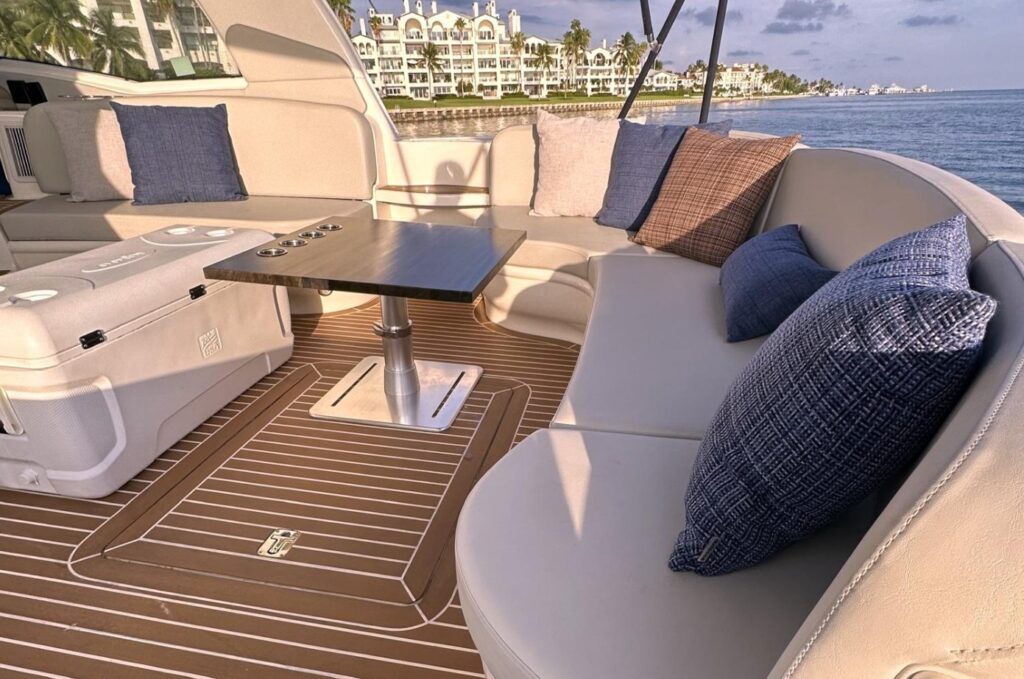
Essential Boat Upholstery Material Upgrades for Better Boat Interiors
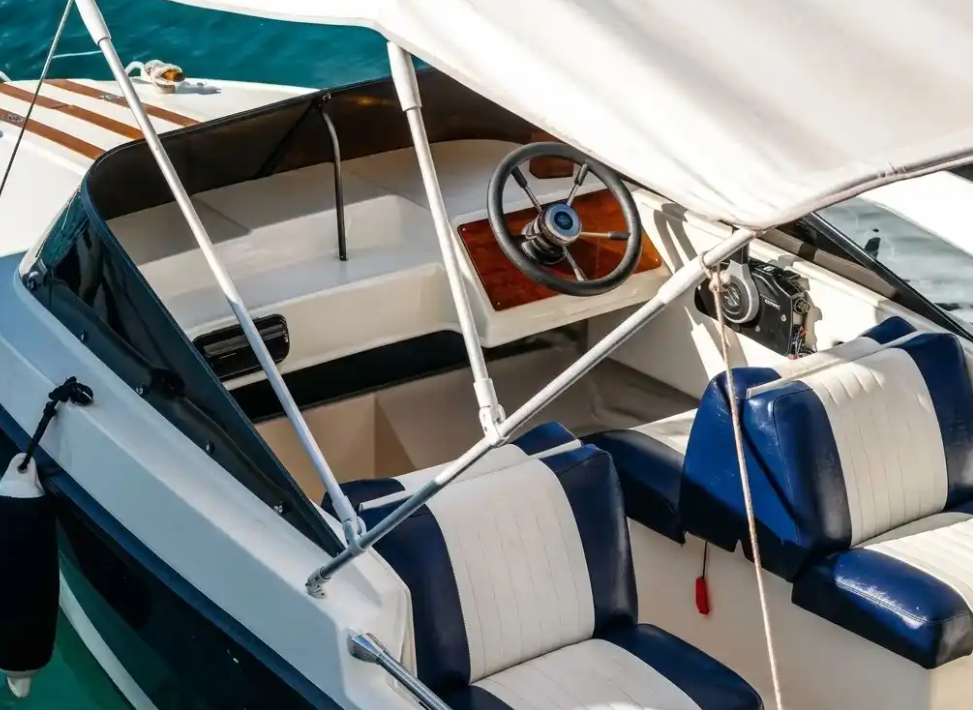
A boat interior does more than provide a place to sit. It creates the atmosphere of every journey, from a quiet morning cruise to an evening spent entertaining guests. As marine design continues to evolve, owners are looking for materials that combine sophisticated appearance with dependable performance. The right boat upholstery material can help achieve that balance while making seating more comfortable and easier to maintain. Boat Upholstery Broward specializes in professional upholstery for boats and yachts, creating custom marine interiors for different vessels and lifestyles.
Why Interior Design Matters at Sea
A boat’s interior can influence how passengers experience the entire vessel.
Comfortable seating encourages people to stay onboard longer. Well-coordinated colors can make a space feel larger and brighter. Quality finishing can also give an older boat a more contemporary character.
For this reason, upholstery has become an important part of marine interior design rather than a minor finishing detail.
Material Should Follow the Lifestyle
There is no single material that works perfectly for every boat.
Owners should first consider how they use their vessel. A boat used for fishing faces different challenges from a yacht designed for entertaining guests.
Think about:
- How often the boat is used
- Where passengers spend most of their time
- How much sunlight reaches the seating
- Whether the vessel operates in saltwater
- How frequently cushions require cleaning
These factors can guide the selection of a boat upholstery material that fits actual use.
A Refined Look Starts With the Right Texture
Texture can completely change the character of marine seating.
Smooth surfaces create a clean and contemporary appearance. Subtle grain patterns can add visual depth without making the interior feel busy. Combining textures can also separate different sections of a cushion.
This makes texture an effective design tool for owners who want something more distinctive than a basic color change.
Color Can Transform an Older Interior
Replacing upholstery creates an opportunity to rethink the color palette.
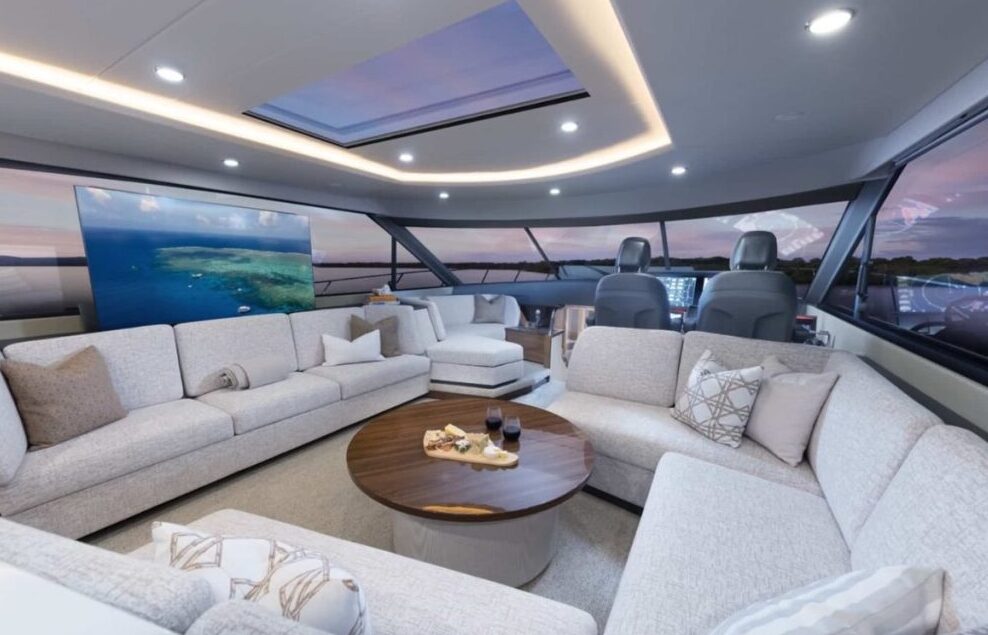
Older boats often feature traditional combinations that may no longer match current preferences. A lighter neutral palette can make the interior feel fresh, while darker accents can add contrast.
Popular choices include:
- Soft white
- Light gray
- Cream
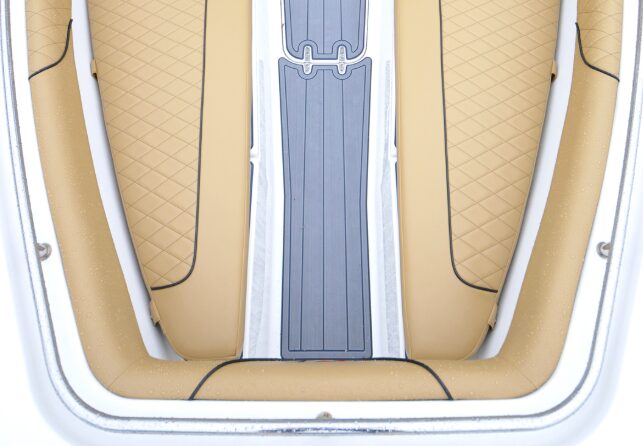
- Sand
- Navy
- Charcoal
A versatile boat upholstery material allows owners to experiment with these combinations while maintaining a cohesive appearance.
Comfort Begins Beneath the Surface
Good design should always include physical comfort.
Foam gradually loses its resilience as passengers use the seating. Flattened cushions can become uncomfortable even when the exterior remains relatively intact.
During a restoration, checking the foam can therefore be just as important as selecting the new covering.
A supportive cushion paired with a durable boat upholstery material can provide a noticeable improvement in the overall onboard experience.
Marine Conditions Demand Performance
A beautiful material must still handle life on the water.
UV exposure can fade surfaces. Moisture can create problems when it remains trapped inside cushions. Salt residue and frequent cleaning can also accelerate wear.
For marine applications, owners should look for materials that offer:
- Strong UV resistance
- Moisture resistance
- Good color retention
- Easy maintenance
- Resistance to everyday abrasion
Performance and design should work together rather than compete.
Custom Details Create a Distinctive Finish
Personalization does not require an elaborate redesign.
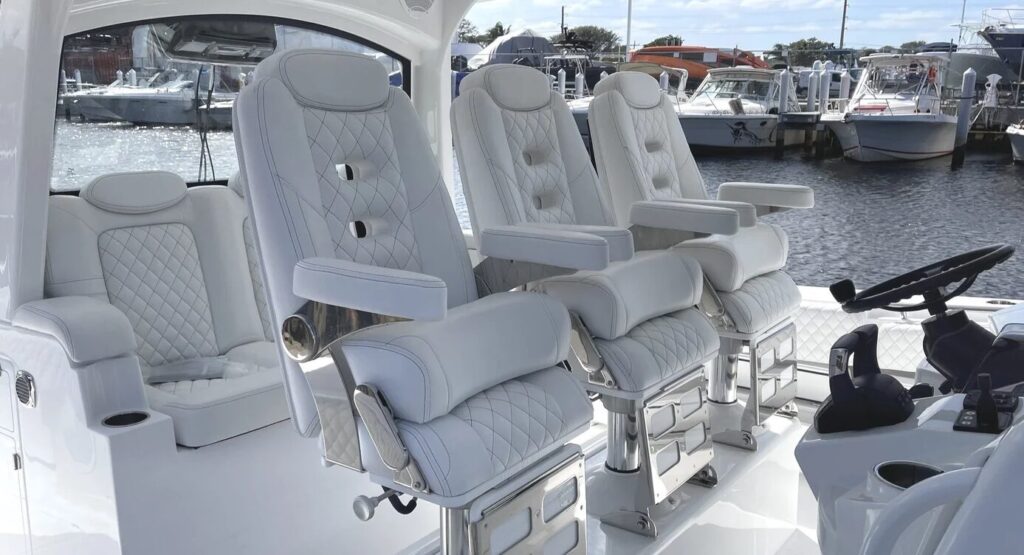
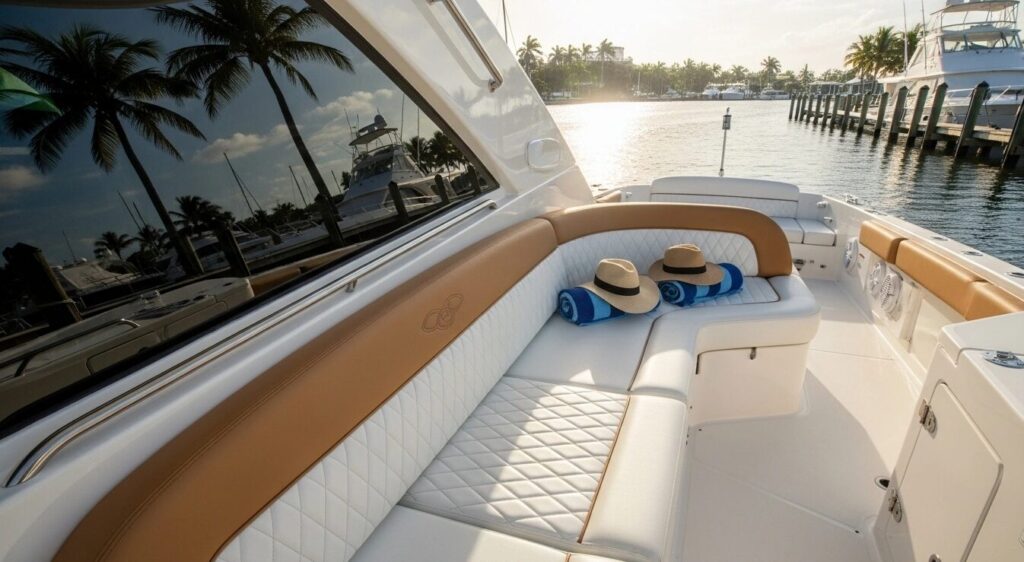
Contrast stitching can emphasize cushion shapes. Piping can define individual sections. Two-tone layouts can create visual depth.
Other possibilities include:
- Diamond stitching
- Custom embroidery
- Decorative borders
- Textured inserts
- Coordinated accent panels
These details can make factory seating feel more individual while preserving a clean overall design.
Outdoor Seating Needs Extra Protection
Exterior cushions experience the harshest conditions.
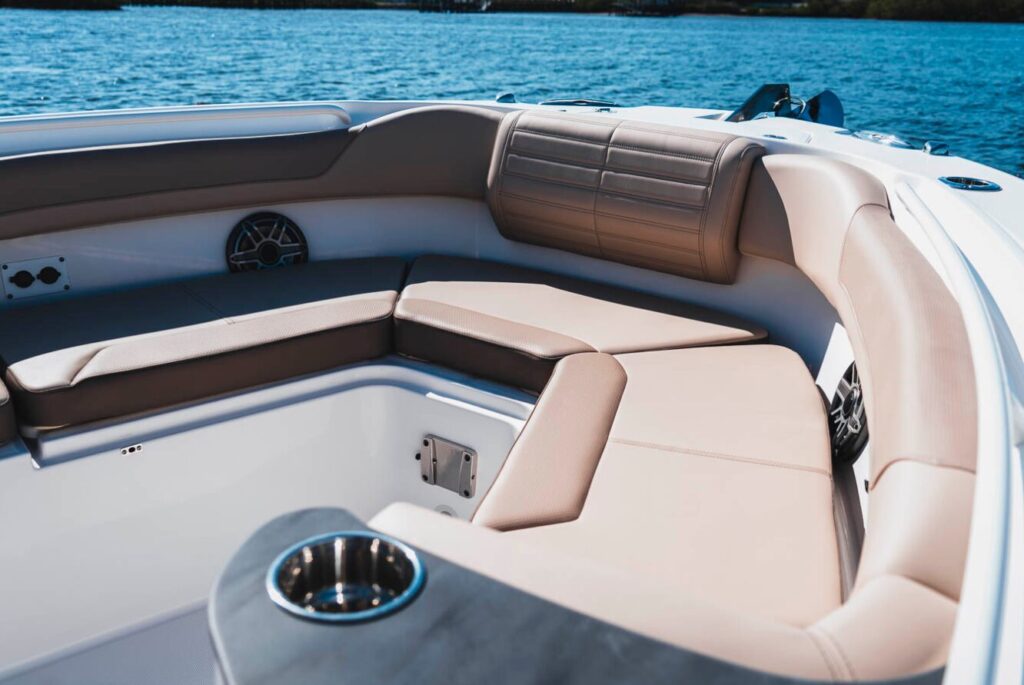
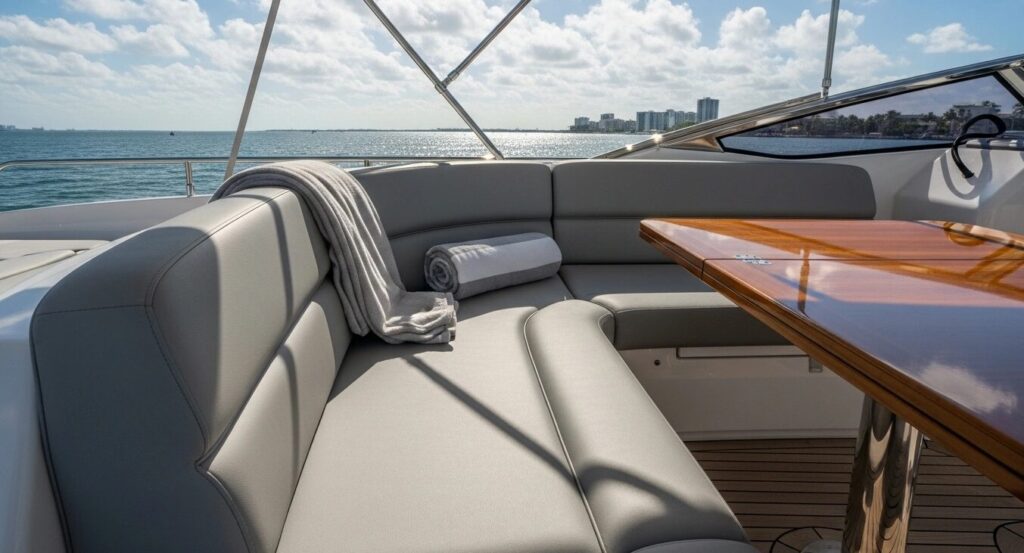
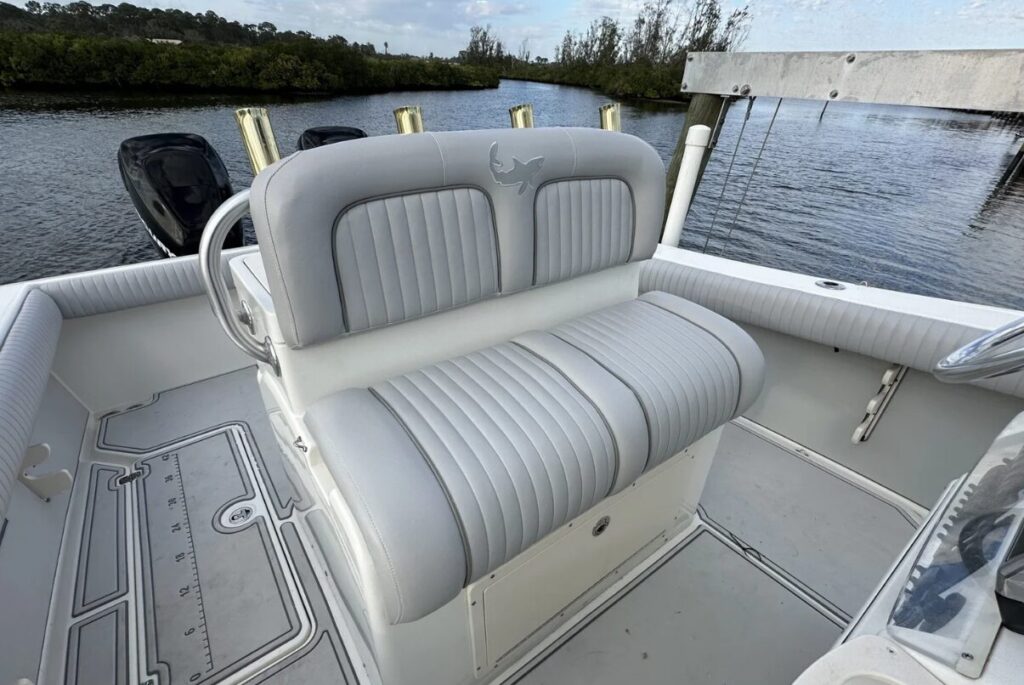
Cockpit and bow seating can receive direct sunlight, rain, saltwater spray, and frequent passenger traffic. Helm seats may experience particularly high wear because operators use them for extended periods.
A suitable boat upholstery material can help these areas handle demanding conditions, while covers can reduce exposure between trips.
Maintenance Preserves the Investment
Even high-quality upholstery needs regular care.
Salt and dirt should not remain on seating unnecessarily. Spills should receive prompt attention, while wet cushions should dry completely.
Owners can protect their interiors by:
- Cleaning seats regularly
- Removing salt residue
- Drying cushions after water exposure
- Inspecting seams
- Avoiding sharp objects on seating
- Using appropriate covers during storage
Simple maintenance can help preserve both appearance and performance.
Reupholstery Can Be a Design Reset
A boat does not need a complete renovation to feel different.
Replacing tired seating can change the visual identity of an interior without altering the vessel’s layout. Owners can retain the features they like while introducing a more modern palette, improved cushioning, and updated materials.
This makes reupholstery an attractive option for vessels that remain mechanically sound but have interiors that show their age.
Timeless Design Beats Short Lived Trends
Marine interiors need to remain appealing for years.
Bold trends can be useful for inspiration, but timeless foundations often provide better long-term value. Neutral colors, quality materials, comfortable cushions, and subtle detailing can adapt to changing tastes.
Owners can then introduce stronger trends through smaller, easier-to-replace accessories.
Final Thoughts
Modern boat interiors increasingly combine practical performance with sophisticated design. Owners want seating that looks refined but can still handle sunlight, moisture, saltwater, cleaning, and regular use.
Choosing the right boat upholstery material is an important step toward achieving that balance. When material selection, foam quality, color, texture, installation, and maintenance all work together, marine seating can become one of the strongest design features aboard a boat.
More interesting articles you can explore here.