A trailer has been released for Sung Kang’s Shaky Shivers, which reaches theatres for one night in September
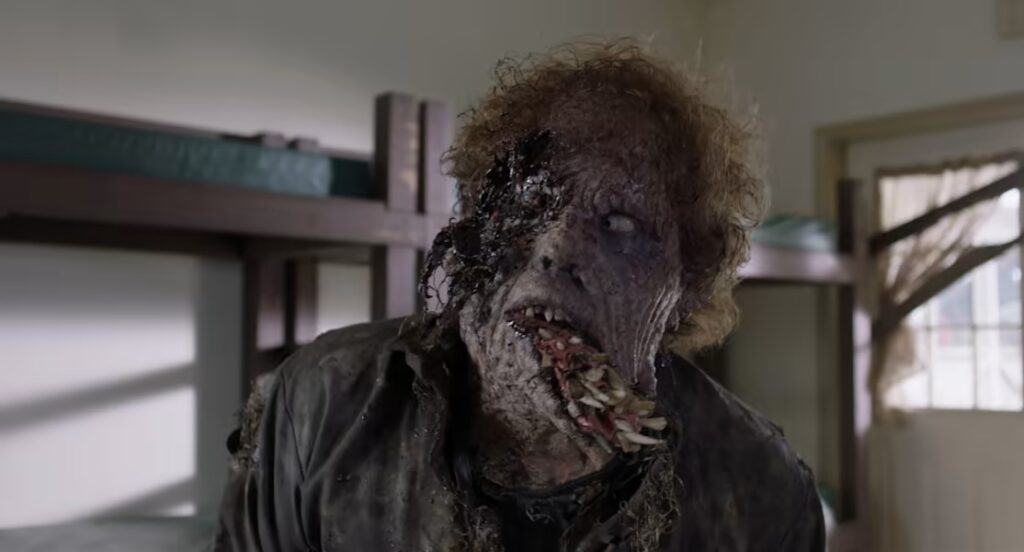
Sung Kang, who is best known for playing the fan favorite role of Han in the Fast and Furious franchise, has made his feature directorial debut with the ’90s-set creature feature Shaky Shivers, and a few months ago we heard that the film had landed a North American distribution deal with Cinedigm. Now a trailer for Shaky Shivers has arrived online, and along with the trailer comes the announcement that Cinedigm is teaming up with Fathom Events to bring the film to theatres for one night in September! The specific night is September 21st, and tickets are available at THIS LINK.
Following the theatrical screening, Shaky Shivers will move to the SCREAMBOX streaming service.
Shot over the course of five weeks at a closed down girl scout camp back in 2020, Shaky Shivers takes viewers on a hilarious and nostalgic journey to an abandoned camp where two young women, played by Brooke Markham (In the Dark) and VyVy Nguyen (The Sympathizer), stumble upon a book of magical spells. Surrounded by classic monsters and drawing inspiration from 80’s horror films, Karen and Lucy find themselves facing a series of supernatural occurrences after a fateful encounter with an old woman. As zombies, werewolves, and Bigfoot wreak havoc, the duo must navigate a wild night, armed with an unfamiliar spell book, to restore order before their lives unravel completely…
Jimmy Bellinger (Blockers), Erin Daniels (House of 1000 Corpses), Skyler Day (Parenthood), and Herschel Sparber (Lucky Stiff) are also in the cast.
A press release notes that, while the film is set in the ’90s, it’s also a nostalgic tribute to ’80s horror movies. It features “a thrilling monster mash” and “captures the spirit of the ’80s classics that Kang grew up adoring”.
Kang provided the following statement: “The whole idea was to make this for the old school horror hounds and for them to share it with their families today. Little by little, we’re doing that. I couldn’t be more excited about rolling this film out.“
Brad Miska, the managing director of Bloody Disgusting/Cinedigm, had this to say: “This campy film transports us back to an era when spooky tales were shared by flashlight during slumber parties. Sung Kang’s directorial debut promises a truly unique and thrilling experience for fans. With its eclectic mix of quirky humor, chilling moments, monstrous creatures, and a captivating throwback atmosphere, fans are in for one hell of an experience this fall.“
Shaky Shivers was scripted by Aaron Strongoni and Andrew McAllister, who were inspired to write a creature feature script after making a documentary about special effects artist Gabriel Bartalos, who ended up working on the film. Kang produced the film through his company Raison D’etre, alongside Luci Y. Kim of Luka Productions and Jean Shim of Aerie On Elms. Nina Yang Bongiovi of AUM served as executive producer with Kevin M. Lin, Michael Y. Chow, and Brian Yang.
What did you think of the Shaky Shivers trailer? Let us know by leaving a comment below. I’m really looking forward to checking this one out.
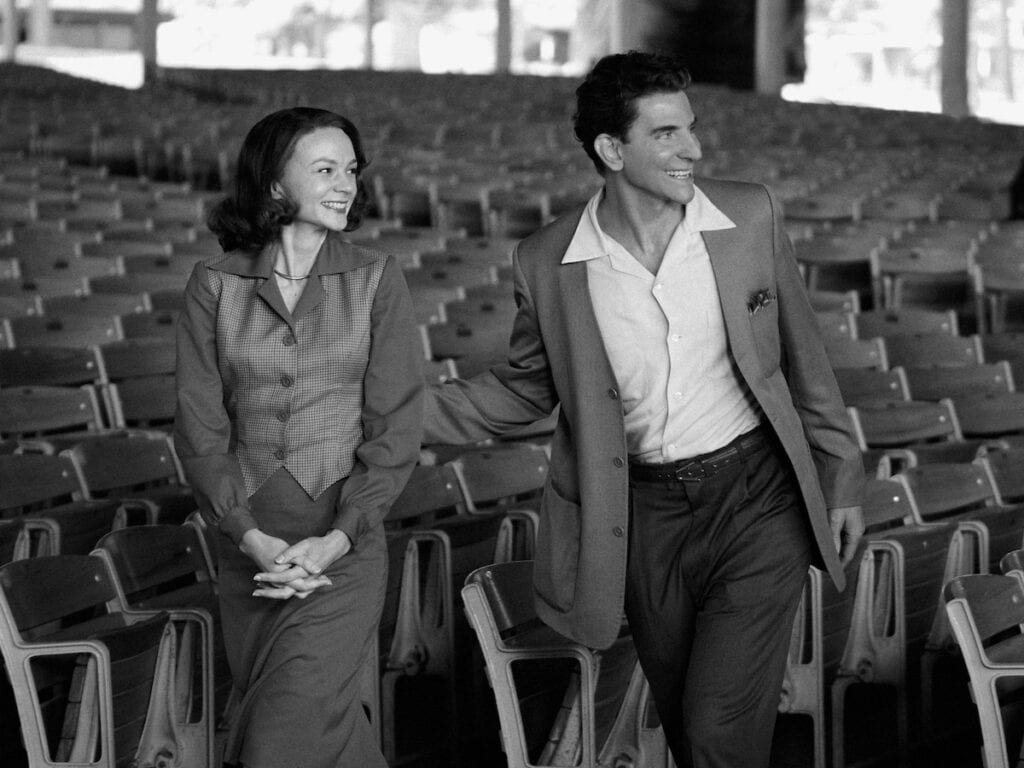
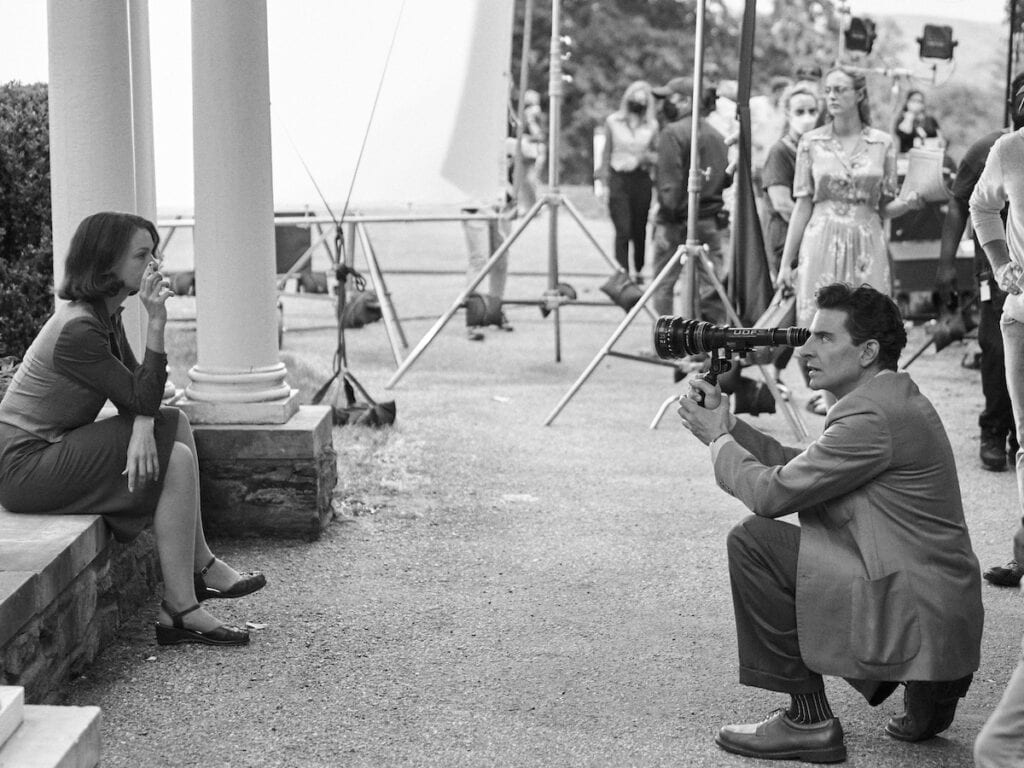
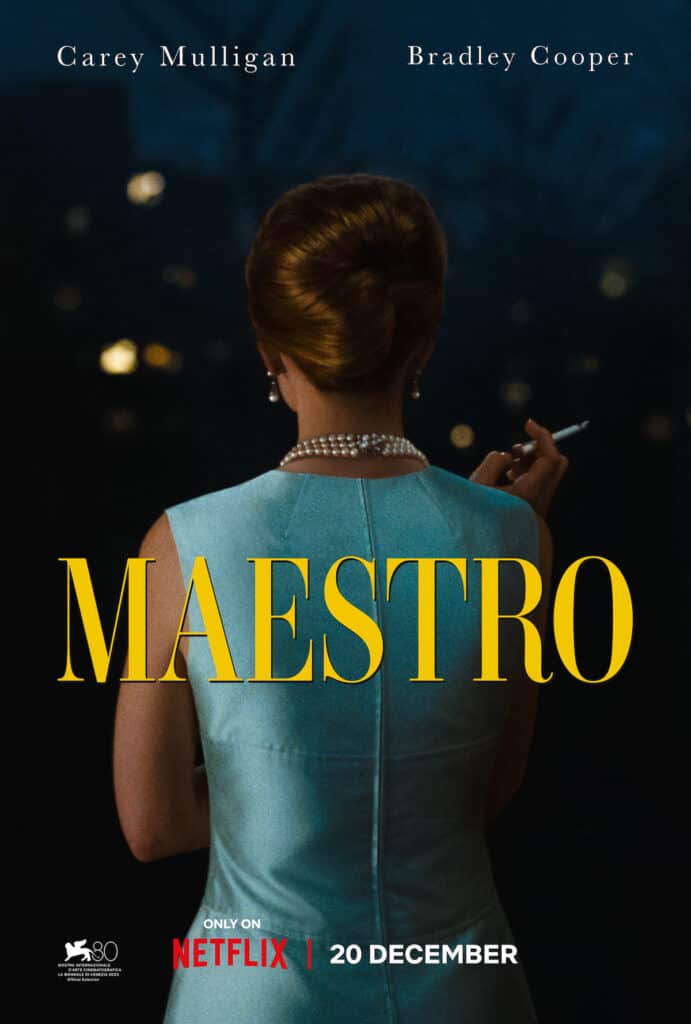
Awards season is over the horizon, and while films like Killers of the Flower Moon and Napoleon are going to be big releases for Apple Originals, Netflix will be throwing its hat into the fray with Bradley Cooper’s new drama, Maestro. Cooper, who has already gained acclaim as a writer and director with his Academy Award-nominated remake of A Star is Born from 2018, returns in the trifecta duty of writing, directing, and starring in Maestro alongside Carey Mulligan, whose credits include The Great Gatsby and had garnered positive reviews for her performance in Promising Young Woman. Netflix has now released the trailer for Cooper’s romance drama.
The plot synopsis, according to Deadline, reads, Billed as an emotionally epic examination of family and love, Maestro tells the complex love story of Leonard Bernstein and Felicia Montealegre Cohn Bernstein (Carey Mulligan) — a story that spans over 30 years. Perhaps best known for his score to Broadway’s West Side Story and the classic Marlon Brando film On the Waterfront, Bernstein married the actress in 1951 and went on to share three children with her, with the couple splitting their time between New York and Connecticut. Complicating the dynamic between the duo were the affairs he had over the years, with both men and women, even as they were conducted with Felicia’s consenting awareness. The pair were separated at one point for a period of a year, though they ultimately stayed together until Felicia’s death in 1978.
The film’s cast includes Carey Mulligan, Bradley Cooper, Matt Bomer, Maya Hawke, Sarah Silverman, Josh Hamilton, Scott Ellis, Gideon Glick, Sam Nivola, Alexa Swinton, and Miriam Shor. Maestro comes from Steven Spielberg’s Amblin Entertainment and Martin Scorsese, Bradley Cooper, Steven Spielberg, Fred Berner, Amy Durning, and Kristie Macosko Krieger are on board as producers on the film. Executive producers include Carla Raij, Josh Singer, Bobby Wilhelm, Weston Middleton, and Tracey Landon. Bradley Cooper would co-write the movie’s screenplay with Josh Singer, whose credits include Spotlight, The Post, and First Man.
Maestro is set to premiere in Venice, then it will be released in theaters on November 22, before finally heading to Netflix, where it will available to stream on December 20.
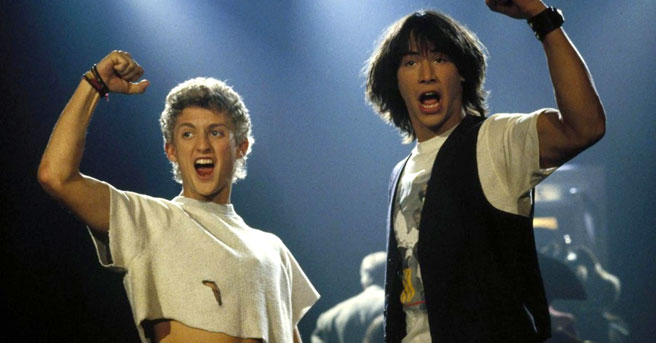
We revisit the making of Bill & Ted’s Excellent Adventure and explore why this movie stands the test of time so well.
Keanu Reeves has made a household name for himself. In the 90’s, he was the star of classics like Speed, Point Break, the movie that changed Sci-Fi action, The Matrix, and Bram Stoker’s Dracula (record scratch)…okay, so he wasn’t the best part of that movie. Let’s move along!
In mid-2010’s, he reinvented himself again as John Wick in the John Wick franchise. To this day, he’s kicking ass, taking names and getting us audience members to flock to the theatre and watch whatever he puts out.
As someone who grew up in the 90s, I would watch all his films. Two of them would stand out to me before The Matrix came out. The first and obvious choice was Speed. The other was Bill & Ted’s Excellent Adventure…a film that has stood the test of time. So let’s try to guess what number I’m thinking of, hit up the local Circle K and find out when did the Mongols rule China on this episode of Revisited, which is written, narrated and edited by Ric Solomon.
In this video, we dig into how a low-budget comedy that sat on the shelf for a year ended up grossing four times its budget, spawning a sequel that includes (to date) two sequels, two tv shows, a comic book series, video games and more. Were Alex Winter and Keanu Reeves always the top choices to play Bill S. Preston Esq and Ted “Theodore” Logan? And when its production company went bankrupt, did Bill & Ted almost end up stranded on the shelf, permanently? We dig into all of that, so check out the video and make sure to let us know in the comments how you think Bill & Ted’s Excellent Adventure holds up all these (many) years later.
Bill & Ted’s Excellent Adventure has the following synopsis: Bill (Alex Winter) and Ted (Keanu Reeves) are high school buddies starting a band. However, they are about to fail their history class, which means Ted would be sent to military school. They receive help from Rufus (George Carlin), a traveler from a future where their band is the foundation for a perfect society. With the use of Rufus’ time machine, Bill and Ted travel to various points in history, returning with important figures to help them complete their final history presentation.
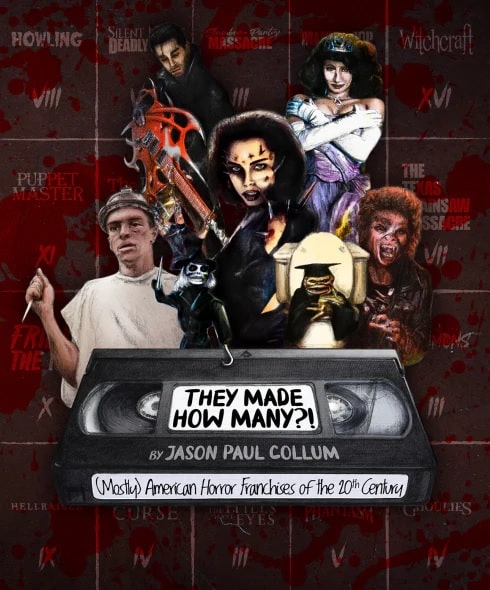
Horror fans may be familiar with the name Jason Paul Collum. He has written, directed, produced, and/or acted in multiple films over the last thirty years, including Safe Inside, October Moon, November Son, and the documentaries Something to Scream About, Sleepless Nights: Revisiting the Slumber Party Massacres, and Screaming in High Heels: The Rise & Fall of the Scream Queen Era. He has also written the book Assault of the Killer Bs: Interviews With 20 Cult Film Actresses – and this month, a new Jason Paul Collum book has been published. It’s called They Made How Many?! (Mostly) American Horror Franchises of the 20th Century, and it’s a 654 page look at the many horror sequels that were made in the 1900s. Copies can be purchased at THIS LINK.
They Made How Many?! (Mostly) American Horror Franchises of the 20th Century has the following description: The Howling 8. Children of the Corn 9. Witchcraft 16. Amityville 41 (legally?). Horror sequels have existed for over 100 years, dating back to at least The Golem (1915) and its first sequel, The Golem and the Dancing Girl (1917). Originally a rarity and often looked down upon as lesser-than films, sequels within the genre exploded in popularity in the 1980s when video rental stores needed product to fill their empty shelves. A phenomenon around the world, sequels to any successful title guaranteed a profit for producers. These often direct-to-video installments were also quickly forgotten. This collection covers practically every American horror franchise from silent films of the early 1900s to the year 1999, with a few foreign exceptions that found equal fame in the U.S. Along for this nostalgic ride are the thoughts and recollections of many of the cast and crew members who brought them to theaters and TV screens for multiple generations to enjoy.
As someone who owes their horror fandom to the many sequels of the 1980s, this book sounds like a fun idea and a must-read to me.
Will you be picking up a copy of They Made How Many?! (Mostly) American Horror Franchises of the 20th Century? Let us know by leaving a comment below.
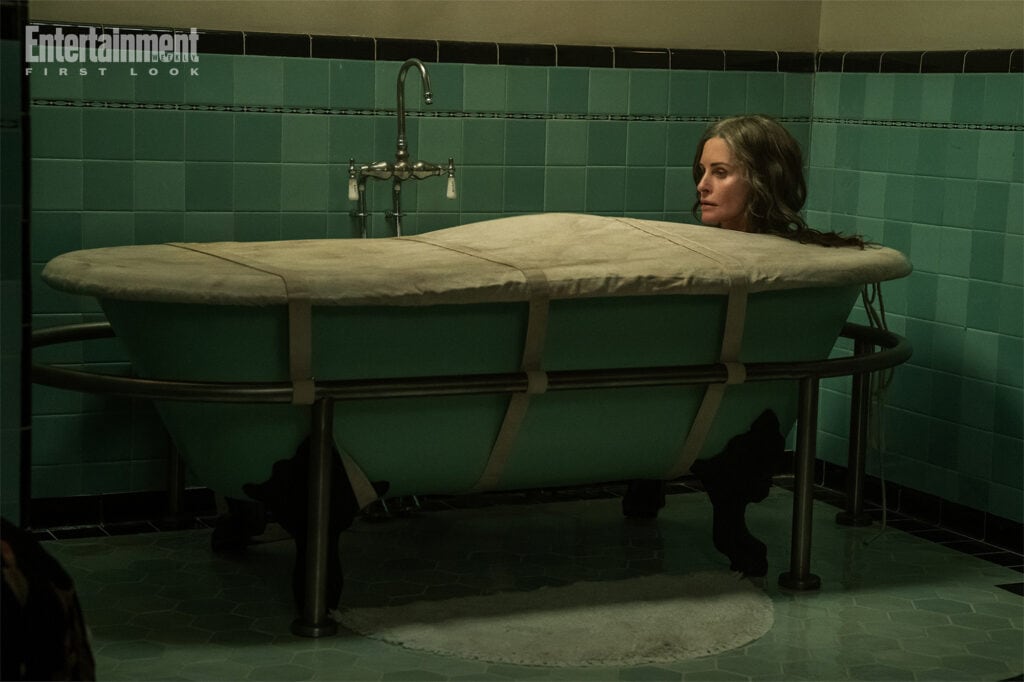
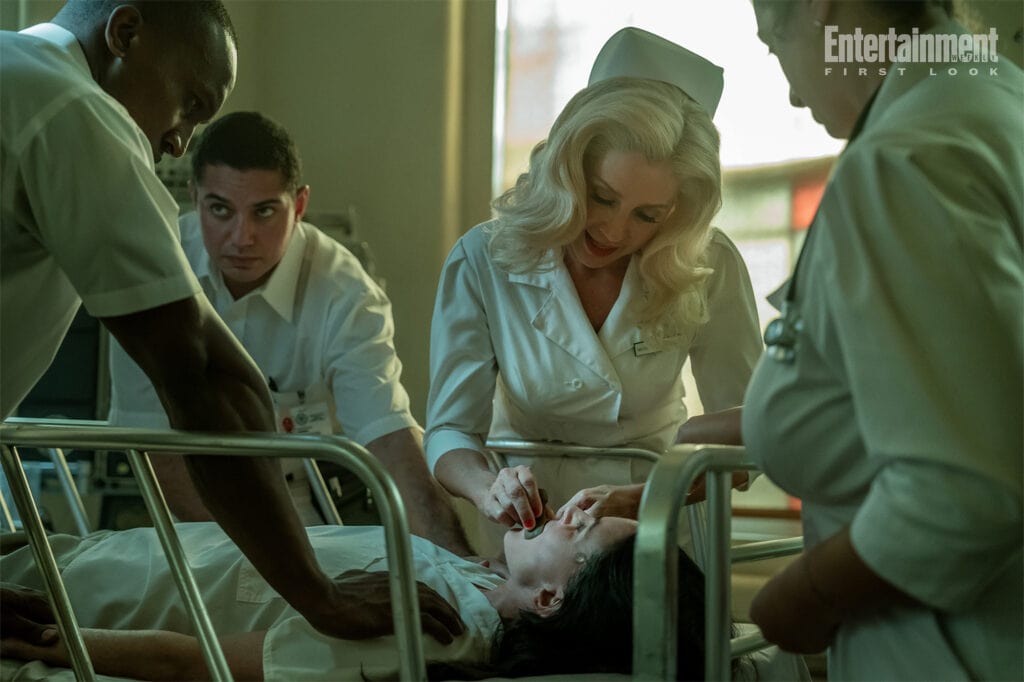
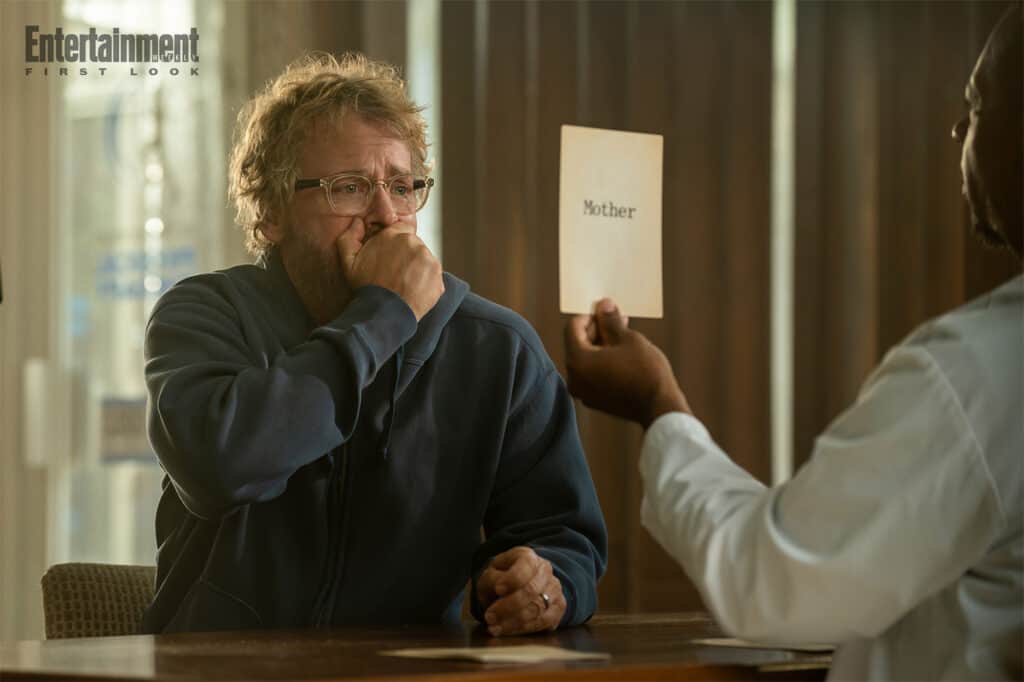
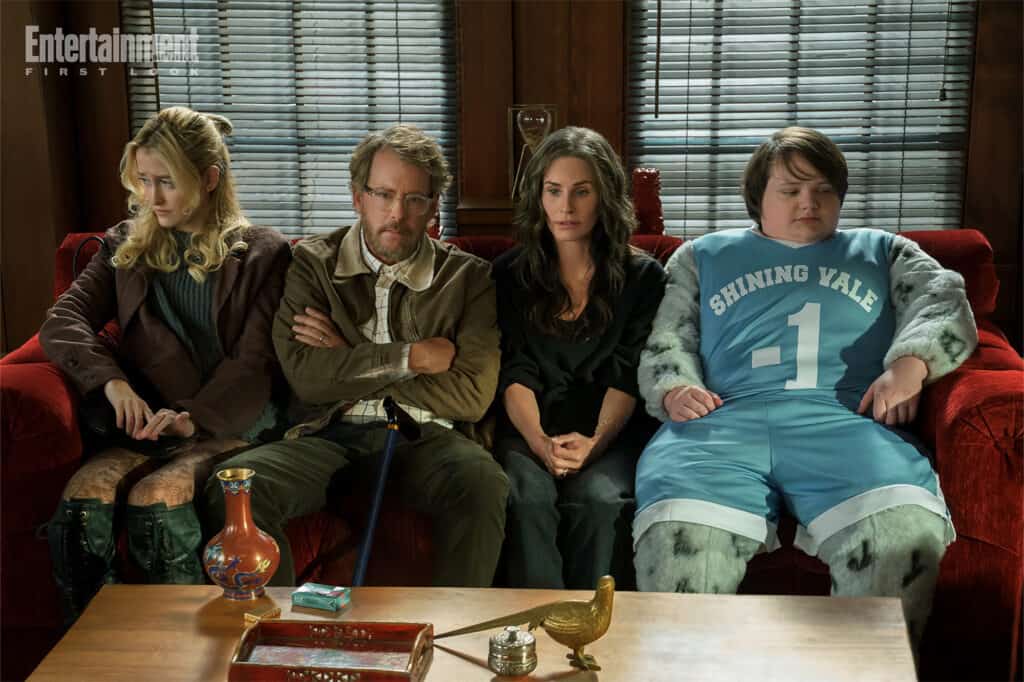
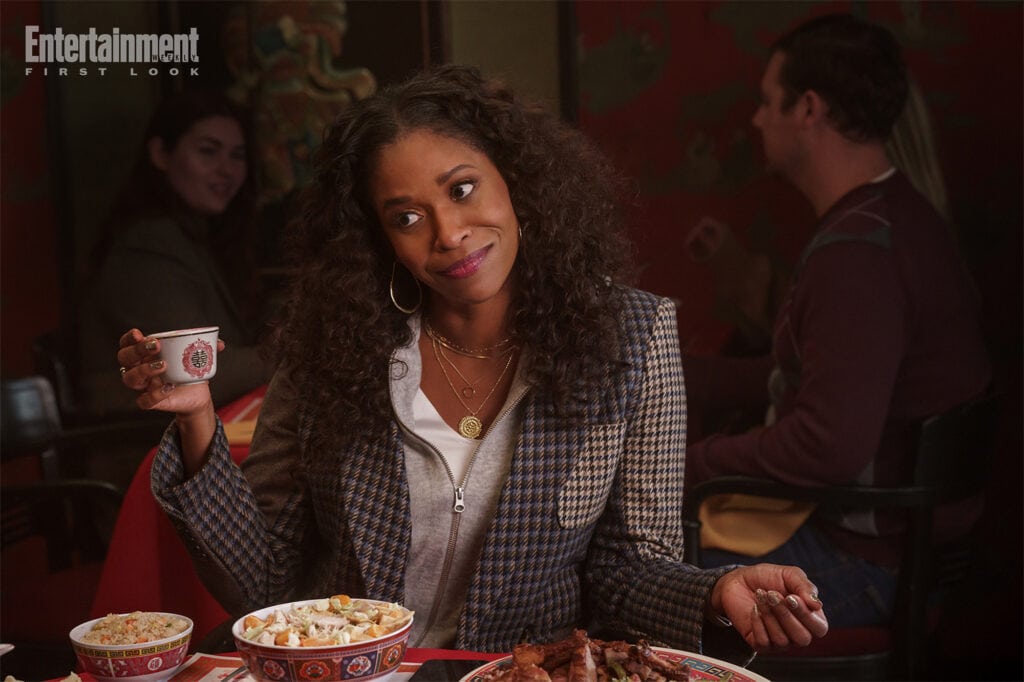
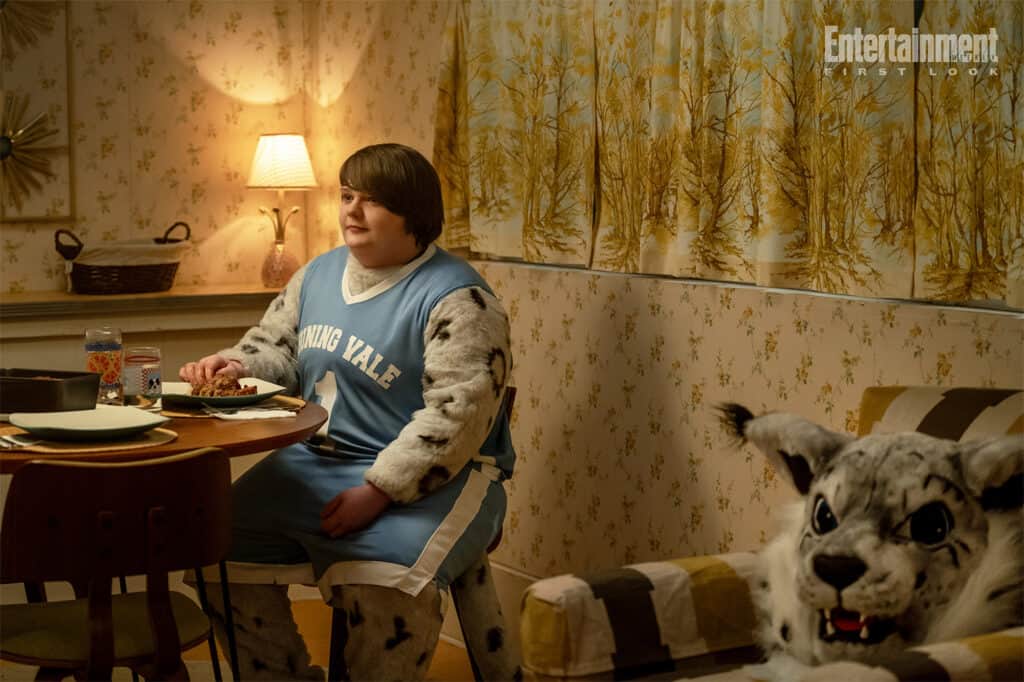
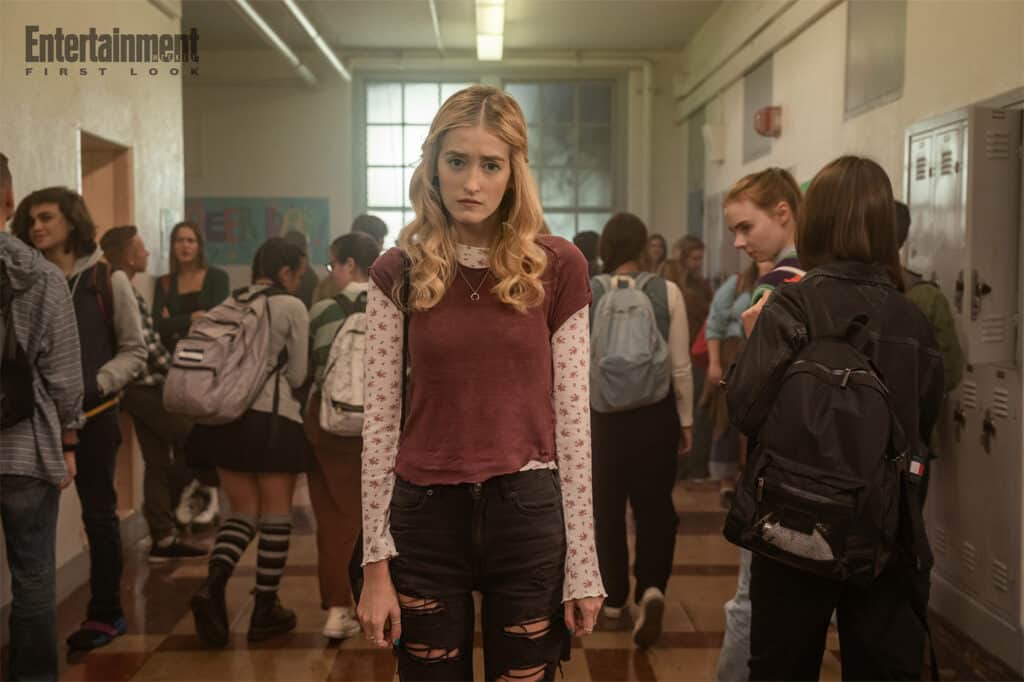
The horror comedy series Shining Vale premiered on Starz back in March of 2022 – and just when I was starting to wonder if the show was turning out to be “one season and done”, Entertainment Weekly has gone ahead and broken the news that Shining Vale season 2 is scheduled to begin airing on Friday, October 13th! Along with that confirmation comes the unveiling of some first look images from the new season, and you can check those out at the bottom of this article.
Created by Jeff Astrof and Sharon Horgan, the first season of Shining Vale followed a dysfunctional family that moves from the city to a small town into a house in which terrible atrocities have taken place. But no one seems to notice except for Patricia “Pat” Phelps, who’s convinced she’s either depressed or possessed – turns out, the symptoms are exactly the same. Pat is a former “wild child” who rose to fame by writing a raunchy, drug-and-alcohol-soaked women’s empowerment novel (a.k.a. lady porn). Fast forward 17 years later, Pat is clean and sober but totally unfulfilled. She still hasn’t written her second novel, she can’t remember the last time she had sex with her husband, and her teenage kids are at that stage where they want you dead. She was a faithful wife until her one slip-up: she had a torrid affair with the hot, young handyman who came over to fix the sink while Terry was at work. In a last-ditch effort to save their marriage, she and Terry cash in all their savings and move the family from the “crazy” of the city to a large, old house in the suburbs that has a storied past of its own. Everyone has their demons, but for Pat Phelps, they may be real.
Shining Vale stars Courteney Cox as Patricia “Pat” Phelps, Greg Kinnear as Pat’s husband Terry, Merrin Dungey as Pat’s friend and book editor Kam; Gus Birney and Dylan Gage as Pat and Terry’s teenage kids Gaynor and Jake; Mira Sorvino as Rosemary, “who is either Pat’s alter ego, a split personality, her id, her muse, or a demon trying to possess her”; Sherilyn Fenn as realtor Robyn Court; and Judith Light as Joan, “Pat’s Lithium-infused mother, who has long battled mental illness, and her daughter… (who she blames for her mental illness). Joan is vain and hyper-critical, taking any opportunity to recall her prized youth, or belittle Pat. Of all the horrors that Pat faces, becoming Joan is the most frightening – and most real.”
The first season ended with Pat being committed to a psychiatric hospital. Season 2 picks up four months later, when Pat’s insurance runs out and she is released from the psychiatric hospital early. She returns home, determined to pick up the pieces of her broken family, but she quickly finds out her children don’t need her, Terry doesn’t remember her, and to make matters worse, Pat’s new neighbor Ruth looks exactly like Rosemary. As if that wasn’t enough, the house starts to reveal the shocking secrets of its dark past.
Shining Vale is produced by Lionsgate and Warner Bros. Television, in association with Aaron Kaplan’s Kapital Entertainment, Astrof’s Other Shoe Productions, and Horgan and Clelia Mountford’s Merman. Astrof, Horgan, Mountford, Kaplan, and Dana Honor are all executive producers, while Cox is a producer. The pilot episode was directed and executive produced by Dearbhla Walsh.
Did you watch the first season of Shining Vale, and will you be tuning in for season 2? Let us know by leaving a comment below.
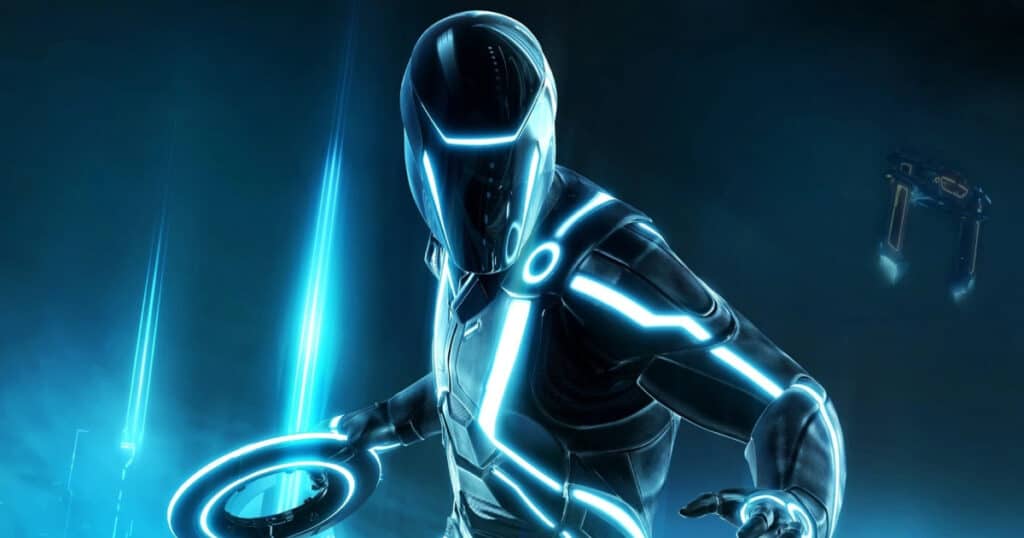
Tron: Ares has fallen victim to the dual strikes by SAG-AFTRA and the WGA, which its directors says has made things that much harder.
The ongoing SAG-AFTRA strike, now in its second month, has claimed yet another victim, as Tron: Ares has officially been delayed the same week it was set to begin filming. Coming hot off the news, director Joachim Rønning has expressed his frustrations on social media, urging there to be a better “safety net” as SAG-AFTRA and WGA (whose own strike has exceeded 100 days so far) continue to be in a stalemate with the AMPTP, the group at the center of both strikes.
The delay of Tron: Ares will result not just in a calendar shakeup but the loss of jobs for around 150 crew members. As such, director Rønning has not minced words on his take. As per The Hollywood Reporter, “Today was supposed to be our first day of principal photography on TRON: ARES (a movie subsequently about AI and what it means, and takes, to be human). Instead, we are shut down with over a hundred and fifty people laid off. It’s indefinite, which makes it exponentially harder for everyone…The AMPTP, SAG-AFTRA and WGA need to speed up the negotiating process and not leave the table until it’s done. This is Hollywood. We close deals for breakfast. Why do we suddenly have all the time in the world when every day is so precious? These tactics are extremely frustrating. It’s time for diplomacy so we can get back to work – under conditions that are fair to everybody #amptp #sagaftra #wga”. That Tron: Ares centers around artificial intelligence is quite interesting, considering the topic is a major point in negotiations for both unions. You can read his full statement from Instagram below:
Tron: Ares is set to be the third movie in the Tron franchise following 1982’s original and 2010’s Tron: Legacy. It had been building its cast for some time – recently adding Cameron Monaghan (Shameless, Gotham) and Sarah Desjardins (Riverdale, Yellowjackets) to the already-cast Jared Leto, Evan Peters, Jodie Turner-Smith, and more – building as best as they could in the excitement, although fans would much rather see Jeff Bridges, Garrett Hedlund and Olivia Wilde in the cast. Most would probably want to see how Cillian Murphy could expand his Legacy cameo as well.
Do you share Joachim Rønning’s sentiments about Tron: Ares being delayed because of the strikes? Are you still looking forward to the threequel? Give us your thoughts in the comments section below.
It’s a bit hard to believe now, but once upon a time… a new Star Wars movie coming out was a huge deal. Nowadays, thanks to several movies and an onslaught of TV shows, the Star Wars brand is omnipresent, and not going anywhere anytime soon. But after the 1983 release of Return of the Jedi, there was a Death Star-sized void in the Star Wars galaxy, one that seemed like it would never be filled. When it became obvious in the mid-90s that George Lucas intended to bring his long rumored prequel trilogy to life, there was no doubt movie fans young and old felt like the Force was strong with us, maybe more so than ever before.
The Phantom Menace was to be the first of the three, and in 1999 it entered our world as perhaps the most highly-anticipated movie ever released. This thing came loaded with expectations – expectations that might’ve been impossible to meet. But most people just wanted to be back in that far away galaxy, revisiting familiar characters and worlds while acquainting ourselves with brand new ones. A new Star Wars movie – could you believe it?! And though it would be telling a tale that many of us already knew – at least, thought we knew – there was no denying that the very idea we’d be seeing that iconic crawl on a big screen, accompanied by that gloriously loud boom of John Williams’ theme, was tremendously exciting, prequel or not. Hell, the word prequel itself was something of a novelty, not nearly as commonplace as it is now.
And if we were indeed going back in time, then at least we’d be seeing the origin story of one of cinema’s most memorable villains. We’d heard the name Anakin Skywalker plenty of times, we knew he was Luke’s father and Obi-wan’s apprentice and friend before being turned into the monstrous Darth Vader by the Emperor, but what exactly would that transformation look like? The notion of witnessing Anakin’s devolution from hero to evil henchman was indeed a compelling one, as was the idea of seeing the badass Obi-wan was long before we met him.
I’ll not bore you with the details of this writer’s first time seeing Phantom Menace other than to say I saw it at three in the morning at Manhattan’s legendary Ziegfeld theater opening day – well, opening morning. That should give you an idea of the level of anticipation coursing through these veins. Being in a sold out theater filled with fully-awake fanboys and girls at that ridiculous hour was a genuine treat… For a while…
No friends, I did not like Phantom Menace that first fateful viewing. Nor did I like it the second, or the third time. We’re not going to dwell on the past, just consider it some added context.
Because recently I revisited Episode One for the first time in a long while for the purposes of this “Star Wars Revisited” series, and what better reason? As was the case with the original trilogy, it’s nearly-impossible to watch the film with a set of “quote unquote” fresh eyes while shoving aside all prejudices and grievances, but it deserves as fair a shot at reevaluation as any movie out there, especially considering it’s arguably the most divisive movie in the franchise. Alright, maybe it’s tied with The Last Jedi on that front… So does “The Phantom Menace” look a little different with all those pesky expectations out of the conversation?
Well, here’s the deal. Phantom Menace is still a tough pill to swallow. Scene after scene brings the hope that George Lucas will get the movie on track, get some juvenile humor and caricatures out of his system early, deliver a narrative that brings more to the table than boring bureaucracy and standard getting-to-know-you character introductions. But he never does. The movie is meant to a table-setter, there’s no doubt about that, with Lucas setting the stage for dire future events like the unraveling of the Republic and the extermination of the Jedis – not to mention Anakin’s tortured embrace of the dark side.
But at almost every turn, Phantom Menace is a stiff, unexciting affair, filled with actors who look like they’re trying hard to find inspiration in situations they seem uncomfortable in. When the movie comes to life, it’s because of elaborate visual effects, not because characters we love are doing things we have a vested interest in. The original Star Wars movies are so unique in how they combine eye-popping spectacle with humor, heart, and wonderful personal moments, major and minor. The Phantom Menace never seems to have a beating heart, and when it strives for the big emotional beats that truly grab the audience, it flops, usually thanks to some dodgy acting, inane dialogue and uninspired directing.
This was George Lucas’ first directorial effort since the original Star Wars came out in 1977. We know he was always very closely involved with most of his Lucasfilm Productions, but returning to the director’s chair after a twenty-year hiatus clearly has its challenges. Right off the bat, Lucas shows rust, opening with sequences that look like they were designed to show off CG production design as opposed to involving us in story. There’s a boring formality to the way he composes shots early and often, and you can’t help but blame his over-reliance on shooting in front of green-screen stages for that. Of course, now we know it’s very possible to rely on CGI and green-screens and still deliver a well-directed picture, but Lucas doesn’t seem to have any interest in composing an engaging image within the frame. He’s going to let the wizards at ILM do all the heavy lifting, and the movie’s small handful of stimulating sequences feel as though they were handled by the second unit.
But the director also needs to be in charge of his actors, and he has trouble in that department too… Even during his New Hope days, Lucas wasn’t known as an actor-friendly director, yet he gets marvelous performances from pretty much all involved in that film, and if you take a look at his previous flick, American Graffiti, there’s further proof of a genuine talent with a knack for getting the best out of his ensemble. Sadly, the performances in Phantom Menace are adequate at best, thoroughly unimpressive at worst. That goes for humans and aliens alike.
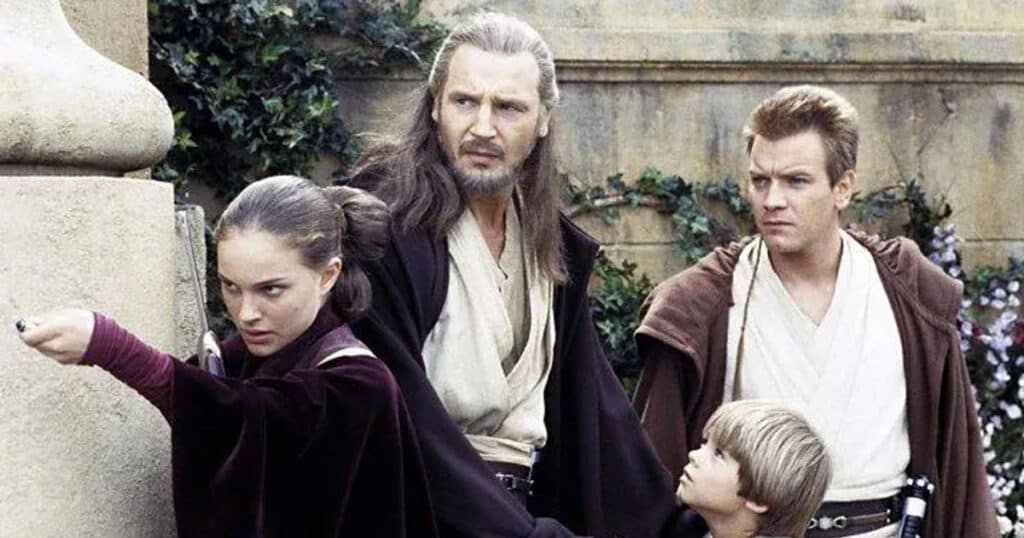
Liam Neeson and Ewan McGregor are naturally charismatic actors, and that natural screen presence goes a long way here, but Neeson often looks like he has very little investment in what’s going on, while McGregor tries gamely to boost up an underwritten role. Natalie Portman too seems no match for Lucas’ humdrum dialogue and indifferent direction. Even Sam Jackson is slightly off, frequently looking perplexed by his assignment even though we know he genuinely coveted the opportunity to play a Jedi.
The most human performance probably comes from Ian McDiarmid, who appears pleased as punch to be back in action as Palpatine – here depicted as an amiable politician who effectively hides a very dark side. McDiarmid has some fun with the role and consistently brightens up the screen when he’s around, which isn’t often enough. Also effective is Pernilla August as Anakin’s somber mother; if Lucas is able to wring any actual drama out of the sad situation Anakin and Shmi are in, it’s thanks to August’s heartfelt performance.
And as for Jake Lloyd… Look, we’re not here to pile on him. No one should be mad at Lloyd for his performance; playing a young Anakin Skywalker was going to be a challenge for any young actor, and it’s quite obvious early on that Lloyd isn’t up to the task. Again, the blame must be squarely on Lucas’ shoulders for casting Lloyd in lieu of someone else who might bring some spirit to the part. This is young Darth Vader we’re talking about here, and even though we meet him as an innocent child, there should at least be a little bit of an edge to him – especially considering the Jedi council’s wariness surrounding his apprenticeship. Watching him, all we can think is: “This guy is gonna be Darth Vader?”
We’re also not going to pile on Jar Jar Binks – not too much, anyway. He’s received twenty-plus years of relentless bashing and that’s been plenty. But for the purposes of this Revisit, let’s not mince words: Jar Jar is a ridiculously ill-advised and unwelcome element in Episode One. To say this movie is often in dire need of some comic relief in it is to understate matters, but Jar Jar is not the solution. He makes the silliness of C3PO look positively dignified, although if we can give any kind of compliment to the legacy of Jar Jar, it’s that you can’t deny Ahmed Best – the actor playing him – is bringing all the energy he can muster to the forefront. Lucas was always adamant that Jar Jar and his shenanigans were aimed at a younger audience, and maybe he does indeed work for that demographic, but you can’t convince me this was the best we could do.)
And the less said about Boss Nass, the better.
These characters are thrust together in a story that takes a painfully long time to generate any kind of intrigue. The pressing issue at hand has to do with the Trade Federation, its blockade of Naboo, and its conspiracy with the dreaded Darth Sidius, who is using them as pawns in his quest to control the galaxy. As mentioned already, this movie is meant as a table-setter for the rest of the trilogy, but the Trade Federation storyline is a non-starter; even if it’s necessary in the grand scheme of things, it completely bogs the movie down whenever it’s the focus. Add to that, the Trade Federation characters, the Neimoidians, are thoroughly dismal creations – we take them no more seriously than we do Jar Jar, and they’re supposed to be the main antagonists of the piece.
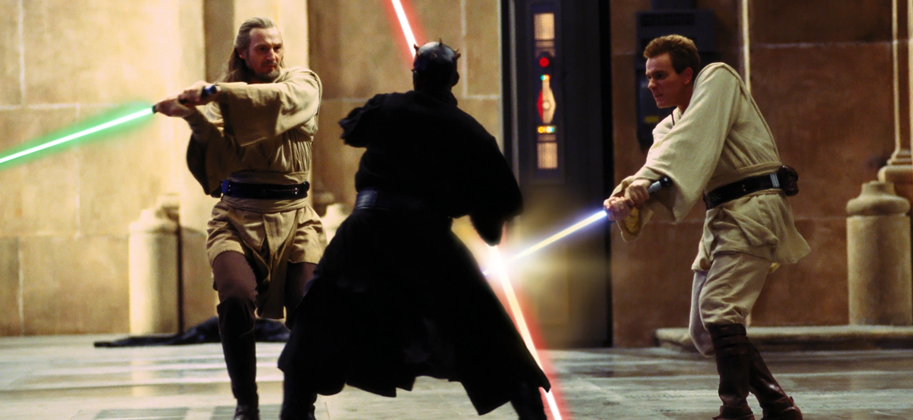
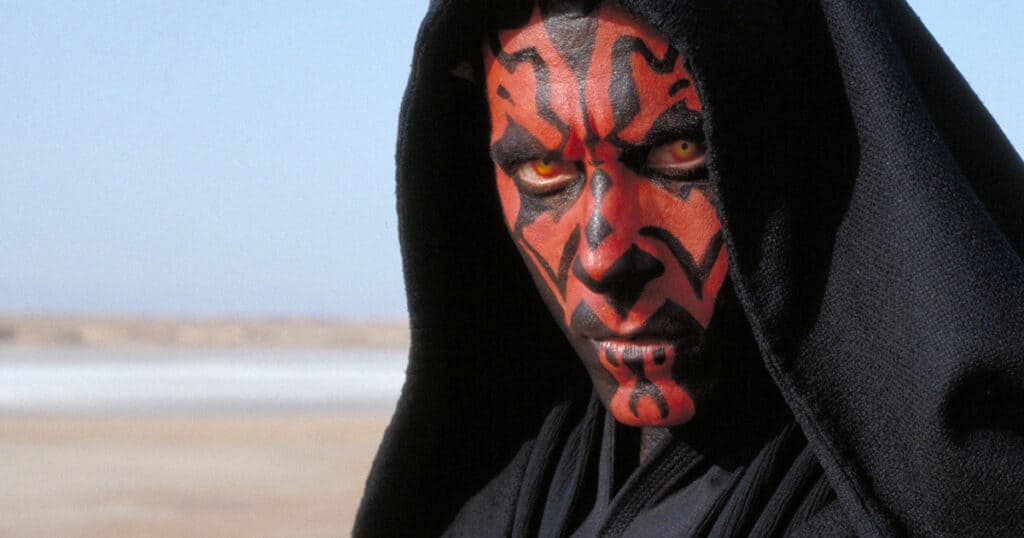
But that brings us to another looming issue for Phantom Menace. There really are no villains to root against. The Trade Federation obviously can’t fit the bill, and Darth Sidius is more of a vague threat than tangible bad guy. That leaves us with Darth Maul, who received so much hype prior to the film’s release. The promise of Darth Maul being a flashy new baddie in the Star Wars universe was very enticing, but the movie barely utilizes him at all. He’s in one fairly unexceptional dust-up with Qui-Gon in the middle of the film, and then he gets his big moment in the third act with a rousing lightsaber duel against the Jedis. The movie’s best sequence, it brings life to Phantom Menace at a critical time – though of course it’s frustratingly intercut with the bumblings of the Gungans and Anakin alike. Just when we’re getting used to Darth Maul as an intimidating foe, he leaves the premises in pieces, and we bid adieu to the most captivating character in the film. The fact that his death hits harder than Qui-Gon’s really tells you something.
The third act has another saving grace, and that’s John Williams’ “Duel of the Fates,” a great track that still maintains immense power. Williams’ score for Phantom Menace overall is far from his best, but “Duel of the Fates” just about makes up for it. He would go on to do much more memorable work in the next two prequels, however, once again becoming one of the main MVPs for the “Star Wars” series.
In purely visual terms, Phantom Menace brings some superficial pleasures; Naboo – above and below the surface – is a lovely place to look at, and ILM’s artists frequently give us enjoyable sights such as the frightful underwater monsters Qui-gon and Obi-wan encounter. The pod race is also an entertaining set piece, even if it does feel like it’s just filling time and giving us a sorely-needed action sequence in a movie that, until that point, hasn’t been very thrilling.
When it’s all over, and the droid army has been temporarily defeated and Boss Nass holds up that glowing orb thing, there’s a surreal feeling that comes over those of us who’ve been disappointed by the experience. For better or worse, this is how the prequel trilogy begins: it has established the core of our main protagonists moving forward, introduced a lot of excitable cartoon characters, and made us privy to more otherworldly politicking than was expected. There’s no doubt that we can only go upward from here… Right?
To be fair, several of our viewers will disagree with the overall tenor of this review, and that’s understandable. Through the years I’ve met plenty of Star Wars fans who enjoy – or at the very least, accept – The Phantom Menace. No one wanted it to be great some twenty-plus years ago more than this writer, just as I wish it contained a number of happy surprises and pleasures upon a revisit. It does not, not for me.
But it’s not a bad thing that the movie has its fervent supporters. A generation of geeks grew up with the prequel trilogy as their focal point in all things Star Wars, folks who couldn’t imagine a world without Phantom Menace and will absolutely go to bat for the film time and time again. Love it or hate it, Phantom Menace is an integral part of this very special corner of the galaxy. It’s a part of who we are, and you can’t take that away from it…