Katie Holmes doesn’t expect there to be a Dawson’s Creek reunion, partly due to today’s society and social media.
Paula Cole isn’t the only one who doesn’t want to wait, as Dawson’s Creek fans have been hoping for a reunion for some time. And now that such fare is more popular than ever and this marks the 20th anniversary of the series finale, talk has again emerged from the creek.
During a discussion at this year’s Cannes Film Festival, Joey Potter herself, Katie Holmes, addressed the idea of a Dawson’s Creek reunion. Unfortunately for fans of the teen drama, Holmes isn’t all that confident, despite some minor chatter. “There have been many discussions over the years. We all loved the experience…We’ve often talked about it…For now, we kind of just keeping saying that until there is a real reason to do it, it hasn’t been something where people have said, ‘This is the take on it.’”
Even if there was a Dawson’s Creek reunion, there is some doubt that it wouldn’t work in today’s society. “There’s a protection that comes along with the discussion. The show was a time capsule. To put it into today’s world might tarnish it a little bit. It was right before everyone had a phone and social media and all of that, so there was an innocence that was there between the characters that was one of the things I think people liked about the show. To put it into the setting of today’s world, I’m not sure.” She may have a point. Remember the time Dawson got super drunk and fell face first into his own birthday cake? Every background character would have been recording and posting to r/facepalm instead of just living in that glorious moment.
Holmes spoke last year about the potential of a Dawson’s Creek reunion, saying, “I think it’s great that you are nostalgic for it. So am I. But it’s like, do we want to see them not at that age? We all decided we don’t [want a reboot] actually,” she said, supposedly indirectly citing co-stars James Van Der Beek, Joshua Jackson, and Michelle Williams. [Insert Dawson crying meme here] And so while we may not get the reunion we all want, we did at least get “Run Like Mad” removed, so we have to take victories when we can.
Dawson’s Creek ran on The WB from 1998 to 2003, with 128 episodes during the six-season run. The show is often credited with popularizing teen dramedies.
Would you like to see a Dawson’s Creek reunion? Would it work in 2023?
The Inland Empire episode of Revisited was Written, Narrated, and Edited by Mike Conway, Produced by Lance Vlcek and John Fallon, and Executive Produced by Berge Garabedian.
What defines a horror movie? Traditionally, it’s a genre meant to scare and thrill the audience by way of tension and illicit our darkest fears. The most popular of these are ones treated like an amusement park ride. You hand in your money for price of admission and hope for nothing but the best the ride promises to offer. Slashers and jump scare fueled films have long dominated the box office and the very best of them have earned a well-deserved cult status. It’s a genre which can be likened to a comfort food for many of us gorehounds and recently there have been quite a resurgence to fill our bellies. But that’s not all horror has to offer. The term elevated horror has been thrown around quite a bit recently which removes the horror standard of jump scares and kills and replaces it in a more metaphorical sense to dig even deeper into our psyche to bring out our true fears. I bring this up because whenever you hear the name David Lynch, do you associate his name with horror? He has brought us classic upon classic with films like Blue Velvet, Twin Peaks, Lost Highway and even the underrated G rated Disney film The Straight Story. But when you really take a look into his more celebrated filmography like the masterpiece Mulholland Drive, it is a film which has all the qualities of elevated horror, but gets targeted as a mystery or thriller. Probably because the Academy sneers its nose at the genre. I mean, come on…Silence of the Lambs is clearly a horror movie.
But today’s subject is a different beast. It’s one that took a chance and the themes of Mulholland Drive and amped up the Lynchness to 11. Have you ever walked out on a film and asked the question “what the hell did I just watch?” Well, friends, I’m here to hopefully answer that question revisiting David Lynch’s Inland Empire (get it HERE).
Before I continue on, be warned this is full of spoilers where I will pretty much speak of the film’s major plot points all the way up to the ending.
“A Woman in Trouble.” That’s the tagline to the movie and pretty much the only thing Lynch answers when asked exactly what the movie is about. As with pretty much his entire filmography he provides the viewer with a surrealistic mind-bending experience which, more than likely, would require multiple viewings to fully understand. But Inland Empire? That’s on a whole different level.
During its three-hour run-time, only about a third of it consists of a straight-forward story. Fading actress Nikki Grace gets the role of a lifetime in a film called On High in Blue Tomorrows alongside womanizing co-star Devon Berk. They soon learn the film is actually a secret remake of an unfinished Polish film called 47, which was abandoned due to the two leads being murdered. Eventually, the two actors begin an affair. However, Nikki’s world starts to blend with that of the film, making it difficult to distinguish what is and what isn’t real. And that, my friends, is where the coherent story ends. Let’s jump back to the beginning.
Inland Empire begins with a shot of an old vinyl playing a broadcast of Axxon N, the longest radio play in history. From there, we see a crying woman known as The Lost Girl watching an eerie sitcom about a family of rabbit people. These rabbits speak in sentences which don’t make sense and is accompanied by random laugh tracks and applause. We will come back to these two stories in a bit.
Back in the real world, an older and disoriented woman stumble onto Nikki’s doorsteps, introducing herself as a new neighbor. The two women begin to talk about the film Nikki auditioned for to which the woman replies she knows for a fact she scored the role. The woman then tells Nikki two stories. The first involves a young boy who opened a doorway to see the world, causing an evil reflection that follows him. The second is a variation of the tale about a girl who gets lost in an alley behind a marketplace. She hints that the movie Nikki auditioned for involves murder and if her husband, Piotrek, is involved in the production. As Nikki, and the audience for that matter, get increasingly confused by this woman’s comments, she adds she has trouble keeping up time. She then points across the room and tells her if it were tomorrow, Nikki would be sitting right there. The time then jumps to the next day when Nikki receives the phone call that she got the lead in the film. Meanwhile, her husband overlooks seemingly in anger. The two stories this woman tells could be chopped up as nonsense, but when we are dealing with Lynch, one would have to keep these pieces in mind for later.
Some time goes by and the film is underway. While on a talk show, Nikki learns her co-star Devon is a womanizer and the hosts asks if the two are going to have an affair with each other. One person who doesn’t take the joke lightly is Piotrek, who warns Billy there will dire consequences to his actions if he tries anything.
On the first day on set of the film On High in Blue Tomorrows during a table read, a disturbance is heard in the background of the set. Devon goes to investigate the noise, but nothing is found. It is here where the director tells the pair about the film being a remake, which in turn is based on a cursed Polish folktale. Later on, we see exactly what the disturbance was from the point of view of the intruder. The film then cuts to a frightened and distraught woman at a police station who says she was hypnotized by a man to kill someone with a screwdriver. That’s pretty much the gist of the scene, but again, we will come back to that in a bit, as it is relevant to the story. As the filming resumes, Nikki and Devon begin an actual affair and try hide it, even by calling themselves their character’s names, Billy and Sue. Talk about method acting. In an alley with a bag a groceries, Nikki sees a door with Axxon N marked on it. She enters and is now in the façade of a house from the film. She sees herself going over the script with her Devon and the director. On the other side of a window, her husband stares at Nikki, haunting her. The façade then changes into her character’s house in the suburbs and Nikki now has fully immersed herself as her character Sue. Still with me? Because this is where the nightmare and true horror of Inland Empire begins.
Over the course of the next two hours of this film, Lynch takes you through many settings through the essence of Nikki’s desperate soul. To dissect this film in its entirety could honestly take hours, but I would just like to point at the key moments which transpire. However, from here on to make things a little easier, I’ll refer Nikki and Devon to their character names.
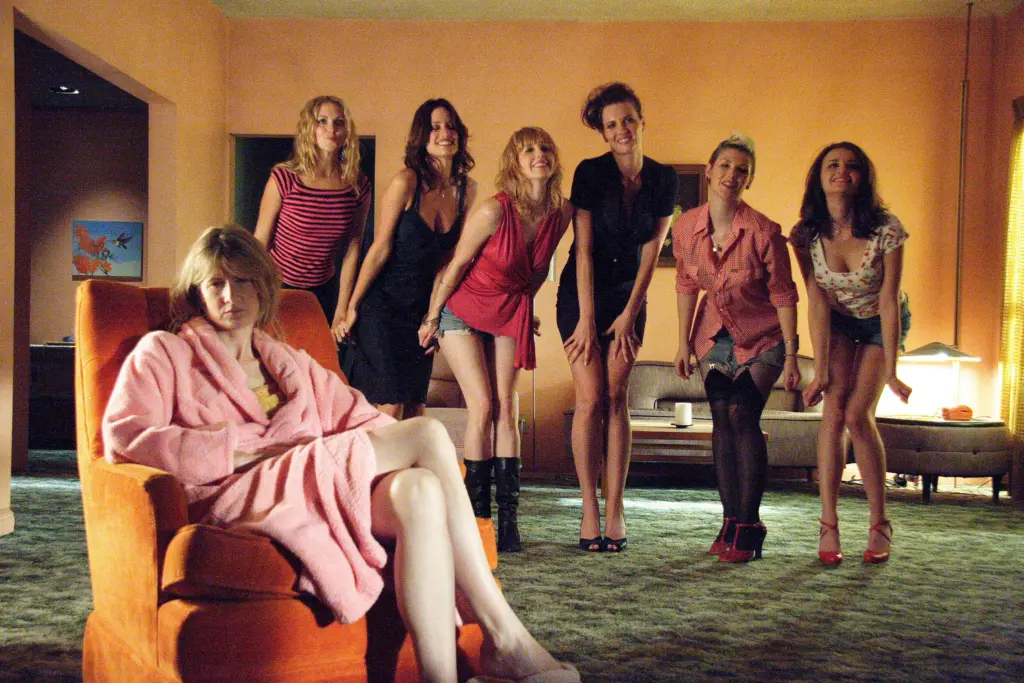
When Sue first enters her character’s home, she is greeted by a troupe of prostitutes. They all speak of a certain man whom they have all shared at one point. Thinking they are talking about Billy, she tries to hide her eyes from them, but when she opens them again, she is now in 1930s Poland working as a prostitute. Meanwhile the Lost Girl from the beginning is watching this as if it were part of a TV show with the Axxon N radio play continuing to spin, acting as a portal between Sue and the Lost Girl. She transports back to the current time where she eventually speaks to a policeman about her troubled past and how her husband left for a traveling circus from Poland. She’s also worried about a man she refers to as The Phantom, a hypnotist from the circus who had disappeared. She leaves for Los Angeles to Billy’s mansion to profess her love for him. However, his wife Doris is there. The same woman who had claimed to be hypnotized to kill someone with a screwdriver.
Now on the streets of LA, Sue meets up with the prostitutes where she herself mockingly admits to being one herself. She then sees Doris, now dressed as she had from the interrogation scene earlier, coming after her. She escapes, but ultimately gets stabbed and slowly dies on Hollywood Boulevard amongst the homeless.
Suddenly, we hear “cut” from the director as the camera pulls back, revealing it to be the final scene of On High in Blue Tomorrows. Sue, now Nikki, is confused to what is going on and wanders off onto the Paramount lot. However, she sees a camera is still lingering on her as if she is continuing to be cursed to live a repeating nightmare. In an alley, she sees the Axxon N doorway leading back to Sue’s home where she grabs a gun. In the distance, The Phantom stalks her and approaches her as she reaches a door labeled 47. She fires at The Phantom, causing his face to morph into the most goddamn horrifying image that will stick with you. Watching this all transpire in real-time; The Lost Girl sees Nikki enter her room. The two share a kiss and Nikki disappears. This finally frees The Lost Girl from the locked room where she sees her husband, Smithy and their son. The curse continues.
Like Lost Highway and especially Mulholland Drive, Inland Empire takes a complete 180 from reality and enters a realm where everything at first glance feels like every possible bizarre idea was thrown at the wall to see what sticks. Since the film’s release in 2006, there have been countless articles, essays and videos on people’s theories on exactly what this film is. But the beauty of it is, there is no right or wrong opinion. And honestly, my thoughts vary every now and then.
On one hand, you could interpret everything which occurred after the strange neighbor in the beginning all in Nikki’s head. Both of the brief stories she tells are reflections of the events of the final two hours. Nikki places herself in the shoes of the characters in her neighbor’s stories and envisions what would happen if she actually took the role. But that’s too easy of a conclusion.
Another is to look at the film as a metaphor on the lengths method actors will go for the sake of art. Such great lengths that they could easily be lost in the role. Not to the extent of Laura Dern’s character, of course. The Lost Girl represents us, the audience watching these actors fully transforming into their roles right before our eyes. The power of cinema is that it can take you on a journey from a world you don’t feel like yourself in to a better place where for over the course of a couple hours, you are that very character as well. It’s an escapism that can have such an impact on you, that it can help you rethink the way you look at the world.
Finally, you can look at it just the way it is. There is indeed a curse where multiple people are reliving a nightmare over and over in different versions of themselves. The Rabbits are deities who act like they are helping The Phantom, but are actually trying to destroy him to rid the curse once and for all. Throughout the film, they transform into real people who give clues and guides Nikki to find The Phantom without her even knowing it. After she finally kills him, she enters and emptied room where the Rabbits were, only now instead of a laugh track, she is greeted with applause.
Maybe it’s all three. Or maybe it’s just simply about a woman in trouble.
If this is indeed Lynch’s final theatrical film, then I’d say he went out with his horrifying version of Sunset Boulevard. Even amongst the more hardcore David Lynch fans, Inland Empire has polarizing responses. But as for me, it’s one that I always come back to analyze the most. It’s not a masterpiece like Mulholland Drive, but it’s pretty damn close. And that’s why I’m giving this film a 9 out of 10.
What are YOUR thoughts or interpretations of Inland Empire? Let us know in the comments and we will see you again for the next one.
Two previous episodes of Revisited can be seen below. To see more of our shows, head over to the JoBlo Horror Originals channel – and subscribe while you’re at it!
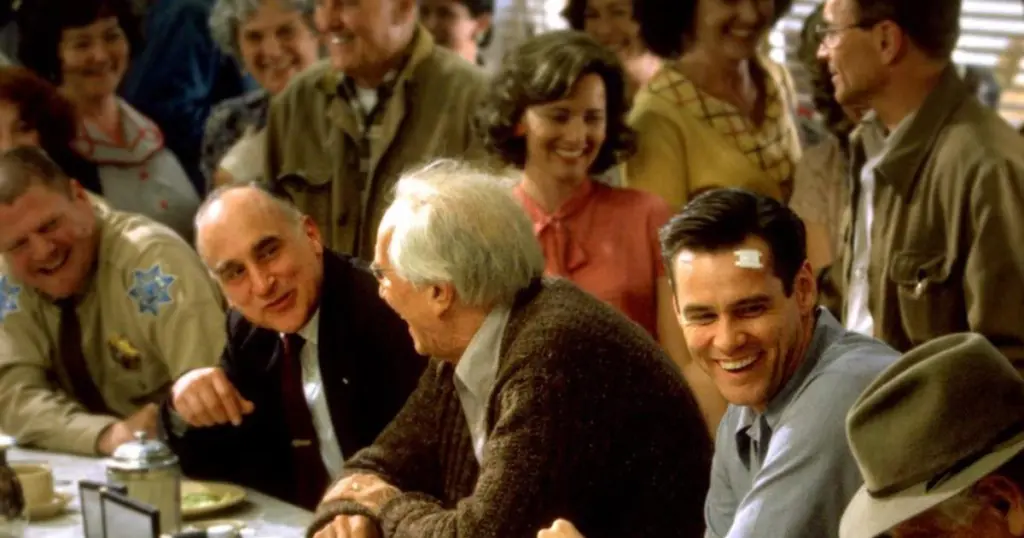
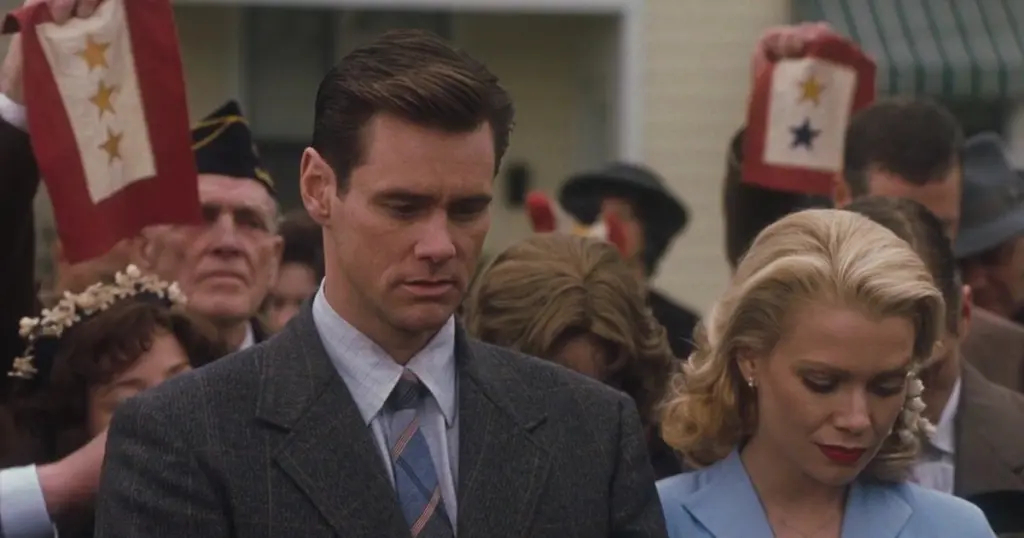
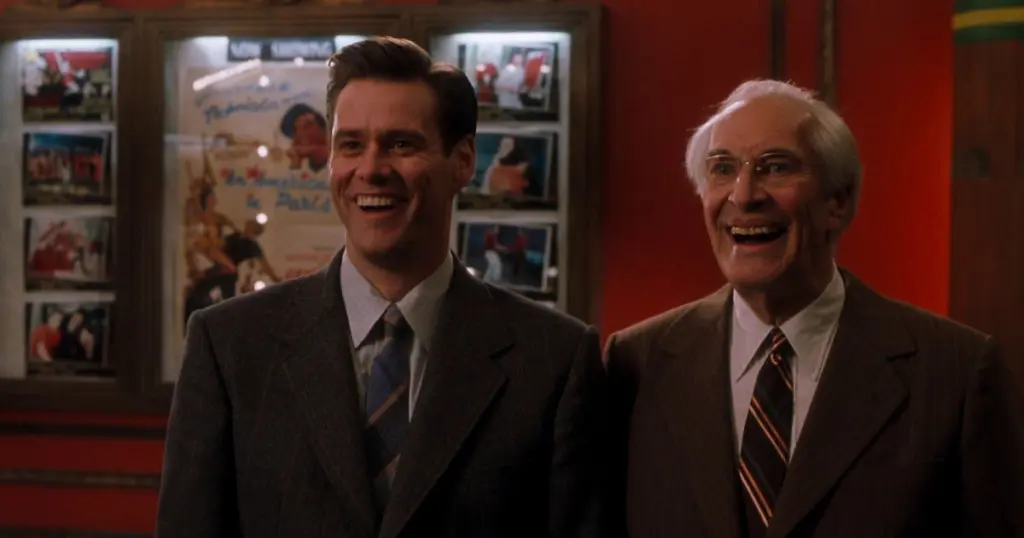
The year was 2001, in the wake of the terrorist attacks of September 11, many studios struggled to find the proper way to market and release their films while still being sensitive to what had just happened. Many films were moved off their original release dates to give the studios, and audiences, more time to figure out the proper way forward. One film, however, was deemed a slam dunk: a feel good story about a man who loses his memory and is taken in by the people of a small town when they assume him to be a long lost son and World War II hero, set against the backdrop of the Hollywood Communist witch hunt of the 1950’s from a respected Oscar nominated filmmaker and starring a lead actor who was in the midst of a dramatic left turn in his career with back to back Golden Globe wins for Best Actor. Of course, when the film was released, talks of Oscar nominations were quickly replaced with questions of how it could all go so wrong. It’s time to kick back with a bucket of movie theater popcorn as we answer the question: WTF Happened to The Majestic?!
Frank Darabont was just your average person, born in a refugee camp in France in 1959 to parents who fled Hungary during the 1956 Hungarian Revolution before his entire family, all five brothers, four sisters and three cousins immigrated to Los Angeles after a short stint in Chicago. As a teen he would attend the famed Hollywood High School where he would meet and form a lifelong friendship with writer Michael Sloane, a friendship that will come in to play momentarily.
After high school, Darabont skipped out on college, electing to follow his love of movies to a job at the renowned Grauman’s Chinese Theater where he worked as a concession employee and usher, no doubt a place where he developed a deep admiration for old school movie theaters.
Darabont would kick off his movie career as a production assistant on films such as Hell Night (1981) and The Seduction (1982)before writing and directing the short film The Woman in the Room (1983) which was an adaptation of a short story of the same name by Stephen King. King granted permission to Darabont as part of his Dollar Baby Initiative which grants permission to students and aspiring filmmakers to adapt one of his short stories for just $1. Darabont simply wrote King a query letter asking for permission, and King granted it. The endeavor proved a successful one as the short film was a semi-finalist at that years Academy Awards. Although Darabont says he was unhappy with how that filmed turned out, King wasn’t, and he gave Darabont the rights to another one of his short stories: Rita Hayworth and Shawshank Redemption.
After making his feature directorial debut with the TV movie Buried Alive, Darabont would go on to write for The Young Indiana Jones Chroniclesbefore finally finding time to adapt the now shortened titled The Shawshank Redemption. Despite the film being hailed by many as the greatest movie ever made, at the time of its release it was actually a pretty notorious bomb, pulling in just $16 million off a $25 million budget. Of course critics raved about the film and those raves would help the film ride a wave of success to the Academy Awards where it was nominated for six oscars including Best Adapted Screenplay for Darabont.
Darabont would follow that up with another prison based Stephen King adaptation: The Green Mile. It would be during the production of this film that Darabont’s old friend Michael Sloane presented him with an original script he had written titled: The Bijou.Darabont loved the script, comparing it to the films of the great Frank Capra. He agreed to get to work on the project as soon as he finished with The Green Mile.Of course in the time between the projects, Darabont’s stock would rise yet again as The Green Milewent on to be a box office smash with nearly $270 million worldwide with Darabont adding another two Academy Award nominations to his name when the film was nominated for Best Picture and Best Adapted Screenplay.
True to his word, Darabont got immediately to work on The Bijou although the film would ultimately change its name to The Majestic after it was believed that Bijou was a little too obscure of a name with some saying they believed the reason Darabont’s Shawshank Redemption didn’t perform better at the box office was due to the name also being a bit obscure. I guess the name Majestic is just more… majestic!
With a script and title in place, it came time to cast. Darabont first offered the lead role of Peter Appleton to his Green Mile star Tom Hanks who turned it down, they then offered the role to Matt Damon who turned the role down so he could star in The Bourne Identity,which in hindsight, was 100% the right decision! Of course Damon would still remain a part of the project as he provides the voice of Luke Trimble towards the end of the film when the farewell letter is read. And that farewell letter wasn’t just a piece of great fiction writing, it is actually pieces of a real letter sent in 1861 from a Major Sullivan Ballou to his wife, a week before he was killed at the First Battle of Bull Run by Confederate Forces during the Civil War.
Jim Carrey was just a simple Canadian boy who grew up to be a stand up comedian who would gain national attention on the hit sketch comedy series In Living Color before making the successful transition to the big screen in 1994 with three films that are now considered comedy classics: Ace Ventura: Pet Detective, The Mask and Dumb and Dumber. For many, Jim Carrey was the funniest man in America, something that apparently Tommy lee Jones was no fan of when he flat out told Carrey that he didn’t like him while shooting Batman Forever. The success of Jim Carrey as a leading man would lead to him becoming the first actor to ever receive a $20 million payday when he took on the lead role in the under-performing and under-rated Ben Stiller directed The Cable Guy. But even though that film didn’t light up the box office, what it did do was show that Carrey could be effective taking on darker and more dramatic roles. This would lead to him being cast in the more drama centric film Simon Birch as well as taking on the lead role in the Peter Weir directed The Truman Show. Carrey earned rave reviews for his comedic, yet subdued and actually quite heart breaking performance as Truman Burbank, a man who doesn’t know his entire life is a farce. Carrey would go on to win the Golden Globe for Best Actor, yet in one of the more shocking omissions in Oscar history, was not one of the five nominated for Best Actor at that years Academy Awards.
The following year, Carrey would give another performance that saw critics again singing his praises when he took on the challenging role of Andy Kaufman in the Milos Foreman directed Man on the Moon. Carrey would yet again win the Golden Globe for Best Actor, making him a rare back to back winner, yet again, in another one of the biggest snubs in Oscar History, Carrey did not receive an Oscar Nomination for his spot on portrayal of the comedy legend.
It was at this time, when Carrey was taking on more dramatic material, almost as a way to show critics he was more than the guy who made a name for himself by talking out of his butt, that he was approached with the script for The Majestic (although it was still called The Bijou at the time) and would sign on immediately, after producers agreed to give him his full $20 million quote.
With a $72 million budget in place (which includes that $20 million paid to Carrey) The Majestic began rolling cameras on March 5, 2001 in Los Angeles before moving up north to the more peaceful Ferndale, California where the bulk of filming took place, ultimately wrapping production on June 29, 2001.
The film would pay homage to those who were actually a part of Senator Joseph McCarthy’s Communist Witch Hunt: the town of Lawson is named after screenwriter John Howard Lawson who was one of many blacklisted screenwriters. When speaking to the Mayor, the name Cole is used to reference another blacklisted screenwriter Lester Cole and the name Luke Trimble was used as a nod to Dalton Trumbo, yet another blacklisted screenwriter who would gain more fame when Bryan Cranston would be Oscar Nominated for portraying him in the film Trumbo. Even the name of the lead character, Peter Appleton, is a nod to Joseph McCarthy’s hometown of Appleton, Wisconsin.
In addition to its impressive cast which included such talented people as Martin Landau, Bob Balaban, Ron Rifkin, Hal Holbrook, Catherine Dent, Brent Briscoe, Jeffrey DeMunn and Laurie Holden, the film would feature cameo appearances (in voice only) from Hollywood heavyweights Garry Marshall, Paul Mazursky, Sydney Pollack, Rob Reiner and his father Carl Reiner playing the studio executives that open and close the film, with Darabont choosing to not show these titans on screen as the camera just focuses on Jim Carrey’s face while receiving the studio notes. Obviously that was a fun scene for Darabont to film as he is no stranger to getting asinine studio notes and having to smile and nod politely in the room.
But it wasn’t just those relationships Darabont drew on to help make the movie. For the film within a film: Sand Pirates of the Sahara, Darabont would call up his good friend Chuck Russell whom he had previously worked with on A Nightmare on Elm Street 3: Dream Warriors with Darabont one of four writers credited for the script and Russell directing. At the time Russell was taking on the Dwayne Johnson led film The Scorpion King and would let Darabont use props from his film to add a little extra production value to Sand Pirates without bumping up the production budget. Darabont would also draw upon his friendship with Steven Spielberg when Spielberg lent Darabont the golden idol from Raiders of the Lost Ark for use in the Peter Appleton scripted film.
Once shooting was completed, it came time to edit and test the film. Due to Darabont having had success with longer films, Shawshankran two hours and twenty two minutes while the far more lucrative Green Mile ran a full three hours and nine minutes. So given those factors, the studio didn’t really interfere with Darabont and his desire to make The Majestica longer movie. That isn’t to say they didn’t test out two different versions of the film, because they did! The studio would test a shorter version of the film and the longer version, the longer cut tested way higher than the shorter cut and thus The Majestic would lock picture at two hours and thirty three minutes.
With a prime release date of December 21, 2001, The Majestic was the talk of the town with many comparing it to the Frank Capra/ Jimmy Stewart classic Mr. Smith Goes to Washington. It was primed and ready to be a massive break out with many predicting it would be the big winner come Oscar night considering it was a movie from a filmmaker with a track record of critical success and featured a lead actor that many assumed couldn’t be over-looked a third time for a Best Actor Oscar nomination.
And then the film was released! The first reviews began pouring in calling the film overlong with a forced sentimentality and that it aimed to be an inspiring tale but failed due to over-sappiness and a slow pace. There were some good reviews mixed in however, many critics did enjoy the take down of McCarthyism and called the story “beautiful” with famed thumbed one Roger Ebert even saying the film was a proud patriotic hymn to America. Jim Carrey’s performance would split critics, some claimed he was badly miscast in this purely dramatic role and blamed his performance on chasing an Oscar, while others (including Roger Ebert) hailed it as Carrey’s best performance to date even comparing him to the everyman qualities exhibited by a Jimmy Stewart.
Yet critics weren’t the only ones who turned their noses at this ode to the magic of the movie theater: audiences just didn’t show up. The film would open to just $4.9 million and an eighth place finish. Many people attributed the poor opening to not just the reviews, but also opening the film in such a crowded market. The Majestic opened on the exact same day as The Lord of the Rings: The Fellowship of the Rings which consumed audiences attention that weekend with $47.2 million, but it also lost out to the opening weekend of Jimmy Neutron: Boy Geniusand the Method Man/ Redman comedy How Highas well as the continued successes of Ocean’s Eleven, Vanilla Sky, Harry Potter and the Sorcerer’s Stoneand even Not Another Teen Movie. I guess to put a positive spin on it we should point out that it wasn’t actually the worst performing new release of that week: the Tim Allen starring Joe Somebody actually finished with about $1.5 million less than The Majestic… so that’s something at least!
There was a lot of Monday morning quarterbacking going on for this release as no one really expected it to bomb as bad as it had. Sure the reviews and crowded marketplace definitely played a factor, but many thought there were others reasons the film tanked so badly. Many pointed to the fact that the film didn’t really have a targeted audience, noting that the typical Jim Carrey fan expects to see him at least being somewhat funny, but the trailers for the film had no comedy in them whatsoever. Many critics would point to the terrorist attacks of September 11th and say that even though the film had a backbone that represented the faith and freedoms of America, as well as being a loving ode to the soldiers who had fought and died in previous wars for those freedoms, audiences just weren’t ready for that yet.
And that American spirit actually hurt the films box office over seas. Released in the UK on May 24, 2002, the film would fail to crack the top ten with UK audiences saying the ending of the film, with its powerful courtroom scene, had no real emotional impact for them as it had no relevance to their world or history. The film would fail to make even $10 million overseas and would ultimately end its worldwide run with just $37.3 million, nowhere near its $72 million budget.
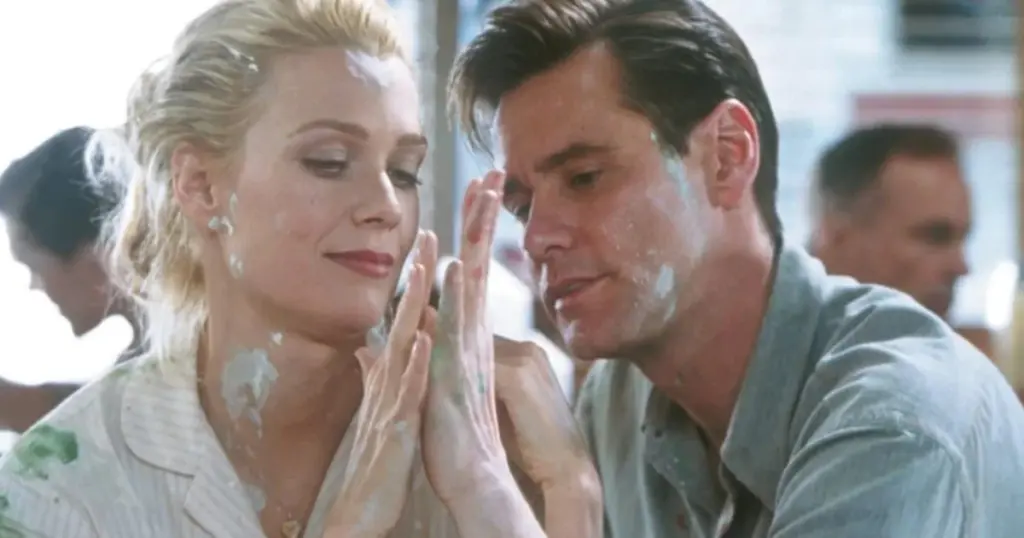
In the aftermath of the film, Jim Carrey and costar Laurie Holden would begin a romantic relationship that eventually ended, but the two must have remained friends as the pair would reunite in 2014 for Dumb and Dumber To.
For his part, Jim Carrey hasn’t really spoken about The Majestic often, only saying briefly that it his least favorite role he has ever played and that he regrets accepting it while Frank Darabont has painted a different tune saying he is extremely proud of the movie and that it achieved exactly what he set out to make. He said that he once read in a magazine article that was praising his work on Shawshank that he needed to apologize for making The Majestic to which he audibly reacted “Really? I need to apologize? Kiss my ass!”
Darabont would return to the world of Stephen King adaptations by making The Mist in 2007 followed by developing The Walking Dead television series which he would be fired from after just a season and a half (of course that firing led to a $200 million settlement, so don’t feel too bad for him)!) While Jim Carrey would continue making critical and commercially successful films including another Oscar Snubbed performance in Eternal Sunshine of the Spotless Mind.
But for as big of a bomb as The Majestic is always touted as being, it does seem to have caught on with audiences recently with the film featuring a solid four and a half star rating on Amazon based on nearly 2000 user reviews. It appears that without all that expectation and hype, The Majesticmay have finally found its audience.
Martin Scorsese’s Killers of the Flower Moon had its world premiere at the Cannes Film Festivals, and the reviews are superb.
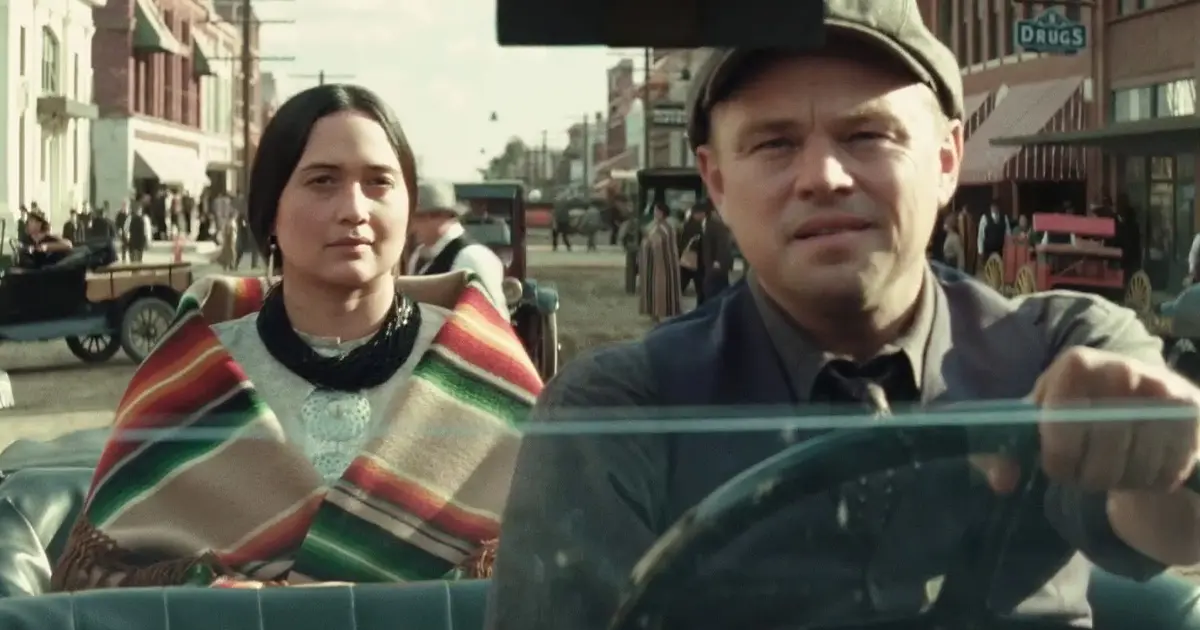
Martin Scorsese’s highly anticipated Killers of the Flower Moon, which released its first trailer this week, just had its world premiere at Cannes. Easily the most anticipated movie of the festival, all eyes were on the post-screening reactions, and folks were curious to know if the film stands alongside the eighty-year-old auteur’s best movies. Indeed, judging by the rapturous response (which included a nine-minute standing ovation), it’s safe to say that Killers of the Flower Moon is going to rank with some of Marty’s finest work. So far, the Rotten Tomatoes score is 96%, with only one of the 27 reviews being negative.
The film, which is based on David Grann’s non-fiction book of the same name, centers around a series of murders that took place in Oklahoma during the 1920s. The victims were all members of the Osage Native American Tribe, with the plot an attempt by a rancher named William Hale (Robert De Niro) to obtain oil rights, with the help of his nephew, Ernest Burkhart (Leonardo DiCaprio), who was married to Mollie Burkhart (Lily Gladstone), herself a member of the tribe whose family members were murdered by Hale and his associates.
Scorsese’s film is said to largely center around Gladstone’s performance, with her already being tipped for a potential best actress Academy Award, with THR noting, “many of us have been waiting impatiently for Gladstone to land a substantial part since her piercingly sensitive work as a lonely ranch hand in Kelly Reichardt’s Certain Women. And it’s taken a director frequently criticized for his scarcity of fully dimensional female characters not only to provide one but to make her the wounded heart of the movie.”
Leonardo DiCaprio also seems like a shoe-in for a potential Best Actor nomination, with several critics saying that the actor’s against-type role is a stunning showcase. IndieWire notes that the film contains “the best performance of Leonardo DiCaprio’s entire career… His nuanced and uncompromising turn as the cretinous Ernest Burkhart mines new wonders from the actor’s long-standing lack of vanity.”
THR also notes that some may be put off by the fact that Scorsese opts not to focus too much on the FBI investigation of the murders, with it being mentioned that Jesse Plemons, who plays real-life FBI agent Tom White, only becomes prominent in the last hour. Other big-name actors like John Lithgow and Brendan Fraser are said to only have small roles, but the same critics also note that focusing the narrative on the Burkharts was the right move.
Are you excited for Killers of the Flower Moon? Let us know in the comments!
The National Donut Day celebration will pay tribute to WWI's historic Donut Lassies through free donuts, community engagement, and donations to the Salvation Army
DENVER, May 26, 2023 (Newswire.com)
-
National Donut Day is Friday, June 2, and LaMar's will be partnering with The Salvation Army to host an annual fundraising and community engagement event. Each participating LaMar's location will also be giving away free donuts to everyone who visits a store.
National Donut Day is celebrated on the first Friday of every June — a tradition dating back to 1917, when Salvation Army volunteers known as the "Donut Lassies" made donuts for soldiers on the front lines of World War I. In celebration of this tradition, LaMar's will be partnering with The Salvation Army to host its 9th Annual National Donut Day fundraising campaign. The campaign will be hosted by various LaMar's locations nationwide, and it will include free donuts, donations to The Salvation Army, and community engagement with local police and fire departments. The goal of this campaign is to spread joy and give back to the community, just like the Donut Lassies did over 100 years ago.
This year's National Donut Day fundraiser will be a celebration unlike any other. In addition to raising funds for The Salvation Army through donations, LaMar's will match all online donations made during the week of May 28th. Each participating location will be handing out free Ray's Original Glazed donuts to customers, along with LaMar's National Donut Day t-shirts, while supplies last. LaMar's will be partnering with local police and fire stations, who will volunteer their time to hand out the free donuts and t-shirts to community members at select participating locations.
In addition to celebrating the holiday at LaMar's stores, The Salvation Army will be delivering thousands of LaMar's donuts to the Denver and Aurora Police Departments as well as locations in Kansas City, MO, Omaha, NE, and Wichita, KS, for National Donut Day. Staff and members of the Army, along with Aurora police officers, will also hand deliver donuts to veterans at the VA Medical Center in Aurora, CO. The Salvation Army brass band will be at the medical center at 10 a.m. to perform and celebrate the national holiday.
"The Salvation Army's tireless mission to keep children clothed, sheltered, and fed is an enduring reminder that we need to do what we can to support our community members," shared Temi Osifodunrin, LaMar's Director of Marketing and Advertising. "LaMar's is thrilled to be spreading joy to our communities on National Donut Day, just like the Donut Lassies did for soldiers during World War I."
To receive a free Ray's Original Glazed hand-made donut on National Donut Day, LaMar's customers must simply visit their local store. For customers who can't make it to a LaMar's location on National Donut Day, LaMar's will also be mailing out "Share the LaMar's Donut Day Love" cards to community members in surrounding neighborhoods. These cards can be used to redeem one free donut with a hole and a small coffee. Specialty donuts & coffee will be available but will incur an upcharge when used with the card.
For more information about LaMar's National Donut Day celebration, or to make an online donation, please visit www.donutday.com.
About LaMar's Donuts- After developing his original donut recipe as a teenager in 1933, Ray Lamar opened the first LaMar's Donuts in Kansas City, Missouri, on Linwood Boulevard in a converted gas station. Today, the franchised chain has 25 stores in five states. LaMar's has won numerous awards and has earned favorable reviews by such publications as The New Yorker and Gourmet magazine. LaMar's donuts were also the first to be reviewed and acclaimed by Zagat, the world's most trusted guide to restaurants. Visit us at LaMars.com.
About The Salvation Army - The Salvation Army, an evangelical part of the Universal Christian Church established in 1865, has supported those in need in His name without discrimination for more than 130 years in the United States. Nearly 30 million Americans receive assistance from The Salvation Army each year across 5,000 communities nationwide. For more information, please visit imsalvationarmy.org.
Contact Information:
Temi Osifodunrin
Director of Marketing and Advertising [email protected]
303-771-9999 x. # 7001
NBC10 Boston News Anchor Glenn Jones to speak during 24th annual event
BOSTON, May 26, 2023 (Newswire.com)
-
Whittier Street Health Center, a community health center with a mission to serve as a center of excellence that provides high-quality and accessible healthcare and social services that achieve health equity, social justice, and the economic well-being of a diverse patient population, will hold its 24thAnnual Men's Health Summit on Saturday, June 24 from 10 a.m. to 2 p.m. at the Frederica M. Williams Building, 1290 Tremont Street, Roxbury. The theme of this year's summit is UNITED for Men's Health: Grounded in Equity.
Across the country, gaps and disparities in healthcare continue to increase and persist. Without access to good jobs, schools, food, and safe, affordable homes, staying healthy is challenging.
The annual event will include a health fair, health screenings, and a panel discussion and conversation about men's health and wellness. In addition, the Summit will serve as an occasion to recognize several men's health champions from diverse backgrounds during the Men's Health Champion Award presentation.
This year's Men's Health Champions are: Mr. Wilner Auguste, founder, Haitian American United (HAU); Rev. John Finley, co-founder and head of Epiphany School; Rev. Art Gordon, pastor, St. John Missionary Baptist Church; Mr. David Morales, general manager, UniCare; Mr. Jean Prezeau, men's health ambassador, Whitter Street Health Center; Mr. William Watkins, MBA, vice president of digital strategies and partnerships, Urban League of Eastern Massachusetts; and Mr. Leverett Wing, president and CEO, Commonwealth Seminar.
NBC10 News Anchor Glenn Jones will be the guest speaker during the highly anticipated event to which all are welcome to attend.
"Our Men's Health Summit aims to help to address preventable causes that contribute to increased morbidity and mortality rates, and decreased life expectancy for men," said Frederica M. Williams, president and CEO of Whittier Street Health Center. "We will explore strategies to advance men's health, raise awareness about why it is important to engage with men to improve their health and well-being and provide health education resources and access to care."
Whittier Street Health Center is an independently licensed community healthcare center with a mission of providing high-quality, reliable and accessible primary healthcare for diverse populations while promoting wellness and eliminating health and social disparities. A champion of equitable access to high-quality, patient-focused care, social justice and economic equity, Whittier Street Health Center serves more than 30,000 patients and 20,000 community outreach visits annually. Whittier Street Health Center provides a comprehensive array of 40 healthcare programs and services designed to meet the primary healthcare, behavioral health, and social needs of the community. For more information, please visit www.wshc.org as well as Facebook (www.facebook.com/WhittierStreetHealthCenter), Twitter (@Whittier_Boston), or LinkedIn (https://www.linkedin.com/company/whittier-street-health-center), or call 617-989-3221.
NEW YORK, May 26, 2023 (Newswire.com)
-
Credello: To combat inflation, the Federal Reserve ("The Fed") has raised its benchmark interest rates to levels not seen since the Great Recession. While these hikes are great for savings accounts and CDs, those considering getting a new personal loan are experiencing sticker shock at the new rates.
I already have a personal loan, is my interest rate increasing?
It depends on the type of loan you have.
Most unsecured loans that are already active and fixed-rate will not incur any interest rate changes. This goes for personal loans, consolidation loans, signature loans, etc. However, missing payments or defaulting on a signature loan or other unsecured loan could make you incur new interest rates as a penalty for the duration of the loan or until you're back in good standing. Check your loan's terms and conditions for details on what you should expect if you fall behind on payments.
Secured, fixed-rate loans like mortgages also shouldn't see any change to their interest rates. Again, this is only if you stay in good standing with the lender so it's critical you know the terms you've agreed to for your loan regarding when you could expect a change in your rate.
Variable-rate loans, both secured and unsecured, are loans that have fluctuating rates based on The Fed's benchmark rate. These are the loans that will most likely be affected by the increases made by The Fed.
How can I tell what type of loan I have?
Knowing the type of loan you have is critical for determining not only how much you'll pay in interest but how your loan is affected by market conditions. The easiest way to determine which type of personal loan you have, or are applying for, is to check the terms. However, there are a few quick ways to determine which loan you have (or could get):
1. Do you have to put any collateral up to get the loan? These are considered secured loans. The most popular types of secured loans are auto loans and mortgages. Unsecured loans don't require any kind of collateral and are often what you'll see for personal loans, signature loans, etc.
2. Do you only see one interest rate listed? Typically, this means your loan is (or will be) a fixed-rate loan. However, check to see if there are any asterisks or fine print that specifies whether this could change.
3. Is it a credit card? Credit cards are unsecured, variable-rate ways to borrow money and will be affected by Fed rate hikes. There are some secured credit cards, too, and are also variable-rate.
A few tips to avoid interest rate increases
1. Look for promotional consolidation offers. Many lenders offer promotional rates that last for a limited time. Consolidating your debt into one loan can lower your interest rate, too.
2. Shop around. Rates can vary significantly from lender to lender, so compare rates before settling on a plan.
3. Make a payment plan. If you're not able to pay off your entire balance each month, making payments on time will help keep your interest rate lower and extend the life of your loan.
4. Pay more than your minimum payment every month. Even an additional $5 payment will help you avoid getting hit with higher rates that take longer to pay off.
The bottom line
Knowing your personal loan type and interest rate is key in determining how your loan will be affected by The Fed's interest rate hikes. Stay up to date on the terms of your loan to ensure you're not hit with unforeseen penalties or rates.
About Credello
Credello is a financial tech company offering a personal finance tool that simplifies financial decisions through personalized, on-demand recommendations — so users can borrow, save, or invest with confidence. Credello believes that finding the right financial product should be as easy and interactive as online shopping, and we are on a mission to make that possible. For more information, please visit https://www.credello.com.
NEW YORK, May 26, 2023 (Newswire.com)
-
Credello: Thanks to the Federal Reserve's raising interest rates, many loan borrowers are getting sticker shock looking at their loan terms. But which loans are getting the highest rate increases? Here's what you should know.
The loans with the highest interest rates
Borrowers are seeing the biggest interest rate spikes on short-term loans, particularly those that run for three to five years. A report by Credible found that rates in April 2023 on 3-year, fixed-rate loans increased by 10.63%, while 5-year, fixed-rate loans averaged an increase of 9.41%.
What's most interesting is that it seems credit scores weren't a significant factor in determining rates. Credible found that these rate increases were happening for borrowers with credit scores of 720 or more, a score that's traditionally seen as worthy of the most competitive (i.e., lowest) rates possible.
Why are these loans getting such drastic rate increases?
Three- to five-year loans are typically categorized as "short-term" personal loans. There are a few differences between long-term and short-term loans, but the most significant difference is the interest rate attached.
Short-term loans usually have more aggressive terms and conditions because the lender makes less money on them over time than on a longer loan, like a mortgage. The risks of short-term personal loans are also a factor lenders consider, as these loans are easier to get for those with lower credit scores.
How to get the best interest rate possible on your personal loan
Getting the best interest rate on your personal loan is important to ensure you are paying the lowest amount of money over the life of the loan.
Improve your credit score.
Improving your credit score is the simplest way to ensure you get the most competitive interest rates possible. While interest rates have risen dramatically for all credit scores, the better scores will always have more options available and the best rates possible. The reason for this is, again, due to risk. Generally speaking, lenders will see those with lower scores (~625 or lower) as less responsible with their finances than someone with a higher score. Some lenders have realized this could be an unfair practice, particularly to minorities or those previously underserved by banks, and have begun adding new criteria to their decision-making algorithms. However, for the most part, improving your credit score is the easiest way to get a better offer.
Credit scores are a mix of factors weighted based on their importance determined by credit reporting bureaus. The two most significant factors are the number of late payments on your record and the amount of credit you have available (known as the "Credit Utilization Ratio").
To increase your credit score quickly, focus on these two factors. Try to make the minimum payment on time every month on any outstanding credit card balances or loans. Next, try to get your credit card balances below 20% of your available credit. Focusing your effort on these two factors will cause the fastest changes to your score.
Shop around for the best rates.
If you're not seeing rates you like, shop around! Many lenders will offer promotional rates for both new and returning customers, so start with the lenders you already have an established relationship with, as they'll typically be the ones to approve your application the fastest.
However, if they're not willing to give you the terms you want, check out loan comparison sites with the most up-to-date information with interest rates lenders offer to those with similar credit scores. They'll also typically have reviews from other borrowers and ratings that give you insight into your chances of getting approved and details on what your experience could be working with them.
The bottom line
While interest rates on personal loans have slowly been creeping up for the past few years, there's been a drastic spike in rates caused by the Federal Reserve's interest rate hikes to combat inflation. However, that doesn't mean there aren't great personal loan rates out there still for those with good credit scores. By improving your credit score and shopping around for the most competitive interest rates available, you should get the best possible terms for your loan.
About Credello
Credello is a financial tech company offering a personal finance tool that simplifies financial decisions through personalized, on-demand recommendations — so users can borrow, save, or invest with confidence. Credello believes that finding the right financial product should be as easy and interactive as online shopping, and we are on a mission to make that possible. For more information, please visit https://www.credello.com.