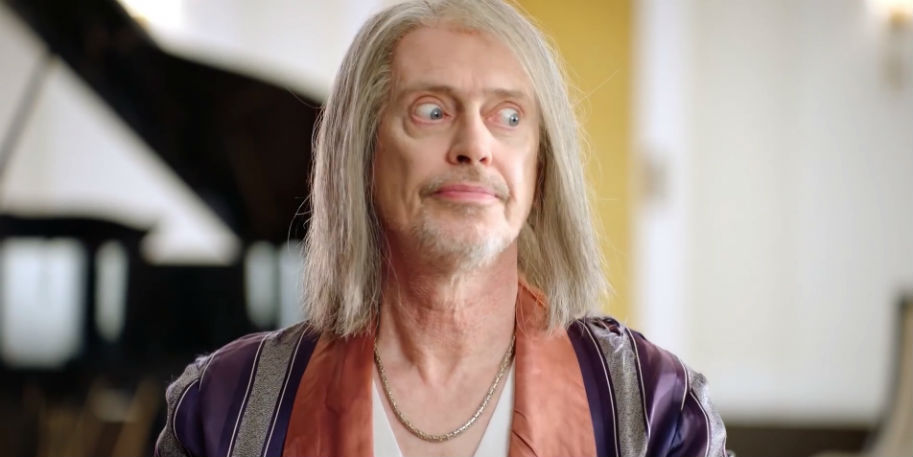
Steven Soderbergh has been trying to see Taylor Swift live but can’t get tickets. He has watched The Eras Tour movie instead.
Last Updated on July 11, 2024
Steven Soderbergh and Taylor Swift are never, ever, ever getting back together. Soderbergh, who admitted he has a fascination with the aura of Swift, is desperately trying to catch The Eras Tour but, like many of us, can’t seem to snag a seat.
Speaking with The Hollywood Reporter, Steven Soderbergh said he would absolutely see Taylor Swift live “if I could. I can’t get in [because tickets sell out so quickly]. But I watched the film.” According to his annual watchlist, Soderbergh caught The Eras Tour on December 13th. The Eras Tour – which is officially the highest-grossing ever, topping Elton John’s Farewell Yellow Brick Road tour – is currently on its European leg before it comes back to North America. Across the globe, Soderbergh has heard nothing but praise. “David Koepp [writer of the Soderbergh-directed Kimi and Presence] took his teenage daughter to see this show. And he was like, ‘You cannot believe what it’s like to be there. It is elemental. To be with that many people with that level of emotion. You cannot not be a part of it. It’s just overwhelming.’ He loved it.”
But even if Soderbergh can’t manage to grab a ticket for The Eras Tour, he recognizes just what sort of impact Swift is having, even citing the tour as a demonstration of the human ability to cooperate and collaborate on a large scale, saying, “You look at a Taylor Swift concert, well look at that whole tour, and just go, ‘Okay, it works.’ All these people, all this effort, the coordination of it, and it works.” He added that there is a lot to learn from the pop icon. “Look, people laugh at how there’s a college class being taught about her in business school. There should be. What she has done, what she’s doing in the way she’s doing it, nobody has ever done this before. The amount of control that she has taken. And she’s doing this all herself. Nobody has ever done this. It’s working. And it’s a great model…I would like to know more about how she is on a granular level, how is she doing all of this? How does the business work? What’s her brain trust? How is the money? How does all the money move? How does it work? I’m fascinated by that because it’s a success story.”
Steven Soderbergh might be taking it to a level that most Taylor Swift fans don’t – they’re a bit more into bracelets than financial analytics – but that’s just how he operates.
What do you make of the Taylor Swift phenomenon? Does it have more of a positive or negative impact?
At the start of March, an image cinematographer Christian Sebaldt shared on Instagram revealed that Final Destination 6 (which is going by the title Final Destination: Bloodlines) was finally, after years of development and a thirteen year gap between sequels, heading into production. Then franchise producer Craig Perry took to social media to confirm that Final Destination: Bloodlines was indeed filming, the aim being to get this one into theatres in 2025 – in time to celebrate the 25th anniversary of the release of the original film. It will even be on IMAX screens! Filming wrapped in May, so we figured this would be a good time to compile a list of Everything We Know About Final Destination 6.
Shaking Up the Formula
Jeffrey Reddick – who wrote the initial screenplay for the original Final Destination and contributed to Final Destination 2 – has been kept in the loop as Final Destination 6 made its way through development, and he has said that this new sequel is going to shake up the formula a bit. He told Dread Central (with thanks to ComicBook.com for the transcript), “I’m really excited with the story that I can’t tell you about. I will say that it’s not just going to be another kind of ‘we set up a group of people, they cheat death, and then just death gets them.’ And there’s one wrinkle that we kind of added to every movie to kind of like change it up a little bit. This one is a true Final Destination movie, but it doesn’t follow that kind of formula that we’ve kind of established… I think I can say that much. It’s very much still a Final Destination movie. It’s not a requel, it’s not anything crazy, but it’s not your typical ‘have an accident, Death starts knocking off the survivors’. It’s different than that. That’s all I can say. But it’s very much a Final Destination movie and I think it’s a really, really smart way… I’m really excited about it.” He later told Collider, “you can’t get away from the cheating death and death coming after you part of it because that’s what makes it a Final Destination film” but this one “doesn’t just kind of add another layer. Usually there’s a new layer every film where it’s like, ‘Oh, well, this can save you or this can save you.’ This film dives into it in such a unique way, it attacks it from a different angle, so you don’t feel like, ‘Oh, there’s an amazing setup and then there’s gonna be one wrinkle that can potentially save you’ … There’s an expansion of the universe … an expansion of the world of Final Destination that I think fans are gonna be really interested in and intrigued by. When I say it doesn’t add a layer, it’s not just, ‘Hey, if you murder somebody in your place, you’ll live.’ It kind of unearths a whole deep layer to the story that kind of, yes, makes it really, really interesting.“
Plot
According to entertainment industry scooper Daniel Richtman, Final Destination: Bloodlines has the following synopsis: Just as she’s about to leave home for college, 18-year-old STEFANI, who’s been having horrific nightmares about dying in a tower accident in the 1960s, discovers that her dream is actually a premonition that happened to her grandmother, Esther, who thwarted death fifty years ago but is now running out of time. Stefani learns that though her grandmother thwarted Death (until she died in her 80s), and Death has been going after the would-have-been victims of that long-ago catastrophe, killing them off and then going after their children. Stefani and her family realize that their bloodline isn’t safe from Death, who will take them violently and gruesomely, in order, unless someone like Stefani figures out a way to stop it.
Creative Team
Jon Watts, director of Spider-Man: Homecoming, Spider-Man: Far from Home, and Spider-Man: No Way Home, is producing the film with Craig Perry, Dianne McGunigle, and Sheila Hanahan Taylor. Watts also wrote the initial treatment, which was fleshed out into a screenplay by Lori Evans Taylor and Guy Busick. The directing duo of Zach Lipovsky and Adam B. Stein, who previously directed the 2018 film Freaks (starring Emile Hirsch and Bruce Dern) and the 2019 live-action Kim Possible movie, are at the helm.
According to The Hollywood Reporter, Lipovsky and Stein beat out over two hundred other candidates for the directing gig, rising to the top through their ideas and passion for the Final Destination brand. “The duo were already in line to get the gig when one final Zoom pitch meeting became what some in Hollywood called “The Zoom call to end all Zoom calls”. The duo made their pitch to New Line execs and producer together, with a burning fireplace behind them. As they wrapped up the meeting, the fire came alive and the mantle began burning. The filmmakers stopped and after a tense moment, quickly extinguished the flames. As they sat down, everyone relieved the accident had passed, a wrenching creak was heard and suddenly, the whizzing ceiling fan broke off and flew down, decapitating one of the filmmakers. The execs and producers went from concern to all-out laughter. The bit, using a combination of pre-recorded footage and visual effects, had transitioned seamlessly and showed their unabashed enthusiasm. It was, to all involved, the cherry on top.“
Cast
The film stars Brec Bassinger, Teo Briones, Kaitlyn Santa Juana, Richard Harmon, Anna Lore, Owen Patrick Joyner, Max Lloyd-Jones, Rya Kihlstedt, and Tinpo Lee. It also features the return of Tony Todd in his iconic role as mortician William Bludworth, who was in the first, second, and fifth films.
We don’t have any official confirmation on who the actors are playing (other than Todd being Bludworth again)… but we can turn to Daniel Richtman for some character descriptions:
STEFANI LEWIS: Smart. grounded, ambitious, Stefani is about to leave her working class hometown and head off for University. Close to her younger POC brother Charlie, Stefani feels bad that Charlie has been moody and angry at her lately, probably because she’s going to be leaving him, just like their mom did. When Stefani learns the truth about the nightmares that have been plaguing her, she realizes that her grandmother Esther was telling them the truth about Death coming for the relatives in their bloodline, and she decides to do everything in her power to keep her family safe.
CHARLIE: Gangly, bright, Charlie is Stefan is younger brother. Normally very close to Stef, he’s grown moody and angry at her as her departure for college draws near, hating the fact that she’s going to be leaving him just like their mom did. When Stefani discovers the bizarre truth about Death coming for their family because their grandmother Esther thwarted it years ago, Charlie thinks the whole thing is nuts. But he has a huge respect for Stefani, and as she studies the manual their grandmother gave her before she died, Charlie realizes that Stefani understands what’s going on, and eventually he comes to believe it, too.
BOBBY: Huge, good hearted, and anxious, Bobby is a high school football linebacker and Julia and Derek’s brother, Stefani and Charlie’s cousin. Sweet and vulnerable despite not being too bright, Bobby is the only one of the family who’s immediately terrified by Stefani’s account of Grandma Esther’s story, that Death is going to come after their family in birth order. A frightened Bobby is willing to try anything to thwart Death.
DEREK: A walking collection of piercings, tattoos and smarm, defiant and a bit crude, full of ego, usually seen with a vape pen, Derek is Bobby and Julia’s brother, Stefani and Charlie’s cousin. A tattoo and piercing artist, Derek absolutely does not believe cousin Stefani’s story that their family is doomed to be chased by Death and killed before their time, and he’s gleeful when he appears to prove her wrong by escaping what should have been a fatal situation. (Producer Craig Perry has confirmed there’s a sequence set in a tattoo / piercing parlor.)
ESTHER: Grandmother to Stefani.
JULIA: Bougie tomboy desperately trying to be stylish, snarky, Julia is Bobby and Derek’s sister, Stefani and Charlie’s cousin. She doesn’t like Stefani, believing that Stefani feels she’s superior to her cousins, and loves to show Stefani how much better of a role model she is for Charlie. Like the rest of the family, Julia doesn’t believe Stefani’s bizarre story of how their grandmother Esther thwarted death fifty years ago, and now Death is coming after everyone in Esther’s bloodline in order; in fact, Julia enjoys seeing Stefani brought down a peg when her own mother refuses to believe it.
And that’s everything we know at the moment. Are you looking forward to Final Destination 6 / Final Destination: Bloodlines? Let us know by leaving a comment below.
Yoshiyuki Momose’s The Imaginary arrives on Netflix today, and it’s one of the most magical animated experiences you’ll find on screens this year. Based on the book of the same name by A. F. Harrold with art by Emily Gravett, The Imaginary is a fantasy epic on part with some of Studio Ghibli and Don Bluth’s best and most impactful works. Studio Ponoc’s The Imaginary portrays the depths of humanity and creativity through the eyes of young Amanda and her imaginary companion, Rudger, a boy no one can see imagined by Amanda to share her thrilling make-believe adventures. But when Rudger, suddenly alone, arrives at The Town of Imaginaries, where forgotten Imaginaries live and find work, he faces a mysterious threat.
We are honored to be joined by Studio Ponoc founder and The Imaginary writer Yoshiaki Nishimura for this in-depth interview into the world of make-believe, dream-devouring demons and connections that span generations. During our time with Mr. Nishimura, we discuss his love for animation, the challenges of adapting Harrold’s enigmatic tale, the inner workings of the film’s villain, Mr. Bunting (Jeremy Strong), Mr. Nishimura’s dream project, and much, much more.
The following interview is transcribed from an on-camera video interview with Mr. Nishimura and his interpreter. For our full review of The Imaginary, click here!
JoBlo: You’ve produced some of the most epic and heartfelt animated films in the past several years. What attracts you to this genre of filmmaking?
Nishimura: Wow! That’s a very hard question! Initially, as a student, I spent my time thinking I’d do live-action films. But once, I saw children looking at a TV screen and screaming, “Please help that little boy! Please, help!” Then I thought, ‘Oh, wow, that power animation has on a child is so strong.’ Then I remembered something about myself from when I was ten years old. When I was ten, I watched Grave of the Fireflies by Isao Takahata. I’ve seen that film more than 100 times. At that point in my life, I didn’t trust grown-ups or society. When I saw Grave of the Fireflies, I thought, ‘Whoever made this film could be trusted.’ If I’m able to create a film that makes children feel like, ‘Oh, this film was made for me,’ then that is worth spending my life on.
Nishimura and I then bonded over the beauty and emotional trauma of Grave of the Fireflies, a film I’ve only seen once because it scarred me that deeply.
JoBlo: What were some challenges you faced while writing The Imaginary? Was it difficult to adapt the source material while making the story your own?
Nishimura: This story is interesting because there are stories where humans meet Martians, like E.T., but The Imaginary comes from the perspective of a boy who is imagined by a girl. What felt very special to me was that if this girl hadn’t imagined this boy, he wouldn’t have existed anywhere in the world. I felt that if I could utilize this situation, we could depict so many things in the world that are important but unseen. That’s how I started scripting The Imaginary.
Creating a fantasy world in animation is easy, but the difficult part is making sure the reality where human beings are creating Imaginaries is grounded. That was the most important balance when you’re going between the imaginary world and that of human beings.
JoBlo: Did you have an imaginary friend growing up? If so, could you tell us about them?
Nishimura: I did not have any imaginary friends, but in the bathroom, I was always traveling through my “Imagination world.” I would think, what if there are five special boys in the world, and I’m one of them? So, this is a world that’s familiar to me. I have children. The world that they live in is very close to me. I didn’t have an imaginary friend, but playing with my imagination was something I was very familiar with.
JoBlo: The film’s villain, Mr. Bunting, is incredibly sinister. At any point, did you have to keep yourself from going too far with his evil intent and actions?
Nishimura: Fantasy literature in England always has some level of something scary. In my opinion, English literature tries to depict the reality of the world of children. It was a challenging task for me to take the fun part of the fantasy and combine it with the scary. One thing I always had in my mind was that we cannot lie to children. Children now are different from how we were. They’re often surrounded by scary visuals and things that evoke fear. Rather than lying to them and saying the world you live in is happy and beautiful, I wanted to communicate to them that the world you live in might have scary things that exist, but you have the power to overcome them.
I created Bunting so he would exist as a metaphor for scary things in the real world. When you’re growing up, what is this being that might be consistently following you? Through that idea, I said, ah, Bunting, and ensured he was there. I owe so much to Jeremy Swift. This character could have been a really scary being, but with his brilliant acting, he was this creepy, scary being, but at the same time, somewhat comical. I thought that was magnificent.
Next, Nishimura and I spoke about Mr. Bunting’s imaginary friend, a ghostly figure not unlike an undead schoolgirl with unimaginable power. I asked Nishimura if there was a story behind her character, and he told me this.
Nishimura: In the illustration that Emily [Gravett] drew in the original book there was a depiction of Bunting’s imaginary friend. When I saw that, I said, ‘Oh my God, this is Sadako [Yamamura] from Japanese horror films. It took me an entire year to create Bunting’s background. I imagined a girl taken away as a child, and now that child is an adult.
JoBlo: Can you recall your proudest moment while working on The Imaginary?
Nishimura: About my happiest or proudest moment, this current piece is very challenging to us. I assume you’re familiar with Japanese animation from the T-shirt you’re wearing [a black-and-white Spirited Away shirt featuring Chihiro and No Face riding a train]. Within the past several decades, the Japanese animation style hasn’t changed much. The backgrounds and illustrations have become more refined, yet the characters and their design have remained simple. I was always thinking, ‘I wish I could do something to push that forward or present something different.
Then I found this technology of light and shading that was developed by a French company. The first thing I thought was, ‘if I use this technology, I can bring more texture to the hand-painted animation, giving it more depth. What was important is that if we used this technique to control the shadows and lighting, we could create images that could control human emotions more. After I found this technique, I called Momose-san, and I said, ‘I want to use this!’ Then Momose-san said, ‘Oh, this is great! The production pipeline had already been established and begun. People said, ‘Why are we changing this? Why now?’ When they saw the first rush of film that we tried out, they said, ‘Wow! This is really going to change something. I was very happy and felt like we’d accomplished something. That was the moment when I felt confident about the work that we were creating.
JoBlo: Is there another story or novel you’d jump at the chance of adapting into an animated film? Something from your childhood?
Nishimura: I do have one, yes. My favorite children’s story that I’ve read is by a German author named Erich Kästner, called The Flying Classroom. I love this story, and Mr. Miyazaki [Hayao Miyazaki of Ghibli Studios] loves it too. So, if I had an opportunity to create this, I think that would be the final accomplishment of my filmmaking life. I feel that’s something further down the road.
Kevin Bacon went completely incognito at a popular L.A. spot and found that he hated living a normal life outside of celebrity.
Last Updated on July 11, 2024
The biggest names in all of celebritydom would kill for the chance to have some anonymity. No longer would a paparazzo flash his camera in your face when you’re just not having a good day. No more would you have to deal with incessant, autograph-hungry “fans” who are just going to toss your scribbled napkin on eBay. But, really, would it be worth it if you can’t get a reservation at the hottest restaurant or have to {gasp} wait in line? For Kevin Bacon, not a shot.
Kevin Bacon is by definition the center of the universe, so he’s one of the more recognizable actors out there. But he wanted to experiment a bit and see what it would be like to go about the day at a popular Los Angeles mall as one of us, a totally normal dude just going about his day. As he told Vanity Fair, “I’m not complaining, but I have a face that’s pretty recognizable. Putting my hat and glasses on is only going to work to a certain extent…I went to a special effects makeup artist, had consultations, and asked him to make me a prosthetic disguise.”
So how did Kevin Bacon’s day of normality go? Well, something like most of ours. “Nobody recognized me…People were kind of pushing past me, not being nice. Nobody said, ‘I love you.’ I had to wait in line to, I don’t know, buy a f*cking coffee or whatever. I was like, This sucks. I want to go back to being famous.” Certainly Bacon is also poking fun at the often ridiculous elements of fame but we have to admit that waiting in line for anything does indeed suck.
The disguise may have worked but Kevin Bacon has never not been recognizable in any other situation, proving to be one of the most consistent presences on the big screen for four decades. And this hasn’t slowed down in 2024, as he co-stars in two major – and very different – movies that are currently out: comedy Beverly Hills Cop: Axel F and Ti West’s horror threequel Maxxxine.
Which movie first comes to mind when you think of Kevin Bacon? Let us know your top choice and why he stands out for you.
Brad Pitt’s highly anticipated Formula 1 project finally has an official trailer. Will it be the definitive F1 racing movie?
Last Updated on July 11, 2024
One of the most anticipated movies for 2025 is undoubtedly the big-budget Formula One drama produced by Apple. Brad Pitt stars in what everyone involved no doubt hopes will become the definitive F1 movie, with it seemingly cut from the same cloth as classics like John Frankenheimer’s Grand Prix or the Steve McQueen passion project, Le Mans. Top Gun: Maverick director Joseph Kosinski is directing, with none other than Jerry Bruckheimer producing.
Yet, despite the high pedigree, very little has been revealed about the production – until now that is, with new distributor Warner Bros finally unveiling the movie’s first teaser trailer, which gives us a taste of the authentic F1 action (the movie is also titled – fittingly enough – F1) while Queen’s “We Will Rock You” fills the soundtrack. Set for a June 25, 2025 the F1 trailer made its debut during the Formula 1 British Grand Prix this weekend, where Pitt and the movie’s team were actually present doing some filming. Here’s the poster:
Notably, the film was produced in collaboration with F1, with them filming at actual races, allowing them to make what everyone no doubt hopes will be one of the most immersive racing movies ever. It’s also getting an IMAX release. Here’s the studio’s official synopsis and full reveal of the stacked supporting cast:
From Apple Original Films, “F1” stars Academy Award winner Brad Pitt as a former driver who returns to Formula 1, alongside Damson Idris as his teammate at APXGP, a fictional team on the grid. The feature is being shot during actual Grand Prix weekends as the team competes against the titans of the sport. The star-studded cast also includes Academy Award nominee Kerry Condon, Academy Award winner Javier Bardem, and Emmy Award winner Tobias Menzies, Emmy Award nominee Sarah Niles, Kim Bodnia and Samson Kayo.
Joseph Kosinski (“Top Gun: Maverick”) directs and produces the feature alongside Jerry Bruckheimer and Chad Oman of Jerry Bruckheimer Films; Pitt, Dede Gardner and Jeremy Kleiner for Plan B Entertainment; and Lewis Hamilton under his Dawn Apollo Films banner. The film is made in collaboration with Formula 1® and the F1 community, including the 10 F1 teams and their drivers, the FIA, and race promoters. Copper CEO Penni Thow serves as executive producer.
Are you looking forward to F1? Let us know in the comments!
The legendary antagonist from a highly anticipated Netflix comedy sequel makes an appearence in Beverly Hills Cop: Axel F.
By now, many of you have undoubtedly watched Beverly Hills Cop: Axel F on Netflix. While jam-packed with easter eggs that will please fans of the series, the movie also contains an unusual cameo that left a lot of fans scratching their heads, as it seems to suggest that another highly anticipated Netflix sequel takes place in the same universe as Axel F.
That movie, of course, is Happy Gilmore 2. In Beverly Hills Cop: Axel F, Christopher McDonald shows up as an irate Beverly Hills golfer, with many assuming he’s, in fact, playing the famous Happy Gilmore antagonist Shooter McGavin. Indeed, he certainly looks like Shooter and acts like Shooter, so could he be playing the same guy?
Given that Netflix is behind Happy Gilmore 2 and Axel F, it seems reasonable to assume that this cameo is more than just a coincidence. Murphy and Adam Sandler both did time on Saturday Night Live, so who knows, maybe Axel (or someone like Judge Reinhold’s Billy Rosewood) could show up in a tiny cameo in the upcoming sequel. For his part, Axel F director Mark Molloy told THR that while McDonald was certainly cast due to his notoriety as Shooter, he had no idea the streamer was developing a sequel:
I had no idea that they were making Happy Gilmore 2. I was talking with Mary Vernieu, our casting director, about the golfer role that we knew we had, and I said, “I’d love a great cameo.” So we started talking about it, and then we were like, “Christopher McDonald!? Oh, yes! That would be amazing.” And fans love it. I’ve heard the reaction when people see Chris come on the screen, and it’s just a really fun cameo. So there’s no bigger story behind it, apart from me wanting to have some fun.
Do you like to think Axel F and Happy Gilmore take place in the same cinematic universe? Let us know in the comments!
Its late summer in 1982 and you’ve seen the preview for Friday the 13th Part III, which told you a few things. The first piece of information that the preview had in store for you was that this was very much Jason’s movie. While Child’s Play would fully embrace the name change and just start using Chucky in the title, Friday the 13th would hang on to that particular superstitious day for a bit longer. Jason is named almost as much as the fact that this sequel in the Friday the 13th franchise would be in 3D, which is to say, A LOT. The preview also shows another detail that at the time would be innocuous but looking back was the catalyst for what many people see as the key to the series. This is the first movie where Jason gets his iconic hockey mask. Put on your trusty red and blue glasses as we push this film right into your lap and find out what happened to Friday the 13th Part III, in 3D!
Friday the 13thparts 1 and 2 were incredibly popular raking in 59 million and 21 million off of their rather small budgets in 1980 and 1981 respectively. While the critical perception wasn’t great, that didn’t stop the public from coming out in droves which means there was a guarantee we would see more from this franchise. Paramount owned the rights at the time and decided to add a wrinkle to the production with the addition of 3D. This was part of a boom in the early 80’s of 3D productions that also included Amityville 3D, Jaws 3D, Silent Madness, Parasite, and a whole list of others. The reason for Paramount and the Friday the 13th team to choose it was because of a movie called Comin At Ya made a lot more money than it should have, presumably based on the fact that it was released in 3D. With Paramount’s stature and ability to fund, they went big on it.
Friday the 13th Part III (watch it HERE) would be the first 3D movie released by Paramount since the 50’s and would end up being the first wide release of a 3D movie by a major studio. It would show up in over 1000 theaters nationwide and be the first production ever to use the Marks 3D system and while the budget says it was just above 2 million, Paramount paid anywhere from 8-10 million to install the proper equipment in movie theaters to be able to smoothly run the film including training for the projectionists and a sort of war room like number for them to call for trouble shooting. With that much effort and money put into the production of the flick, they were going to get their money’s worth.
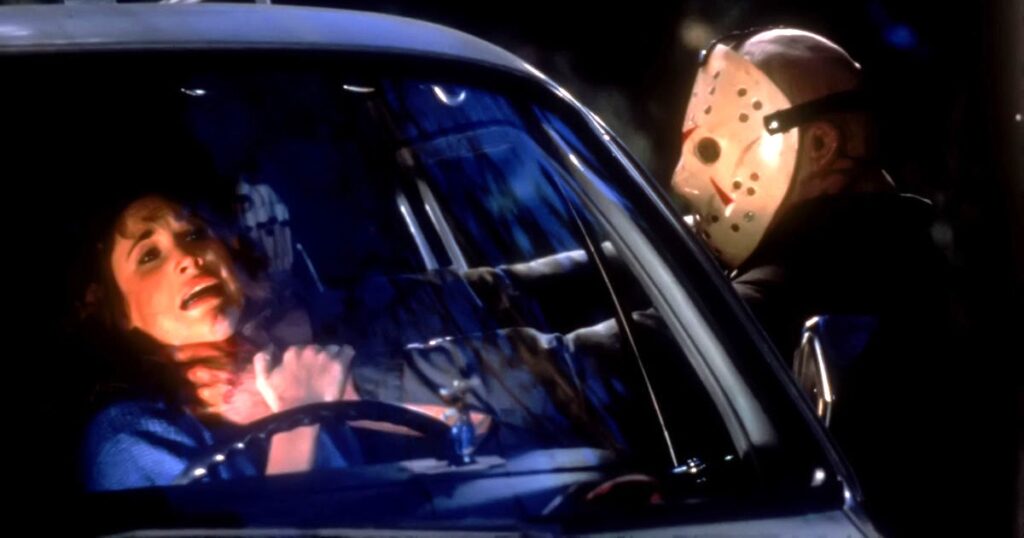
The poster has a 3d looking effect and multiple scenes were filmed just to get extra 3d involved including a scene that was only shown in the theatrical run. A few of the actors even recalled years later that they were told to focus more on little things they could do that would look good in 3D even above their own acting. Things like yo-yos and any number of objects being hurdled at the screen, juggling, and of course the infamous eyeball pop all were designed to make the audience feel engaged. Some of the scenes ended up being very complicated and needed to be shot multiple times, like the car window being broken, a process that proved to be very expensive and time consuming. In addition to this, they had to shoot the movie far brighter than they normally would and even had to take into consideration what colors would be used on screen.
To helm a very much more ambitious project, Steve Miner was brought back into the fold as director after his success with part 2. Miner, an Emmy nominated television director as well, has quite the horror resume with credits after Friday part 3 including House, another collaboration with Friday creator Sean S. Cunningham, Warlock, Halloween H20, and Lake Placid. The original idea of the movie was to have the final girl from part 2, Ginny, played by Amy Steel, come back and be put in a mental hospital after the events of part 2. Jason would track her down and kill all of the hospital staff and patients while setting up a final showdown between the two. While that sounds a bit derivative of slasher contemporary Michael Myers in Halloween 2, it was all for not as Steel was unable or unwilling to come back to the fold.
This changed the approach and Ron Kurz, who wrote the previous movie, was offered the chance to write a script for the third feature but he too declined to be involved. The first draft of the final script was written by the husband-and-wife team of Martin Kitrosser and Carol Watson. Watson wouldn’t have much more on her resume after this, but Kitrosser would go on to write Friday the 13th 5 and be the script supervisor for nearly all of Quentin Tarantino’s movies. While a lot of that script was used in the final movie, Paramount also brought in Petru Popescu to help as they felt the movie wasn’t mean enough. With the 80’s slasher boom at its peak in the first third of the decade, you needed your slasher movie to really stand out and this was already an established series on top of that. While it is said that Popescu added a significant amount to the final movie, he remained uncredited when all was said and done.
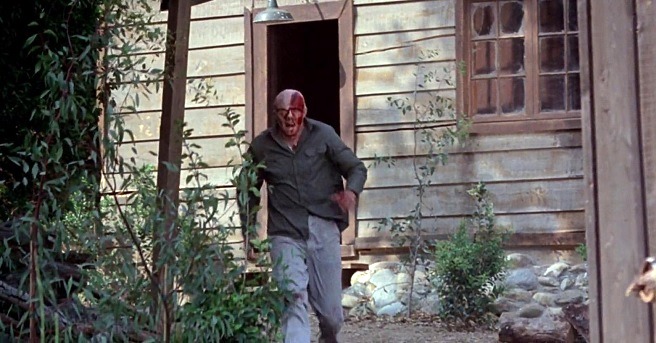
The actors were chosen almost completely based on their looks rather than their acting ability or how well known they were. Dana Kimmell, Tracie Savage, Paul Kratka, Catherine Parks, Jeffrey Rogers, Rachel Howard, and David Katims were all among the main cast who would get terrorized by Jason and Larry Zerner who plays Shelly was found after handing out flyers. When it comes to playing Jason, we would get a third straight movie with a third different actor in the role. British Stuntman Richard Brooker would get the call several films before the role was cemented in the minds of many by Kane Hodder. At 6 foot 3, he was certainly a tall enough Jason but was very trim and ended up having to wear a lot of padding to seem as bulky as the character was needed. He did all of his own stunts for the movie and was lucky enough to be forever tied to the now famous Hockey Mask that the killer wears throughout the series.
The mask was a very fluky occurrence that may not have happened if the movie wasn’t being shot in 3D. The 3D effects supervisor, Martin Sadoff, was a massive hockey fan, specifically of the Detroit Red Wings, and he kept various hockey equipment with him at all times. During a lighting break, he happened to pull out a goalie mask that director Miner loved. When they shot scenes with it, however, it appeared too small on Brookers face so they tweaked it to fit his face better. in addition to resizing the mask, the red triangles and extra hole punches were added to make it stand out. The mask itself was accompanied by a few different prosthetic masks that went under it and took several hours to apply each day.
While the actors, including who played Jason, were new, one thing that stayed the same was series composer Harry Manfredini. His now iconic scores for the series have been played all over and parodied while also being released on vinyl as stand alone or collections over the years. One thing that did change was the opening credits theme, while it had been up beat and jazzy in the past, it was a full blown disco theme for the third movie. Manfredini partnered with Michael Zager for the tune and he would go on to say that it was quite popular at the time in both Discos and Gay Bars. The opening song would become the stuff of legends but the rest of the movie has the trademark Friday the 13th score with all the queues that fans had grown to expect from the series after the first two movies. To that end, Part three marked the first of multiple occasions that the movie was shot under an alternative title and more specifically under the name of a song from pop and rock legend David Bowie, something that would happen again in the series.
Filming the movie had to move all the way across the country from Connecticut to California where they would build nearly every building on the valuzet movie ranch. Part of the reason we received Richard Brooker as the new Jason is because Jason from part 2, Steve Daskawicz, was offered the role but was told that he would have to supply his own travel from his east coast-based home to the new shooting location in Saugus California. He declined and that is why Brooker was able to join and be the first man in the mask. The main reason for the move to California was to be closer to the burgeoning 3D technology that they were going to be using on the film, something Paramount was sued for in the realm of 25 million dollars by Marks Polarized Corporation.
The movie, like many slasher films, would also need to be cut down in a lot of areas to avoid the dreaded X rating. While the script was changed to have a darker and more menacing feel, the gore, deaths, and some of the scenes from that script needed to be changed. One of the more famous instances of this is an alternate ending where survivor Chris walks back to the house only to have the door burst open and have Jason grab her hair and decapitate her. While this would later be revealed as a dream, it was deemed too dark and violent to include. The scene is also notable for using an alternative mask created by none other than Stan Winston. The mask remains in this scene and is not visible in other parts of the movie with the entire design of the character getting an overhaul.
The deaths of Andy, Vera, Edna, Chili, and Debbie’s deaths all had to be cut down in varying degrees to appease the then MPAA from branding them with an unusable rating. In addition to the cuts that were filmed, another element of the script was excised completely. Originally it was going to be implied that Jason had sexually assaulted some of his victims, but several executives thought that this either went too far or that it would make Jason less marketable, perhaps some foresight that this series still had a lot of legs left to it.
Friday the 13th Part III was released on Friday, August 13th, 1982, and raked in almost 10 million dollars in its opening weekend. That number is significant because while it was only number 21 for the year in terms of box office numbers, it surpassed the first movie in terms of opening weekend numbers. In addition, as recently as 2020, it’s the 4th highest grossing movie in the franchise and with inflation its one of the highest grossing slasher films of all time. Its nearly 37 million take at the box office is impressive but the critical reception was cold. While reviewers at the time didn’t think much of it, it is usually near the top of fans rankings for the series and continues to be a crowd pleaser for over 40 years later. Now you can say you don’t need 3D glasses to see just What Happened to Friday the 13th Part III.
A couple of the previous episodes of WTF Happened to This Horror Movie? can be seen below. To see more, head over to our JoBlo Horror Originals YouTube channel – and subscribe while you’re there!
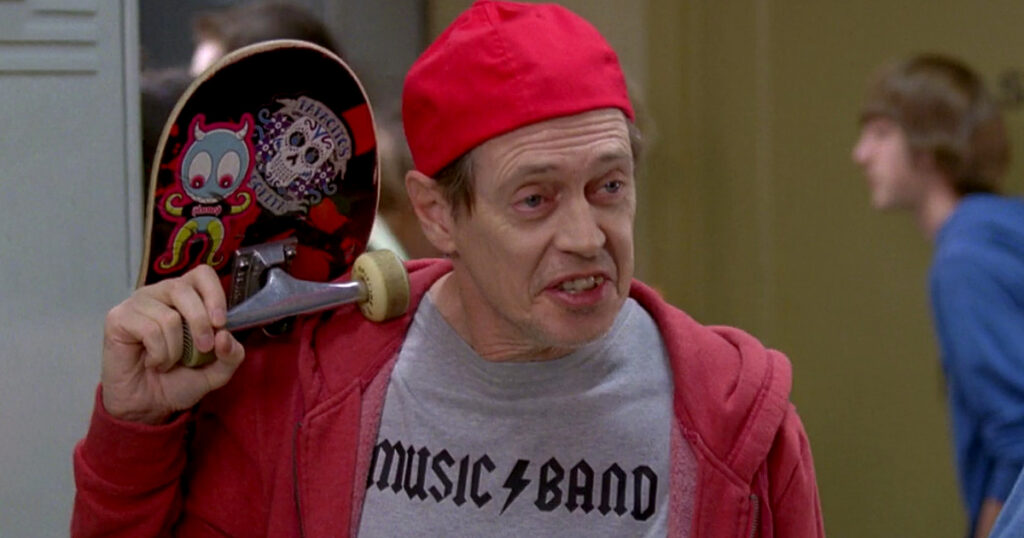
An old adage reminds us that “character is what you do when no one is watching.” Steve Buscemi, the acclaimed actor, exemplified this maxim on September 11, 2001, when he reported to Ground Zero and worked with his old unit, Engine Company 55, in Manhattan. Without fanfare, press conferences, or public declarations, Buscemi worked alongside other firefighters in the aftermath of the attacks. It was only later, through chance encounters and quiet disclosures, that the public learned of his selfless actions that day. And so, it’s fitting that Buscemi, a man of character, is best known for his work as a character actor – bringing depth, nuance, and complexity to the roles he’s played on screen, just as he brought courage, compassion, and humility to his work on and after that fateful day.
But how was that courage formed? To know that, we must return to where the beginning began, when he was born ON HIS BIRTHDAY, December 13, 1957, in Brooklyn, New York, to John and Dorothy Buscemi. He grew up in Valley Stream, Long Island, with his three siblings. Buscemi’s childhood was marked by a strong sense of community and a passion for the arts, which was encouraged by his parents. He attended Valley Stream Central High School and later studied drama at Nassau Community College.
Buscemi’s Early Career
Before pursuing a career in acting, Buscemi served as a firefighter with the New York City Fire Department from 1980 to 1984. He worked at Engine Company 55 in Manhattan’s Little Italy. Buscemi’s experience as a firefighter has had a lasting impact on his life and work, and he has often spoken about the camaraderie and sense of purpose it gave him. After leaving the FDNY, Buscemi began taking acting classes and landed his first film role in the 1985 comedy The Way It Is. He went on to study at the Lee Strasberg Theatre & Film Institute and began building a successful acting career.
In 1986’s Parting Glances, Steve Buscemi played Nick, a supporting role in this poignant drama that explored the dynamics of a group of gay friends in New York City. While not a major role, it marked one of Buscemi’s earliest film appearances and showcased his ability to inhabit characters on the fringes of society.
The following year, in 1987’s Kiss Daddy Goodnight, Buscemi portrayed Johnny, further demonstrating his versatility in smaller roles. His performance contributed to the film’s exploration of dysfunctional family dynamics.
In 1989, Buscemi had a more substantial role as Charlie the Barber in Mystery Train, directed by Jim Jarmusch. This anthology film allowed Buscemi to showcase his talent for bringing depth and nuance to eccentric characters, a skill that would become a hallmark of his career.
1990’s Miller’s Crossing saw Buscemi take on the role of Mink, a memorable supporting character in the Coen Brothers’ critically acclaimed neo-noir film. His performance as the fast-talking, idiosyncratic gangster added to the film’s rich tapestry of colorful characters and further cemented his acting reputation.
In 1991’s Barton Fink, Buscemi delivered a standout performance as Chet, the eccentric and enigmatic friend of the film’s titular character. His scenes with John Turturro were highlights of this Coen Brothers masterpiece, showcasing Buscemi’s ability to blend humor and pathos in his portrayal of offbeat individuals.
Buscemi’s career took a significant turn in 1992 with his iconic role as Mr. Pink in Reservoir Dogs. His performance as the cynical and foul-mouthed jewel thief was a scene-stealer, and his tense exchanges with other members of the heist crew remain among the most memorable moments in Quentin Tarantino’s groundbreaking debut film.
Steve Buscemi’s brief cameo in 1994’s Pulp Fiction, where he played a Buddy Holly-impersonating waiter, further cemented his connection to Quentin Tarantino’s distinctive filmmaking style. Interestingly, Tarantino initially considered Buscemi for the role of Jimmie, which the director ultimately played himself. However, scheduling conflicts prevented Buscemi from taking on the part. In a twist of fate, Buscemi ended up playing a waiter, a role that’s ironic given his Reservoir Dogs character Mr. Pink’s notorious aversion to tipping waiters.
Breakout roles
In 1993’s Rising Sun, Buscemi played Willy Wilhelm, a supporting role that allowed him to showcase his comedic chops amidst the film’s neo-noir thriller narrative.
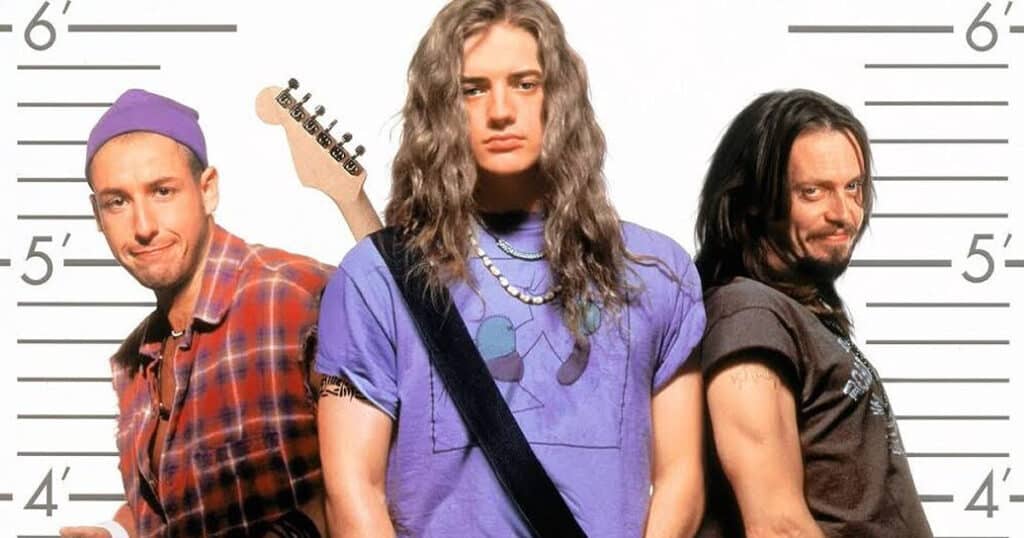
Steve Buscemi’s role in the 1994 movie Airheads is as the bass player of the band called “The Lone Rangers”. The movie is about a band that wants to make it big and get their demo tape played on the radio, but when the DJ refuses, things get out of hand, and they hold the place hostage. In the same year, Buscemi had a memorable cameo as a Beatnik Barman in The Hudsucker Proxy, further cementing his status as a go-to actor for offbeat and idiosyncratic characters. 1995’s Desperado featured Buscemi in a memorable role as, fittingly, a character named Buscemi. His presence added a touch of quirky humor to the action-packed film.
Steve Buscemi played the role of Carl Showalter, a bumbling and eccentric hitman, in the 1996 Coen Brothers film Fargo. His character, along with his partner Gaear, played by Peter Stormare, is hired by William H. Macy’s Gary Lundegaard to kidnap Gary’s wife and demand a ransom from Gary’s wealthy father-in-law. Buscemi’s performance as Carl is memorable for his quirky mannerisms, witty one-liners, and comedic timing, which add a layer of dark humor to the film’s tense and violent moments. Despite his character’s flaws and ineptitude, Carl is a complex and intriguing figure, and Buscemi’s portrayal brings depth and nuance to the role. His chemistry with Stormare and Macy is a highlight of the film. Their characters’ interactions are some of the film’s most compelling moments.
In the same year, Buscemi made his feature directorial debut with Trees Lounge, in which he also starred as Tommy. The film showcased his unique voice as a writer and director, exploring themes of working-class ennui with a distinctive blend of humor and melancholy.
1997’s Con Air saw Buscemi take on the role of Garland Greene, a convict with a peculiar fascination with philosophy and literature. His performance added a touch of quirky humor to the action-packed prison drama.
Buscemi’s role as Donny in 1998’s The Big Lebowski has become one of his most iconic and beloved performances. As the eccentric and often confused friend of Jeff Bridges’ The Dude, Buscemi delivered a masterclass in scene-stealing supporting work, creating a character that has become a cult favorite among fans of the Coen brothers’ classic.
In the widely-renowned masterpiece and arguably greatest film of all time Armageddon, also released in 1998, Buscemi played Rockhound, a member of the team tasked with saving the world from an incoming asteroid. His performance brought a much-needed dose of humor and levity to the high-stakes premise, and his chemistry with co-stars like Bruce Willis and Ben Affleck made him a standout in this ensemble cast.
In 2000, Buscemi directed the gritty drama Animal Factory, further showcasing his skills behind the camera and his ability to explore complex themes and characters.
Steve Buscemi starred in the 2001 thriller Domestic Disturbance with John Travolta and Vince Vaughn. During the filming,” Buscemi was slashed in the face in a bar fight while standing up for Vince Vaughn, which resulted in severe injuries. That year also saw Buscemi lend his distinctive voice to the character of Randall Boggs in the beloved animated film Monsters, Inc. His portrayal of the conniving and misguided villain added depth and humor to the film, and his vocal performance became a highlight of the Pixar classic.
Buscemi reprised his role as Randall Boggs in 2013’s Monsters University and later in the TV show Monsters at Workin 2024, further cementing his place in the iconic Pixar universe. In 2002’s Spy Kids 2: The Island of Lost Dreams and 2003’s Spy Kids 3-D: Game Over, Buscemi played Romero, adding his unique brand of quirky humor to these family-friendly adventures.
Buscemi reunited with Jarmusch for a brief but memorable cameo in the acclaimed 2003 film Coffee and Cigarettes. His appearances in these Jarmusch films cemented his status as a quintessential figure in the realm of American independent cinema, seamlessly inhabiting the director’s wry, character-driven narratives with his inimitable presence and comedic timing.
2003’s Big Fish saw Buscemi deliver a poignant performance as Norther Winslow, showcasing his ability to bring depth and nuance to supporting roles in more emotionally resonant narratives.
In 2004, Buscemi made a memorable guest appearance as Tony Blundetto in the critically acclaimed TV series The Sopranos. His performance as a former convict trying to reintegrate into society added a layer of complexity to the show’s exploration of crime and family dynamics. Buscemi’s involvement with the show extended to directing several episodes, further demonstrating his versatility as a storyteller.
Buscemi’s recurring role as Lenny Wosniak in the hit sitcom 30 Rock began in 2007, and his appearances as the quirky private investigator added a touch of off-kilter humor to the show’s satirical take on the entertainment industry.
In 2010, Buscemi played Wiley in the comedy film Grown Ups, reprising the role in the 2013 sequel Grown Ups 2. These films allowed Buscemi to showcase his comedic talents and appeal to a broader audience.
Boardwalk Empire and beyond
Buscemi’s portrayal of Nucky Thompson in the period crime drama Boardwalk Empire, which premiered in 2010, was a tour de force performance that earned him critical acclaim and numerous accolades. As the influential and complex Atlantic City political boss, Buscemi delivered a nuanced and layered performance that showcased his range as an actor and his ability to anchor a prestige television series.
In 2011, Buscemi made guest appearances on the quirky comedy series Portlandia, playing various eccentric characters and even directing several episodes. This collaboration allowed him to further flex his creative muscles and indulge in his penchant for offbeat humor.
Buscemi lent his distinctive voice to the character of Wayne in the Hotel Transylvania animated film series, starting with the 2012 original and reprising the role in the sequels Hotel Transylvania 2 in 2015 and Hotel Transylvania 3: Summer Vacation in 2018. His vocal performance added a quirky and endearing quality to the lovable werewolf character, contributing to the franchise’s success and appeal to audiences of all ages.
2014 saw Buscemi take on the role of Pete in the critically acclaimed web series Horace and Pete, which he co-created and starred in. This project allowed him to explore complex themes and characters in a more intimate and experimental setting, further cementing his reputation as a versatile and daring artist.
Buscemi’s love for exploring the quirks of everyday life was on full display in the 2015 web series Park Bench, which he directed and starred in. This unique project showcased his talent for finding humor and humanity in the mundane, as he engaged in witty and insightful conversations with everyday people on a park bench in New York City. With his signature wit and curiosity, Buscemi brought out the extraordinary in the ordinary, making Park Bench a charming and delightful watch.
In 2017, Buscemi delivered a standout performance as Nikita Khrushchev in the satirical black comedy The Death of Stalin. His portrayal of the Soviet leader was equal parts hilarious and chilling, showcasing his ability to balance humor and drama with deft precision.
2019 saw Buscemi take on the role of God in the quirky comedy series Miracle Workers. His portrayal of the Almighty added a delightfully irreverent touch to the show’s high-concept premise, and his involvement as a director for several episodes allowed him to put his unique stamp on the project.
Buscemi reunited with his longtime collaborator Jim Jarmusch for the 2019 zombie comedy The Dead Don’t Die. In this satirical take on the horror genre, Buscemi brought his trademark deadpan humor to the role of Farmer Miller, once again proving his mastery at elevating quirky character roles with his inimitable screen presence and comic timing.
In 2020’s Hubie Halloween, Buscemi played Walter Lambert, a supporting role that allowed him to showcase his comedic talents in this Adam Sandler-led horror comedy.
Looking ahead, Buscemi has several exciting projects on the horizon. He is set to play Barry Dort in the highly anticipated Wednesday Season 2, further exploring the delightfully macabre world of the Addams Family spin-off series.
Buscemi is also attached to star in the upcoming film The Shallow Tale of a Writer Who Decided to Write About a Serial Killer, a project that promises to showcase his ability to portray complex and morally ambiguous characters.
He is also slated to appear in the highly anticipated Transformers One, the latest installment in the blockbuster franchise. His involvement in such a high-profile project is a testament to his enduring popularity and versatility as an actor.
Throughout his illustrious career, Steve Buscemi has consistently demonstrated an uncanny ability to breathe life into eccentric, offbeat, and often darkly humorous characters. From his breakout role as Mr. Pink in Reservoir Dogs to his tour de force performance as Nucky Thompson in Boardwalk Empire, Buscemi has carved out a unique niche for himself as a character actor par excellence and a masterful leading man.
What sets Buscemi apart is his ability to find depth and humanity in even the most idiosyncratic or morally ambiguous characters. Whether playing a small-time crook, a philosophical convict, or a Soviet leader, Buscemi brings a level of nuance and complexity that elevates his performances beyond mere caricature.
His collaborations with acclaimed filmmakers like the Coen brothers, Quentin Tarantino, and Jim Jarmusch have showcased his talent for inhabiting the offbeat worlds they create, seamlessly blending humor and pathos in a way that few actors can match.
Beyond his acting prowess, Buscemi’s forays into directing and writing have further cemented his status as a multifaceted artist with a unique voice and vision. Projects like Trees Lounge, Animal Factory, Lonesome Jim, a 2005 comedy-drama exploring family dynamics; Interview, a 2007 remake of Theo Van Gogh’s film about a journalist’s encounter with a celebrity; and The Listener, a 2022 drama about a telephone helpline worker, have allowed him to explore themes and characters that resonate with his sensibilities, offering a glimpse into the mind of one of the most idiosyncratic talents in modern cinema.
In addition to his illustrious career in film and television, Buscemi has also made significant contributions off-screen. He serves on the Advisory Council for Friends of Firefighters, a nonprofit organization that provides mental health and wellness services to active and retired NYFD firefighters and their families. Alongside notable figures like Gary Sinise, Dee Snider, and Kevin Smith, Buscemi contributes to ensuring these brave individuals receive the support they need. His commitment to this cause is a testament to his character and his dedication to giving back to the community, further solidifying his legacy as not just a talented actor and director, but also a compassionate and caring individual.
It’s all the more baffling, then, that Buscemi was attacked while walking down a street in New York City on May 8, 2024. He was taken to a hospital and treated for bruising, swelling, and bleeding to his left eye after being punched. The subject was identified by authorities, but as of this writing, is still at-large. This incident is part of a disturbing trend in New York City, where there have been at least 12 reported incidents of people being randomly attacked over the preceding weeks. Fellow Boardwalk Empire alum Michael Stuhlbarg was also attacked while walking through Central Park 2 months prior, which makes me wonder if it’s an irrational response to hating the show. It’s been off the air for 10 years. Let it go.
But on a more uplifting note, whether stealing scenes in ensemble comedies or anchoring prestige dramas, Steve Buscemi has left an indelible mark on the entertainment landscape. His ability to find humor and humanity in the most unlikely of places has endeared him to audiences and critics alike, cementing his legacy as a true original in the world of acting.
The cast of Space Cadet talk filming, including Poppy Liu’s seven-month pregnancy and incredible improvisational skills.
Usually, when we see space in cinema, it’s usually accompanied by the word “opera” or “epic.” Enter Emma Roberts as a Florida Girl who wants nothing more than to get to space, and you’ve got Space Cadet, a lighthearted romantic (?) comedy that feels more cheerleader camp than serious space institution. These aren’t usually my types of films but I will always take the opportunity to be able to interview Chanel Oberlin from Scream Queens, Kiki from Hacks, and Billy Bone from Black Sails. So join me as I talk to stars Emma Roberts, Poppy Liu, Tom Hopper and writer/director Liz W. Garcia about their new film, Space Cadet (read our review here).
Space Cadet plot synopsis:
Tiffany “Rex” Simpson (Emma Roberts) has always dreamed of going to space, but life isn’t going quite as planned. Determined to turn things around, she aims high and with the embellishing touch of her supportive best friend Nadine (Poppy Liu), her “doctored” application lands her in NASA’s ultra-competitive astronaut training program. In over her head, Rex relies on her quick wits, moxie and determination to get to the top of her class. NASA program directors Pam (Gabrielle Union) and Logan (Tom Hopper) certainly take notice, but can this Florida girl get through training and into the cosmos before she blows her cover? Written and directed by Liz W. Garcia (“Purple Hearts,” “The Sinner”), Space Cadet is a comedy about the power of being yourself, following your dreams and shooting for the stars.
SPACE CADET IS STREAMING ON PRIME VIDEO ON JULY 4TH, 2024.
About the Author
Tyler Nichols is a horror fanatic who resides in Michigan and is always on the hunt for the next great film. When not scouring the internet for movie news, he is usually off watching something dark, writing nonsensical musings, or playing in some fantastical video game world. While horror takes up most of his time, he still makes time for films of all types, with a certain affinity for the strange and unusual. He’s also an expert on all things Comic Book Cinema. In addition to reviews and interviews here on JoBlo.com, Tyler also helps with JoBlo Horror Originals where he’s constantly trying to convince viewers to give lesser-known horror films a chance.
PLOT: In 1980s Hollywood, adult film star and aspiring actress Maxine Minx finally gets her big break. But as a mysterious killer stalks the starlets of Hollywood, a trail of blood threatens to reveal her sinister past.
REVIEW: I think I was one of only a handful of people left unimpressed by Ti West‘s double feature of X and Pearl. I was impressed by the scheduling and secrecy elements of production but I just couldn’t connect to the story itself. Each felt like a shallow experience, lacking in any true direction, and devoid of interesting characters. I consider myself a fair man, so when the trilogy capper was announced, I knew I’d be giving it a shot. So when I tell you that not only did I enjoy this film, I absolutely loved it: there’s a lot of baggage attached to that statement.
Maxxxine follows after the events of X (and its prequel Pearl) by following aspiring actress Maxine Minx in her quest for Hollywood stardom. All the while, a mysterious killer known as the Night Stalker is murdering young women in the city. Taking the visual style of a Maniac Cop or a Dressed to Kill, there’s a phenomenal 80s aesthetic that permeates every frame. The heavy grain and neon lights will put any older fan in a place of pure nostalgia. Then add in the studio backlots and run-down video store and any self-respecting movie fan will be batting off endorphin hits. Sure, there are silly inclusions like the Psycho house, but it works for the 80s Hollywood vibe. But there’s also a campiness in its sound design that blends with the LA setting to perfection.
This is where I’m going to lose some people: I never really understood the intense adoration for Mia Goth‘s performances in the prior films. Yes, saying a bunch of lines without breaking can be impressive but if I don’t find the words being said believable than what’s the point? Goth in MaXXXine is what I’ve always wanted from this character: a bit of pathos and actually having struggles. And she delivers an utterly fantastic monologue which I think far eclipses her prior work. Kevin Bacon is an absolute scene stealer as Private Investigator John Labat. His sliminess oozes through the screen and is a great counterbalance to some of the more serious things happening. He always takes these villainous roles and gives them such a detestable side. I wanted more of him but at least his character sendoff is worthy of his reputation.
I was surprised at how layered nearly every side character felt. From Bobby Cannavale to Halsey, each person breathes fully in this lived-in world. And it’s also always great to see genre staple Larry Fessenden in a small part. The kills in MaXXXine aren’t overly abundant but they make their presence known. From crushed testicles to a completely crushed car, this is not for the squishily squeamish types. There’s a practicability to all of the effects that satiate even the most rabid of gorehounds. We need to celebrate when CGI isn’t over every frame of a death scene. Tyler Bates delivers a score that fits this film comfortably between other slashers and thrillers of the 80s.
I still feel that West struggles with exposition, delivering it in often very clunky ways. At one point, something is very clearly revealed in the first act yet no character acknowledges it till closer to act three. It makes Maxine seem like a bit of a dummy that it took her so long to come to a very obvious conclusion. But outside of a few instances, I’d say this is the best-written of the entire trilogy. X and Pearl are filled with caricatures but MaXXXine finally provides us with some fleshed-out human beings. Even Moses Sumney’s Leon feels more lived in than any of the porn star cast of X. Sorry, I’m not trying to constantly bash the other films but it’s hard not to constantly compare the three films when they’re each so drastically different yet expected to carry through a narrative.
And those that haven’t seen the first two shouldn’t be dismayed. This could easily be seen on its own and completely stands up. However, since this is the trilogy capper, you’re going to get a little more from knowing the context that the rest of the series gives. I’ve seen some people upset with the direction this going in the third act but I think it’s been perfectly set up by the ending of X. I always love these “evil masked by good” stories and this manages to recreate 1985 in a believable way. Goth and Bacon are absolute highlights with some of the best gore gags of the year. So if you’re down for a film that feels of the era and is a great character piece for Goth, then you’re going to love watching her be a fucking star.
MAXXXINE IS PLAYING IN THEATERS ON JULY 5TH, 2024.