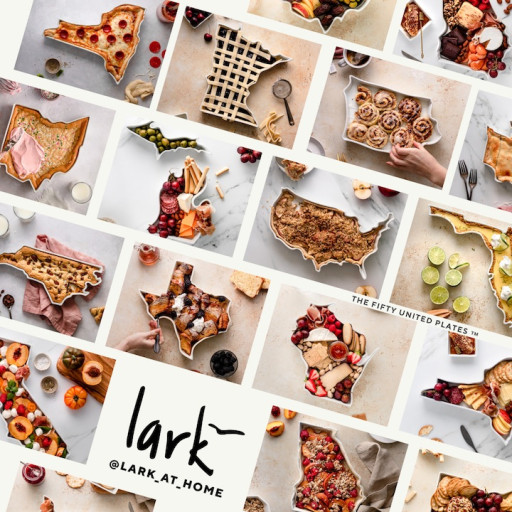
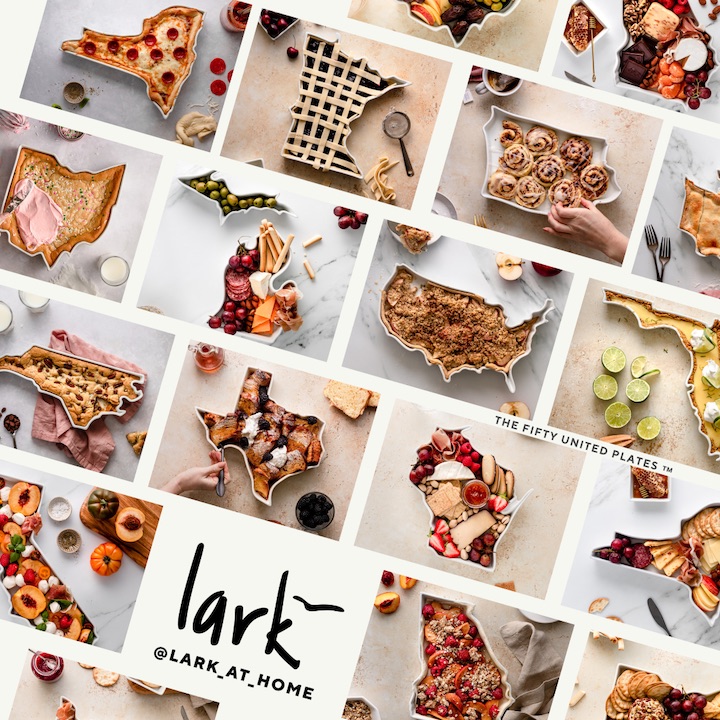
Built for our neighbors, born of their bounty, and made only greater in its relation to another person, another place - a spread known as The Fifty United Plates®.
DETROIT, August 31, 2023 (Newswire.com)
-
Every state holds a memory, a story, a cherished moment for the people who call it home. Lark at Home, renowned for their heartwarming kitchen wares, lovingly captures these stories with their "Fifty United Plates" collection. This unique collection honors each of the 50 U.S. states, serving up not just a meal, but also the nostalgia, love, and pride of home.
"More than just a collection of plates, it's our love letter to the rich tapestry of American culture, landscapes, and cherished family stories from every corner of the country," shares Ryan Lawless, at Lark at Home. "Our aim is to make every meal a journey, a homecoming, a celebration."
Highlights of the "Fifty United Plates" collection:
Narrative Designs: Every plate, an artwork, tells the tale of its state, igniting conversations and memories around the dinner table.
Crafted with Care: Made with porcelain, each plate is both a piece of art and a testament to quality.
For those far from home and for those who simply cherish the magic of shared tales and meals, "Fifty United Plates" is your journey home, one plate at a time. Experience the warmth of the collection and more at www.larkathome.com.
About Lark at Home: Lark At Home's aesthetic is a hit with contemporary families and design-forward consumers. Their mission is to provide modern wares of the highest quality made in the most capable, ethical production settings. A husband and wife design team, Kaitlyn and Ryan Lawless, they are based in metro Detroit, Michigan.
For media inquiries: please contact: [email protected] or (360) 472-1974
Barbie is set to overtake the Super Mario Bros Movie as the highest-grossing movie of the year at the domestic box office.
Sorry, Mario. It’s Barbie’s world now. Per Deadline, Barbie will overtake the Super Mario Bros Movie to become the year’s highest-grossing movie at the domestic box office this Wednesday with a haul of over $574.2 million.
The Super Mario Bros Movie took 138 days to reach $574.2 million, which Barbie did in just 34 days. As it stands now, Mario remains #1 at the worldwide box office with $1.3 billion, but Barbie is just behind at $1.2 billion. As the film is still going strong, Mario might just have to give up that spot as well.
Barbie has also become the highest-grossing movie in Warner Bros. history at the domestic box office, speeding past the previous record holder, Christopher Nolan’s The Dark Knight. Barbie also has the chance to surpass Harry Potter and the Deathly Hallows – Part Two to become the studio’s highest-grossing movie worldwide.
Speaking of the success of Barbie, Margot Robbie actually predicted that the film would gross $1 billion when she pitched it to the studio. “I think my pitch in the green-light meeting was the studios have prospered so much when they’re brave enough to pair a big idea with a visionary director,” Robbie said. “And then I gave a series of examples like, ‘dinosaurs and [Steven] Spielberg,’ that and that, that and that – pretty much naming anything that’s been incredible and made a ton of money for the studios over the years. And I was like, ‘And now you’ve got Barbie and Greta Gerwig.’ And I think I told them that it’d make a billion dollars, which maybe I was overselling, but we had a movie to make, okay?!“
Greta Gerwig’s Barbie features a star-studded cast which includes Margot Robbie as the title character and Ryan Gosling as Ken. When Barbie suddenly begins to worry about her own mortality, she goes on a journey of self-discovery to the real world, accompanied by a love-lorn Ken. Considering how well the film is doing, you can almost certainly expect a sequel to be announced once the WGA and SAG-AFTRA strikes have concluded, but it was revealed that neither Robbie, Gosling, or Gerwig have deals in place to return for a sequel. Barbie will be released on Digital on September 5th.
NEW YORK, August 30, 2023 (Newswire.com)
-
Three in 10 (31 percent) American consumers will boycott brands that are not committed to diversity, equity, and inclusion (DE&I) and this number increases to nearly four in 10 (37 percent) among under-represented U.S. consumers, according to a new, eye-opening, investigation into intersectionality in brand marketing by leading global market research agency Savanta.
The report also discovered that Gen-Z, along with LGBTQIA+ and under-represented U.S. communities, are championing for ethical consumerism with 37 percent of these consumers prepared to shop elsewhere to ensure they are not contributing to behaviors or causes that they disagree with.
Savanta's "Understanding Bias, Discrimination, and Its Impact on Society," researches the lived experiences of nearly 5,000 participants across the U.S. and Europe, to understand the discrimination felt by consumers, in an effort to raise awareness and fuel inclusivity from brands when marketing to their audiences.
According to Sadia Corey, vice president of Savanta's client development, the goal of the study was to "recognize the diverse ways groups are marginalized, so that brands can enhance authenticity and foster genuine connections with consumers."
Brand DE&I Efforts Impact on Consumer Behavior
In today's tight economy, price still reigns supreme when making purchasing decisions, particularly among women and Baby Boomers in all countries, with 73 percent reporting that value is the biggest buying factor. This is, naturally, followed by quality and convenience. However, Savanta's report shows that Americans' pursuit of ethical consumerism is gaining momentum. In fact, 31 percent of U.S. shoppers said that they will not buy from a brand that is not committed to DE&I and this number increases to 37 percentamong under-represented communities and Gen-Z consumers.
Time to Take a Stand?
There is a perception that brands need to voice an opinion when it comes to important social issues. Remaining silent at important social moments has both pros and cons, but for the majority of consumers, it appears that it will have no effect on how they view the company. In fact, more than half (53 percent) of all consumers surveyed said that they would think neither positively nor negatively about a brand if it did not speak out.
However,"Understanding Bias, Discrimination, and Its Impact on Society" found that brands that take a stand do matter to many groups in America. With 28 percent of the LGBTQIA+ community, 31 percent of gender non-conformists, and 27 percent of those from the under-represented community reporting that their perception of a silent brand would be negatively affected, it can be determined that the old adage of "treat others as you would want to be treated" resonates with those who may have experienced discrimination, and it means that they want to support people like them.
How are U.S. Shoppers Showing Support?
Consumers are demonstrating their allegiance to the brands and stores that they align with in meaningful ways. In addition to shopping local, which 45 percent of the LGBTQIA+ community prefers to do, those from the under-represented U.S. community are significantly more likely to shop at minority-owned businesses than White or Caucasian people (35 percent versus 20 percent), as are those from within the LGBTQIA+ community (33 percent).
"As consumers increasingly demand authentic and inclusive brand experiences, those brands that fail to recognize the importance of intersectionality risk losing relevance, market share, and the opportunity to create a lasting impact," said Corey.
Methodology
Savanta conducted research for the report between May and June 2023. In total, 4,973 adults were surveyed across six countries, 29 percent of whom were based in the U.S. 53 percent identified as female, 45 percent identified as male, and 2 percent identified as gender non-conforming. Four generations were surveyed, including 17 percent Gen Z (age 18-25), 30 percent Millennial (age 26-40), 31 percent Generation X (age 41-59), and 22 percent Boomer II (age 60+). 85 percent surveyed identified as heterosexual, 11 percent as LGBTQIA+, and 4 percent preferred not to say. Race was reported as 74 percent White/Caucasian and 28 percent BIPOC in the U.S. and U.K. In addition to the quantitative survey conducted across markets, the conversational insights platform Voxpopme was used to collect qualitative data through 155 video responses to a variety of questions. This mix of both qualitative and quantitative research helped inform an array of rich findings on the topics Savanta focused on. Note: Ethnicity was only identified in the U.K. and U.S. due to Europe's ban on data collection by race.
To learn more about "Understanding Bias, Discrimination, and Its Impact on Society," or to view the report, visit Savanta Report.
Contact Information:
John Whittaker [email protected]
+1 347.533.1463
COEUR D'ALENE, Idaho, August 30, 2023 (Newswire.com)
-
For a third consecutive term, Reono Bertagnolli, A Medical Group, DBA Rely Radiology, has earned The Joint Commission's Gold Seal of Approval® for Ambulatory Care Accreditation by demonstrating continuous compliance with its performance standards. Rely has emerged as an industry leader in teleradiology and telecardiology, and proudly displays the Gold Seal as evidence of its ongoing commitment to providing the highest-quality patient care.
"I am proud of the entire Rely Radiology team and the company's accreditation," says Dr. Reono Bertagnolli, Medical Director. "This achievement and seal reflect Rely's unwavering dedication to provide the highest quality services and to meet or exceed the rigorous standards and expectations set by The Joint Commission on a regular basis."
To earn re-accreditation, Rely Radiology underwent an arduous, comprehensive review by The Joint Commission. The inspection confirmed the company's ongoing compliance with Ambulatory Health standards spanning several areas including emergency management, environment of care, quality assurance, credentialing, and leadership.
The Joint Commission's standards are developed in consultation with health care experts and providers, measurement experts and patients. They are informed by scientific literature and expert consensus to help health care organizations measure, assess, and improve performance.
"Rely has been an excellent partner over the years, and their re-accreditation by The Joint Commission validates what TridentCare has come to expect from Rely - cost-effective, timely and high-quality interpretations by some of the finest radiologists and cardiologists in the country," said Jeff Hooper, COO for TridentCare, a leading national provider of portable diagnostic imaging.
"As a healthcare accreditor, The Joint Commission works with healthcare organizations across care settings to inspire safer and higher quality of care that is more equitable and compassionate," says Ken Grubbs, DNP, MBA, RN, executive vice president of Accreditation and Certification Operations and chief nursing officer, The Joint Commission. "Through collaborating on innovative solutions and evidence-based resources and tools, The Joint Commission helps drive improvement while maintaining accountability through our leading survey methods and standards. We commend Rely Radiology for its commitment to advance safety, quality, equity, and compassion for all patients."
Rely Radiology is a leading national provider of teleradiology and telecardiology services, specializing in the interpretation of x-rays, ultrasounds, echocardiograms, MRIs, CT scans, nuclear med scans, and more. Using our proprietary electronic-based software and methods, our images can be shared with medical providers anytime, anywhere - quickly, accurately, and effectively.
CONCORD, Mass., August 30, 2023 (Newswire.com)
-
Beta Bionics, Inc., a pioneering leader in the development of advanced diabetes management solutions, is thrilled to announce the successful closure of its Series D funding round securing $100 million in new equity capital.
The Series D funding was co-led by new investors Sands Capital and Omega Funds with an additional new investor, Marshall Wace, also participating. Previous investors Soleus Capital, Eventide Asset Management LLC, Farallon Capital, Perceptive Advisors, certain funds managed by RTW Investments, LP, ArrowMark Partners, and Pura Vida Investments also participated.
Sean Saint, CEO of Beta Bionics, said: "This significant investment represents a powerful vote of confidence in Beta Bionics' mission to redefine diabetes management with user-centric technologies. We are deeply grateful to our investors for recognizing the immense potential of our products. We are eager to push the boundaries of what's possible by expanding access to the iLet Bionic Pancreas nationwide and further develop and test the bi-hormonal bionic pancreas."
"We're excited to support the Beta Bionics team as they work to launch and develop breakthrough technologies that help reduce the burden of diabetes," said Parker Cassidy, Partner, Sands Capital Ventures.
"Our ability to secure this capital is a testament to iLet's competitive differentiation and our financial discipline," said Stephen Feider, CFO of Beta Bionics. "Thank you to the investors for believing in our team and the mission."
Beta Bionics' flagship product, the iLet Bionic Pancreas, is an autonomous insulin delivery system that streamlines diabetes management and reduces the burden on patients and physicians. The only input required to get started is the user's weight — the iLet does the rest. Healthcare providers no longer need to determine complex settings including correction factors, insulin-to-carb ratios or pre-set basal rates. When iLet users "GO BIONIC" with their diabetes management, there's no carb counting* or calculating insulin corrections throughout the day - the iLet determines 100% of the insulin doses.
The new model will continue serving current Profile members and the Morgantown community while expanding its offerings to neighboring West Virginia residents.
MORGANTOWN, W.Va., August 30, 2023 (Newswire.com)
-
Profile Plan of Morgantown, a prominent weight management solutions provider, has announced they are moving to a new, virtual business model to support its members. While the current, physical Morgantown Profile location will close, members will continue to receive a high-quality experience and have access to the same tools, resources, and delicious Profile foods while enjoying the convenience of virtual sessions with their Profile coach.
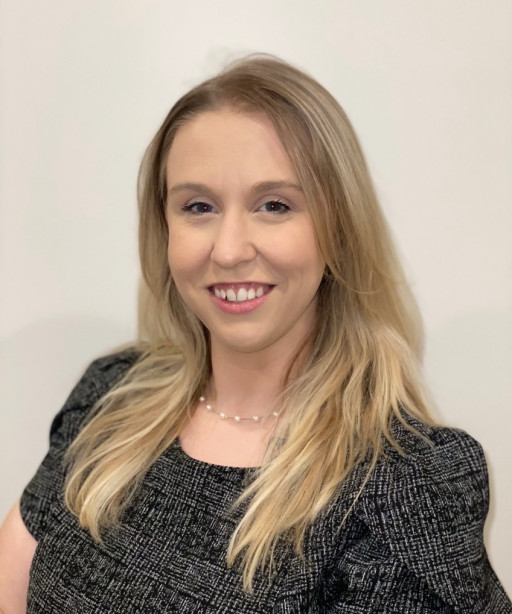
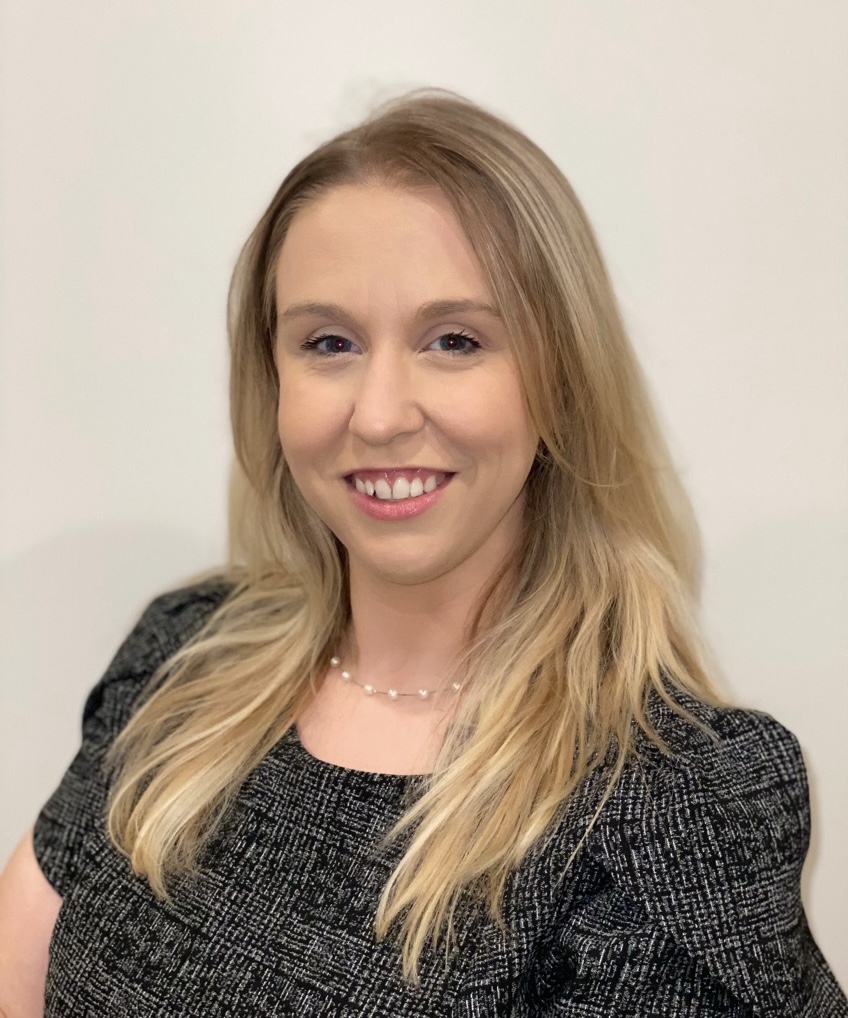
Current Store Manager and Morgantown resident, Tiffany Burrow, has taken over management of the business and will lead virtual coaching efforts. Burrow has been a certified health coach with Profile Plan for the past five years and has managed the Morgantown location for three years. Burrow became passionate about health and wellness after her own personal weight loss of 115 pounds and is highly motivated to help bring increased nutrition and weight loss education and resources to the residents of West Virginia.
"I'm thrilled to be moving Profile Plan to a virtual business as it will offer more flexibility to our current members while allowing others in West Virginia access to our weight loss services. Schedules are busy, traffic can be bad, or life changes and this new model will offer members a convenient way to stay on track with their coaching sessions and ultimately, their weight loss goals," shared Burrow.
Profile Plan, which touts an average of 15% body weight loss for its members[1], is uniquely positioned to support individuals virtually through their personalized one-on-one weight loss coaching sessions, proprietary Profile smart tracking and technology, DNA testing, and subscription-based online food store.
As an established provider of best-in-class weight loss solutions, Profile Plan members are experiencing an average weight loss of 34.5 pounds when following the plan for 12 months, along with an average savings of $1,500 in medical costs within that year. Over 200,000 Profile members across the country have lost a combined total of more than 3 million pounds since opening in 2012.
One of the cornerstones to successfully losing weight and keeping it off is accountability and guidance. Profile's certified, professional coaches work with Profile members weekly to track progress, provide education and modify meal plans for maximum success. It's proven that working with a coach leads to 3X more weight loss.
For more information about Profile Plan or to schedule a free weight loss consultation to kick-start your own journey, please visit profileplan.com.
Contact Information:
Tiffany Burrow
Profile Plan Store Manager [email protected]
304.290.6592
A University of Chicago team identified a special type of stem cell that heals damaged bowel tissue in mice, a discovery that may have direct application to humans with inflammatory bowel disease. These early findings, made possible with seed funding from the GI Research Foundation, resulted in a recent five-year, $2.5 million grant from the National Institutes of Health to study those cells in humans.
CHICAGO, August 30, 2023 (Newswire.com)
-
The state-of-the-art isn't enough when it comes to treating Crohn's disease and ulcerative colitis, the two major types of inflammatory bowel diseases (IBDs).
Medication can reduce the inflammation brought on by these conditions, along with the painful symptoms they cause. Surgery, meanwhile, can remove areas of the digestive tract that have been scarred or don't respond to the medical therapies. Current immunotherapies have revolutionized the treatment of these conditions, which are the result of abnormal immune system response. But there are a large number of ongoing unmet needs and gaps in care. For example, the current medical therapies do not address the root cause of the diseases.
Work by the University of Chicago's Dr. Cambrian Liu and funded by the GI Research Foundation might someday offer a new approach to treatment based on regenerative medicine. Dr. Liu and his team recently identified a unique type of skin-like stem cells that induce the healing of wounds in the colons of mice.
These cells travel from what is known as the anal transition zone, adjacent to the colon, to nearby areas that are ulcerated. They then take on new functions and form a thin, healthy layer of tissue over the wounds.
"These skin-type stem cells can make a hybrid structure that's resistant to the disease and partially restores some of the intestine's functions," Dr. Liu said. By better understanding these stem cells, researchers could ultimately develop a new class of treatments for people with IBD.
"You could use these cells as a Band-Aid. You could cover up areas of bleeding in these patients so that you can tilt the balance back toward healing. In patients that have really severe disease, [it may even be possible to] rebuild a good portion of the lining of the intestine with these stem cells."
Leveraging seed funding from the GI Research Foundation, the team recently received more than $2.5 million from the National Institutes of Health to further study these cells. Through this study, they are imaging and determining the characteristics of the stem cells in humans and determining how they change in order to heal wounds caused by IBD.
"Ultimately, the advantage of this approach would be that we can pull these stem cells from the patients themselves. The ideal workflow would be to pull some from the patient, regenerate them in the lab, and then transplant them back into the patient. You're getting the benefit of rebuilding the organ without running the huge risk of immunological rejection that comes from using foreign tissue, as can happen with organ transplants," Liu said.
This summer, the team received an additional $100,000 from the GI Research Foundation to study other stem cells in the bowel and explore how the function of those cells might generate an improper autoimmune response in people with IBD. Those insights will help doctors determine who is most likely to respond well to current immunotherapies used to treat IBD and how those immunotherapies might interact with stem cell-based wound healing treatments.
"There's a very important push in understanding GI disease, and especially IBD, as a personalized disease. Everyone is a little different…So we ask questions like: In patients that achieve wound healing naturally, what's different about their stem cells? Does their body create an environment that is more conducive to healing? Is the inflammation that drives inflammatory bowel disease a stem cell-driven process?" Liu said.
A new imaging technique is central to answering these questions. Dr. Liu and his team are the first researchers in the world to use this technique in studying regeneration of the bowel and gastrointestinal tract.
They call it ALCHEMIST, short for Analysis of Cleared Human Intestine. It's based on a technique that is used by brain researchers, and it allows the Liu team to get three-dimensional pictures of samples of intestine that have been removed from a mouse or human at the cellular level.
"The field has struggled with this - linking changes in these organs down to the very level of the cells that make them up when they're impacted by disease," Liu said.
"Certainly, we have medical imaging technologies like MRI or CAT scans that can generate three-dimensional views of organs. But those are limited in terms of how small they can see in the body. And, often, the processes that drive disease are going to be found in those very small-scale details."
Previously, the state-of-the-art was to cut samples into extremely thin slices and examine those with a microscope. But, using that method, researchers lose the three-dimensional context that is crucial to understanding how cells are behaving. They also introduce unwanted artifacts into the sample when they cut it with a scalpel.
With ALCHEMIST, however, the Liu team uses carefully selected chemical reagents to wash out the cell membranes - effectively turning the tissue transparent. These membranes scatter the light that is used by a microscope, and they're partially responsible for leaving observers with a fuzzy picture.
Having washed away much of what confounds the image when looking at a large, thick sample, the team uses a confocal microscope to capture a series of two-dimensional images. The microscope captures those images at different depths and blocks any out-of-focus light before it reaches the camera. They then computationally reconstruct those images into a three-dimensional image of the sample.
This technique allows the team to look at the entire mouse colon at once. It also allows them to look at human samples that are about as large as a person's hand.These are exceptionally large samples that are not typically examined at the cellular level.
"This makes a huge difference. In health, what happens is, normally tissue is very orderly at a microscopic scale. But when disease happens, that order breaks up, and you can't rely on these traditional slices to tell you much about what's happening in the neighborhoods of that disease. You have to have a Google Earth sort of view of that whole process. ALCHEMIST gives us that, and it's been incredibly helpful and informative for our lab," Liu said.
In the case of the stem cell research, "it allowed us to see the entirety of the mouse distal colon during the healing process. And that showed us the skin-like anal stem cells were contributing to wound healing."
About the GI Research Foundation
The GI Research Foundation was founded in 1961 by grateful patients and friends of the late Dr. Joseph B. Kirsner, a pioneer in gastroenterology who devoted his life to medicine, teaching, and patient care. Today, the University of Chicago Medicine's Digestive Diseases Center, which is supported by the foundation, is internationally recognized for research-driven medicine and its team of highly specialized physicians. For more information, see: https://giresearchfoundation.org
About the University of Chicago Digestive Diseases Center
The Digestive Diseases Center at the University of Chicago Medicine is a collaborative, multidisciplinary network of physicians, researchers and allied health professionals who share a legacy of innovation and a common purpose: to improve the lives of patients who suffer from digestive diseases. For more information, see: https://www.uchicagomedicine.org/conditions-services/digestive-diseases
Contact Information:
Jackie Casey
Executive Director [email protected]
312-332-1350