Home Blog Page 298

AI-Powered Pre-Authorization Advances Administrative Efficiency in Radiology

0
AI-Powered Pre-Authorization Advances Administrative Efficiency in Radiology
Gravity by Alpha Nodus Automates 80 Percent of Authorizations Within Seconds

Alpha Nodus, a leader in advanced AI healthcare solutions, today announced enhancements to Gravity, the company's prior authorization tool that automates 80 percent of authorizations within seconds, accelerating the patient journey and increasing revenue by automating redundant processes, reducing errors, and eliminating case backlogs. 

Gravity for prior authorization automates the time-consuming process of evaluating patient information for reimbursement. What typically takes days to weeks to process is done within seconds, leaving just the exceptions for staff to manually process. Alpha Nodus released its latest version of Gravity with a new user interface, allowing clients to use data to optimize efficiencies. The solution integrates with Radiology Information Systems (RIS) and has a zero-footprint deployment.

Typically, the process for prior authorization is a tedious manual process. Oftentimes staff need to match disparate information sent by referring physicians and insurance guidelines to determine patient eligibility for a prescribed procedure. This is a time-consuming process, delaying patient care.

Gravity pursues prior authorizations from payors and updates clients' RIS statuses and insurance fields. The latest version delivers a user interface designed specifically for enabling staff and AI to work cooperatively. The cloud portal provides hybrid views of information that both prior authorization and insurance verification teams want. Rather than moving between RIS and payor portals with exploratory workarounds, staff can remain in one application that is honed for their tasks. Additionally, Gravity bundles information in new ways. For example, if staff must make a lengthy call to an insurance carrier, Gravity automatically suggests other appointments needing attention from the same carrier. Leveraging AI to aggregate RIS and insurance information into a format that is designed for prior authorization teams is a first in the industry. 

Alpha Nodus recently deployed Gravity with the latest enhancements at Houston MRI & Diagnostic Imaging. "We are very pleased with how easily the new software was deployed and how quickly it integrated with our existing systems," says Melissa Copeland, Senior Director of Operations. Copeland adds, "We're really looking forward to the new dashboard functionality to further optimize our efficiency and be able to best integrate the AI functionality with our staff."

"We have been using AI technology for several years to entirely automate the routine tasks in prior authorizations, and now it has evolved to put AI tools directly in the hands of staff," said Shamit Patel, CEO at Alpha Nodus. "The automated process significantly reduces workloads and this new interface targets the remaining exceptions."

About Alpha Nodus

Alpha Nodus was founded with the mission of accelerating patient care. The company uses AI to remove barriers that delay prior authorization and patient scheduling. Gravity removes pain points for both healthcare administrators and patients by automating time-consuming redundant processes, providing deep analytics for identifying operational efficiencies, as well as making care easily accessible for patients. To learn more about Alpha Nodus, visit us at www.alphanodus.com

Contact Information:
Ronny Bachrach
Marketing & PR
[email protected]
617-877-3375


Original Source: AI-Powered Pre-Authorization Advances Administrative Efficiency in Radiology

Sinceri Senior Living Welcomes New COO

0
Sinceri Senior Living Welcomes New COO

April Young, former Executive Vice President of Operation and Sales at Sinceri Senior Living, has recently been promoted to Chief Operations Officer. She has been with Sinceri Senior Living for seven-and-a-half years now and continues to seek growth within the company. Young's knowledge of the senior living industry has continued to help drive the company's performance and support community operations.

Young stated, "The company name Sinceri, which means 'Like Family,' is truly reflective of how I feel about our team members, residents, vendors, etc. We are one family united to serve with purpose and joy to our seniors."

Young also expressed that she is looking forward to continuing Sinceri's success and ensuring Sinceri's team members are continually committed to evolving their services as needs change to enhance the lives of those they serve.

Sinceri Senior Living CEO Chris Belford was also pleased with Young's promotion and believes the industry leader always seeks to understand before implementing initiatives that build organizational efficiency and support Sinceri's mission, values, and vision. He also stated, "April is a prodigious leader who thrives in an atmosphere of support, honesty, and integrity. The descriptions of April's leadership style are the pillars of the Sinceri culture we work so hard to create, and having a leader of April's caliber is foundational to our success as an organization."

The Sinceri Senior Living leadership team looks forward to the continued success of the organization, with April at the helm of operations.

About Sinceri Senior Living:

Sinceri Senior Living is a premier senior living management company that provides services to seniors in 73 communities and 19 states, serving approximately 4,600 seniors across the U.S. Sinceri Senior Living manages all levels of care, including independent living, assisted living, memory care, and skilled nursing communities. From the legacy of its first dedicated memory care community more than 35 years ago, Sinceri Senior Living has built a reputation for expertly managing senior living properties, including owned and managed facilities, with highly sought personalized care and exceptional, unique programming for residents and their families.

Learn more about Sinceri Senior Living at www.sinceriseniorliving.com.

Contact Information:
Missy Day
Vice President of Marketing and Communication
[email protected]
(360) 947-9107


Original Source: Sinceri Senior Living Welcomes New COO

Connect America Named to AVIA Marketplace’s Top Remote Patient Monitoring Companies

0
Connect America Named to AVIA Marketplace’s Top Remote Patient Monitoring Companies

Connect America, a nationally recognized innovator in virtual connective care solutions in the home that enable older adults and those living with chronic conditions to live safe and well, announced today that it was recognized as a Top Company in Remote Patient Monitoring upon conclusion of extensive research and company outreach by AVIA Marketplace, the leading digital health marketplace.

The Connect America Home™ platform, which includes their RPM solution powered by 100Plus, enables healthcare providers to deliver better care for patients in the comfort of their homes while remotely managing their chronic conditions. In addition to remote monitoring services, the company's complete end-to-end platform includes the AI-enabled Esper virtual health assistant™ and clinical insights and analytics that help power more informed decision-making, earlier interventions, and better care and outcomes.

"We are honored to be acknowledged as one of the leading Remote Patient Monitoring companies by AVIA," said Janet Dillione, CEO of Connect America. "With the rising need for remote monitoring, the 100Plus RPM solution was introduced with an explicit goal of reducing patient, clinician, and health care system barriers to RPM use and to improve health and cost outcomes. Today, we are proud that 69% of providers using our 100Plus RPM solution believe it has reduced or greatly reduced the incidence of hospitalizations and other forms of high acuity care, and it consistently drives a 92% customer satisfaction rate while improving clinical efficiencies. "

The Top Remote Patient Monitoring Companies Report represents the aggregation and analysis of client ratings and reviews as well as health system implementation data across the country and highlights broader industry trends to contextualize the impact the companies and products are currently having in the space. Given the complexity and evolving nature of remote patient monitoring, the 2023 refresh of this report helps define the remote patient monitoring landscape and how these solutions best support patient care.

"With the rise of Remote Patient Monitoring solutions, a transformative shift in patient care is imminent. Our report illuminates the trailblazers making significant strides in this field," said Dhiraj Patkar, SVP of Digital Health Solutions at AVIA. "Our objective with the Top Remote Patient Monitoring Companies Report is to arm healthcare organizations with comprehensive insights and tools crucial for the successful deployment and expansion of these advanced digital solutions. Leveraging digital technologies, we can extend care access, optimize patient experiences and outcomes, and tackle the escalating challenges that healthcare providers encounter in today's multifaceted landscape."

###

AVIA Marketplace is where innovative health systems and hospitals go to find the right digital health solutions. It's built to efficiently search vendors and guide informed decisions, with tools like product comparisons, match scores, report generators, peer reviews, and market insights.

Access the full report findings from AVIA Marketplace's Top Remote Patient Monitoring Companies list here.

About Connect America
Connect America, and its family of brands, is the leading provider of connective health solutions dedicated to empowering aging adults and vulnerable populations to live safely and independently at home for as long as possible. The company's AI-assisted digital health and safety platform includes Remote Patient Monitoring (RPM) solutions, Personal Emergency Response Services (PERS), Medication Management, Analytics, and SDoH support that enables continuous in-home and mobile monitoring of aging and at-risk populations for more timely interventions and smart escalations of care. With improved outcomes, reduced hospitalizations and lower care costs, patients and their care circles have peace of mind knowing Connect America is how health and home connect. To learn more, visit https://www.connectamerica.com.

Contact Information:
Sean Chase
AVIA Press Contact
[email protected]
(603) 307-9428

Jane MacPherson
Communications Manager
[email protected]
16473027164


Original Source: Connect America Named to AVIA Marketplace's Top Remote Patient Monitoring Companies

Scream 4 (2011) – WTF Happened to This Horror Movie?

0
Scream 4 (2011) – WTF Happened to This Horror Movie?

The new episode of the WTF Happened to This Horror Movie? video series looks back at Wes Craven’s 2011 sequel Scream 4

It’s time for another episode of the WTF Happened to This Horror Movie? video series, and with this one we’re looking at Scream 4 (watch it HERE), the one entry in the Scream franchise that had a surprising lack of success at the box office. The audience didn’t come back for this one, which was released eleven years after the previous film, but did return for the more recent sequels. To hear all about Scream 4 and its bad luck, check out the video embedded above.

Directed by Wes Craven from a screenplay by Kevin Williamson – which received uncredited rewrites from Ehren Kruger and Paul Harris Boardman – Scream 4 has the following synopsis: It has been many years since the Ghostface Killer cut a deadly path through the town of Woodsboro. In order to get over the trauma of those horrific events, Sidney Prescott has written a self-help book. She returns to Woodsboro for her book tour, and reconnects with old friends Gale Weathers and Sheriff Dewey. However, Sidney’s arrival also sparks the return of Ghostface, putting Sidney and everyone she loves in danger.

The film stars Neve Campbell, Courteney Cox, David Arquette, Emma Roberts, Hayden Panettiere, Rory Culkin, Anthony Anderson, Adam Brody, Mary McDonnell, Marley Shelton, Nico Tortorella, Marielle Jaffe, Alison Brie, Kristen Bell, Anna Paquin, Lucy Hale, Shenae Grimes, Aimee Teegarden, Britt Robertson, and Erik Knudsen, with Roger L. Jackson providing the voice of Ghostface.

This is what the WTF Happened to This Horror Movie series is all about: Hollywood has had its fair share of historically troubled productions. Whether it was casting changes, actor deaths, fired directors, in-production rewrites, constant delays, budget cuts or studio edits, these films had every intention to be a blockbuster, but were beset with unforeseen disasters. Sometimes huge hits, sometimes box office bombs. Either way, we have to ask: WTF Happened To This Horror Movie?

The Scream 4 episode of WTF Happened to This Horror Movie? was Written, Narrated, and Edited by Tyler Nichols, Produced by Lance Vlcek and John Fallon, and Executive Produced by Berge Garabedian.

A couple of the previous episodes of the show can be seen below. To see more, head over to our JoBlo Horror Originals YouTube channel – and subscribe while you’re there!

What do you think of Scream 4? Let us know by leaving a comment!

Originally published at https://www.joblo.com/scream-4-wtf-happened/

Nimona trailer: animated adventure film reaches Netflix later this month

0
Nimona trailer: animated adventure film reaches Netflix later this month

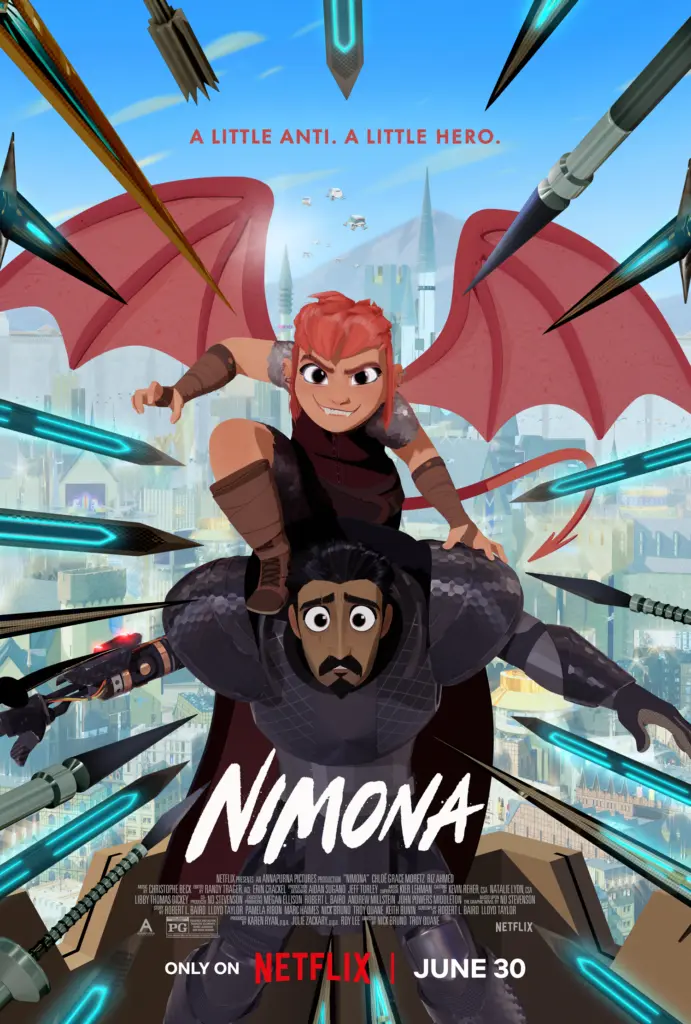
Netflix has unveiled a full trailer for the epic animated adventure film Nimona, which reaches the streaming service later this month

https://www.youtube.com/watch?v=whxdZI8rP0A

Just four weeks ago, the Netflix streaming service unveiled a teaser trailer for the animated adventure film Nimona – and since we’re a little over two weeks from the film’s June 30th release date, it makes sense that a full trailer for the movie has now arrived online. You can check it out in the embed above.

Nimona had a bumpy ride on its way to Netflix. The project was scrapped by Blue Sky Studios when it was near completion, then canceled by Fox… but by the end of this month, it will finally be out in the world.

Inspired by ND Stevenson‘s (She-Ra and the Princesses of Power) webcomic-turned-graphic novel, Nimona was directed by Nick Bruno and Troy Quane from a screenplay by Robert L. Baird and Lloyd Taylor (with Baird, Taylor, Bruno, and Quane receiving story credit alongside Pamela Ribon, Marc Haimes, and Keith Bunin). Here’s the synopsis: When Ballister Boldheart, a knight in a futuristic medieval world, is framed for a crime he didn’t commit, the only one who can help him prove his innocence is Nimona, a mischievous teen with a taste for mayhem — who also happens to be a shapeshifting creature Ballister has been trained to destroy. But with the entire kingdom out to get him, Nimona’s the best (or technically the only) sidekick Ballister can hope for. And as the lines between heroes, villains, and monsters start to blur, the two of them set out to wreak serious havoc — for Ballister to clear his name once and for all, and for Nimona to…just wreak serious havoc.

The voice cast includes Chloë Grace Moretz (as Nimona), Riz Ahmed (as Ballister Boldheart), Eugene Lee Yang (as Ambrosius Goldenloin), Frances Conroy (as The Director), Lorraine Toussaint (as Queen Valerin), Beck Bennett (as Sir Thoddeus Sureblade), Indya Moore (as Alamzapam Davis), RuPaul Charles (as Nate Knight), Julio Torres (as Diego the Squire), and Sarah Sherman (as Coriander Cadaverish).

Coming our way from Annapurna Animation, Nimona was produced by Karen Ryan, Julie Zackary, and Roy Lee. Megan Ellison, Robert L. Baird, Andrew Millstein, and John Powers Middleton serve as executive producers, with ND Stevenson co-producing.

Nimona is described as “an epic tale about finding friendship in the most surprising situations and accepting yourself and others for who they are.” What did you think of the trailer? Will you be watching this movie when it reaches Netflix? Let us know by leaving a comment below.

Originally published at https://www.joblo.com/nimona-trailer/

Blue Beetle will be the first official character of the new DC universe, James Gunn confirms

0
Blue Beetle will be the first official character of the new DC universe, James Gunn confirms

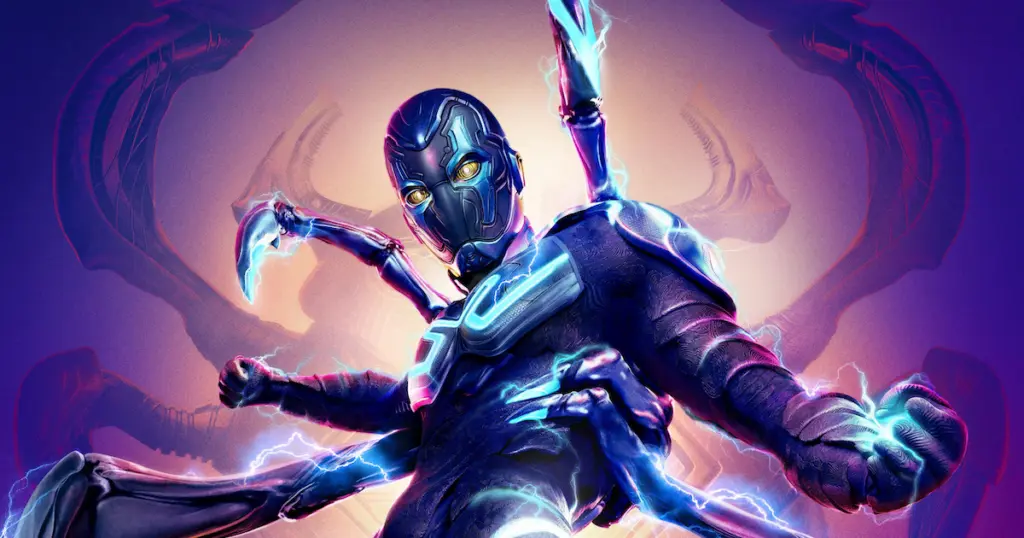
Although the movie was meant to be set in the previous DCEU, Blue Beetle is now the first superhero in James Gunn’s DC Universe reboot.

Earlier, the star of Blue Beetle, Xolo Maridueña, was wise not to put the cart before the horse in regard to the character’s standing as a franchise as he wanted to wait to see how the movie does, “If we get one movie or a trilogy and f*cking fold this into the Justice League shit, we’re ready for the whole nine. For me and Angel [Manuel Soto, director] and the team, we kicked ass with this movie. It just depends on numbers.“. However, it was a little murky on which regime of the DC film universe the origin story would fall under. The new head of DC at Warner Bros., James Gunn, recently appeared on the Inside of You podcast with Smallville‘s Michael Rosenbaum and has confirmed that Blue Beetle will be the first character in his DC universe.

According to The Wrap, the Superman: Legacy director stated, “I mean the first DCU character, for sure, is Blue Beetle, and the first full DCU movie is Superman.” While it may be a curious quote, to differentiate the first DCU “character” from the first “full DCU movie,” Gunn may perhaps refer to Blue Beetle being a film that was conceived and made for the previous universe incarnation before Gunn’s first officially produced film after accepting his new position at DC studios. However, as this is a Blue Beetle origin story, it would open up possibilities in the future for Gunn to bring the character into crossovers with the newly rebooted films apart from sequels.

The official synopsis for Blue Beetle reads,
Recent college grad Jaime Reyes returns home full of aspirations for his future, only to find that home is not quite as he left it. As he searches to find his purpose in the world, fate intervenes when Jaime unexpectedly finds himself in possession of an ancient relic of alien biotechnology: the Scarab. When the Scarab suddenly chooses Jaime to be its symbiotic host, he is bestowed with an incredible suit of armor capable of extraordinary and unpredictable powers, forever changing his destiny as he becomes the Super Hero Blue Beetle.

The movie stars Cobra Kai‘s Xolo Maridueña as the titular hero along with Adriana Barraza (Rambo: Last Blood) as Jaime’s grandmother, Nana, Damían Alcázar (Narcos) as his father, Elpidia Carrillo (Mayans M.C.) as his mother, Bruna Marquezine (Maldivas) as Jenny Kord, Raoul Max Trujillo (Sicario) as Carapax, with Oscar winner Susan Sarandon (Thelma and Louise) as Victoria Kord and comedian George Lopez (Lopez vs Lopez) as Jaime’s Uncle Rudy. Angel Manuel Soto of Charm City Kings directs the superhero film from a screenplay penned by writer Gareth Dunnet-Alcocer, whose credits include Miss Bala.

Originally published at https://www.joblo.com/blue-beetle-dc-universe-james-gunn/

LVDDS Introduces the Comfort3D (TM) Bite Splint

0
LVDDS adds the digitally designed, 3D-printed Comfort3D Bite Splint to its family of preventive care appliances.


LVDDS Introduces the Comfort3D\u2122 Bite Splint

LVDDS adds the digitally designed, 3D-printed Comfort3D Bite Splint to its family of preventive care appliances.

Bite splints help clinicians provide patients with relief from the harmful effects of bruxism. The Comfort3D Bite Splint, now available at Las Vegas Digital Dental Solutions (LVDDS), addresses these harmful effects through a digital design that protects patient dentition and existing restorations.

Created using 3D printing technology, the Comfort3D Bite Splint provides an optimal fit and thus better protection from parafunctional habits that can damage healthy dentition.

Designed to protect restorations, such as veneers, crowns & bridges, implant-supported restorations, and more, the Comfort3D Bite Splint can be prescribed with confidence to protect each patient's unique morphology by covering the full occlusal plane.

In addition to the speed of manufacturing and design ease, these reliable bite splints maximize cost efficiency while maintaining the precise, customizable fit that is achievable through this advanced 3D-printed process.

Available in a clear, single-layered 2 mm hard material, the Comfort3D Bite Splint provides durability and bonds directly with acrylic. Digitally designed and resistant to stains, the appliance is easy to clean and is sure to encourage patient satisfaction.

To learn more about LVDDS, visit lvddslab.com or call 800-936-1848.

Contact Information:
Denise Cortes
[email protected]


Original Source: LVDDS Introduces the Comfort3D (TM) Bite Splint

Silo season 2: Apple TV+ orders more of the apocalyptic sci-fi series starring Rebecca Ferguson

0
Silo season 2: Apple TV+ orders more of the apocalyptic sci-fi series starring Rebecca Ferguson

Apple TV+ has ordered season 2 of the apocalyptic sci-fi series Silo, starring Rebecca Ferguson and based on the stories by Hugh Howey

https://www.youtube.com/watch?v=meIU5S_qnw4

Apple TV+’s post-apocalyptic science fiction series Silo (read our 8/10 review HERE) is based on a series of stories written by author Hugh Howey. It started with a short story called Wool, and at one point the plan was to call the Apple TV+ series Wool as well. There’s plenty of Howey stories to continue pulling inspiration from is Silo has a multiple season run: Holston, Proper Gauge, Casting Off, The Stranded, Legacy, Order, Pact, and Dust... with more to come. And it looks like Apple TV+ is interesting in bringing some of those stories to the screen, because Deadline reports they have officially ordered Silo season 2!

Matt Cherniss, head of programming for Apple TV+, provided the following statement: “It has been enormously fulfilling to see the engrossing, atmospheric and beautifully crafted sci-fi epic Silo quickly become Apple’s number one drama series. As audiences around the world have become gripped by the mysteries and conspiracies buried within this fascinating subterranean world, viewership only continues to climb, and we are so excited for more secrets of the silo to be revealed in season two.

Silo follows the last 10,000 people on Earth as they navigate life in their mile-deep underground home protecting them from the toxic outside world. The catch? No one knows when or why the silo was built and anyone who goes snooping for answers faces fatal consequences.

The series has an impressive cast that includes Rebecca Ferguson (Doctor Sleep), Tim Robbins (The Shawshank Redemption), David Oyelowo (Selma), Common (John Wick: Chapter 2), and Rashida Jones (Parks and Recreation).

Howey began his series in 2011, and attempts to bring those stories to the screen have been coming and going since 2012. Ridley Scott and Steve Zaillian were going to produce a film adaptation for 20th Century Fox. LaToya Morgan was developing a Silo series for AMC. Writer Graham Yost (Speed) is the behind the Apple TV+ Silo series and serves as an executive producer on it alongside Ferguson, Howey, Remi Aubuchon, Fred Golan, Nina Jack, Ingrid Escajeda, and director Morten Tyldum.

Yost had this to say about Silo getting a season 2: “We cannot wait for audiences around the world to immerse themselves in the epic world we have created to bring Hugh Howey’s novels to life. Apple has believed in our vision from day one and it’s an honor to have the opportunity to dig deeper into this story and peel back the layers to our characters in the Silo.

Have you been watching Silo, and are you glad to hear we have season 2 to look forward to? Share your thoughts on this news by leaving a comment below.

Originally published at https://www.joblo.com/silo-season-2-apple-tv-orders-more-of-the-apocalyptic-sci-fi-series-starring-rebecca-ferguson/

Lonseth Interventional Pain Centers Launches Spinal Cord Stimulator Trials for Diabetic Peripheral Neuropathy

0
Lonseth Interventional Pain Centers Launches Spinal Cord Stimulator Trials for Diabetic Peripheral Neuropathy
Medicare-Covered SCS Trials Can Be a Game-Changer for Patients Who Haven't Found Relief With Conventional Treatments

Lonseth Interventional Pain Centers, a renowned provider of pain management solutions, proudly announces the offering of Spinal Cord Stimulator (SCS) Trials for individuals affected by chronic pain conditions, including Diabetic Peripheral Neuropathy. These Medicare-covered trials are a game-changing recourse for patients who haven't found sufficient relief from conventional treatments.

SCS Trials involve the temporary implantation of a device that emits low-level electrical signals to the spinal cord or specific nerves, effectively blocking the transmission of pain signals to the brain. This outpatient procedure, conducted under the guidance of trained professionals, allows patients to experience the potential benefits of SCS without committing to a permanent implantation.

The trial period lasts about a week. After which, patients and their physicians evaluate the effectiveness of the treatment. Successful trials, typically marked by a significant reduction in pain, may lead to the patient becoming a candidate for permanent SCS implantation.

SCS is a progressive therapy involving a device that sends mild electrical currents to the spinal cord, mitigating chronic pain. This technique is particularly useful after conventional non-surgical treatments have proven insufficient. It is programmable to target specific pain areas, making it an effective option for various chronic pain conditions.

During an SCS trial, patients can expect careful preparation, expert execution of the procedure, and a personalized adjustment process to ensure optimal pain control. After the procedure, they take home the trial stimulator for several days to assess its effectiveness in their daily lives.

Candidates for these Medicare-covered SCS trials typically include those with chronic pain impacting daily activities who have not found relief from other treatments, who do not suffer from untreated drug addiction, and who have successfully managed any underlying psychiatric conditions. Moreover, patients should be healthy enough to undergo the procedure safely.

Lonseth Interventional Pain Centers is pleased to confirm that these revolutionary SCS trials are Medicare-covered. Its dedicated team stands ready to support patients through each phase, providing them with a comforting, informed experience.

People don't have to let chronic pain rule their life. They can begin a journey toward less pain by reaching out to Lonseth Interventional Pain Centers to schedule a consultation and find out if they qualify for SCS trials. This groundbreaking therapy could be the key to a new, less painful chapter of their life.

Contact Information:
Eric Lonseth
Doctor
[email protected]
(504) 732-1094


Original Source: Lonseth Interventional Pain Centers Launches Spinal Cord Stimulator Trials for Diabetic Peripheral Neuropathy

WTF Happened to Legend?

0
WTF Happened to Legend?

W​hat is light without darkness? This is what Tim Curry’s character of Darkness ponders in the 1985 film Legend. This fairy tale film from visionary director Ridley Scott would start filming in 1984 and even though the movie followed characters through a magical world, it would end up running into some very real problems. Scott was able to snatch up a new young actor just before he was about to become one of the biggest stars in the world and pit him against a well-respected actor known for taking chances in the parts he chose to play. Little did Scott know that making the film was only the first dragon he would have to slay. Getting it released was going to be even harder. Let’s find out how Legend became a fairy tale warning of making films in the studio system here on WTF Happened To This Movie?

R​idley Scott had always been a big fan of fairy tales. As he was wrapping up his film The Duelists, he thought it might be fun to create a brand-new fairy tale as a film. He went and re-read all the stories from The Brothers Grimm and set out to think of what he could do that would be interesting. After a while, he put the idea aside as he was worried it might be too much of an art house project and would not pull in a mainstream audience. Instead, he went on to make the classic sci-fi film Alien and began pre-production work on a little movie called Dune.

W​hen that film fell apart and went to David Lynch to direct, he circled back again to the idea of creating this new fairy tale film. Scott felt it would be best to create an all-new story rather than try to adapt something that was already known. It would be easier to build it from the ground up for a film than to try and have to change certain aspects of the story to fit the visual medium. He came up with the general idea of a young hermit who lived in the woods that would be transformed into a hero to fight darkness and save a beautiful princess. In doing so, he would release the world from a wintery curse that had taken over.

W​hile he was figuring out how to approach the script for the film, he discovered the works of American author William Hjortsberg (pronounced Jorts-Berg). He liked his work and soon discovered that Hjortsberg had already written a few scripts for low-budget films. Scott knew he would understand how to craft a visual story and asked him if he would like to write a fairy tale with him. When Hjortsberg said he had already been working on a couple of fairy tales, Scott knew he had asked the right person.

I​n 1981 just before Scott was heading off to make Blade Runner, he grabbed Hjortsberg, and they spent five weeks hammering out the story line for what they were calling Legend Of Darkness. Scott knew there had to be a quest for the characters to go on and had the idea of something trying to capture the fastest animal in the forest. This would be the unicorn that would become a central crux of the story. 

W​hen Scott returned from making Blade Runner, he discovered that they had a script that was too long, very expensive, and hard to sell. The character of Lili had originally been a princess that was transformed into a clawed creature that was whipped and eventually seduced by Darkness. Parts of the story were very dark and horrific. They began to take out sections of the story that didn’t feed into the main quest. After some back and forth, they rewrote the script 15 times. It seemed to be worth it, and they were happy with the new version of the story they had. 

I​n Legend, Darkness sends his goblins to bring him the horns from the last unicorns alive. Once they have been taken, the world will be plunged into night, and Darkness can then rule. At the same time, a young princess goes into the forest to find Jack, the young boy she loves that lives there. He tells her that he will take her to see the fabled unicorns today. When he takes her to where they live, she breaks free of his grasp and runs up to them. She touches one and the animals run off. 

W​e see that the goblins have shot one of the unicorns with a poison dart. They hunt the unicorn down and sever its horn. Once this is done, the world plunges into a dark winter. Lili runs to a nearby cottage and sees that everything has been frozen in time. The goblins come, and she overhears Darkness tell them that the world won’t fall into permanent darkness until the last unicorn is killed.

J​ack teams up with some of his forest friends to protect that last living unicorn but soon learns that Lili has been captured and that the unicorn is in trouble. The group travels into Darkness’ domain to rescue Lili and set the mythical creature free. If they can complete their quest, the world will return to normal and Darkness will once again be banished from the living world.

Scott began casting for the film and wanted someone with a theatrical presence for the role of Darkness. He began to think about Tim Curry’s performance in The Rocky Horror Picture Show. Darkness needed to be threatening but also at times seductive. He felt that Curry could easily fulfill that role and Curry found the story intriguing, so he signed on.

F​or Jack, they auditioned a lot of young actors. Among the group were Jim Carrey, Johnny Depp, and Robert Downey Jr. Ultimately they went with Tom Cruise who brings a young innocence to the role. Scott met Mia Sara in a casting session and loved her theatrical instincts. He hired her even though she was only 15 at the time.

When it came to the look of the creatures of the film, Scott hired special effects master Rob Bottin (Beau-Teen). Ridley had wanted him to work with him on the film Blade Runner, but Bottin was already locked into working on John Carpenter’s The Thing. Scott told him about Legend and Bottin thought it would be a great opportunity to create a wide array of creatures and signed on. 

P​erformer Alice Playten was asked if she had any ideas for the look of the goblin Blix. She wasn’t sure if Scott would go for it, but she mentioned that what she had in mind was to make Blix look like Keith Richards. When she brought it up, Scott sat for a second and then agreed that would look really cool if they extended the nose and added the pointy ears. The makeup ended up being so convincing that when Tim Curry was visiting the set before he had to get into makeup, he met some of the other performers. Playten was in her full makeup and when Curry met her he commented that he felt like they knew each other. He couldn’t place it. After mentioning it a few times Playten mentioned that her character was designed after Keith Richards. Curry immediately saw it and started laughing.

W​hen it came time to create Darkness, Scott hoped to showcase an amazing visual that hadn’t been put on film before. The idea was to give him the cool visual with the giant horns and make him a hulking presence. It was decided to create an apparatus that would strap onto Curry’s head to hold the horns, then a body suit to give Darkness a muscled body, and finally he had to wear lifts to make him taller. When the costume was all put together Darkness would stand about 7 foot 3. He towered over the smaller Cruise which gives the character a great presence. 

B​ecause of the form of the horns went straight outward instead of upwards, it caused a strain on Curry’s neck during fittings. Bottin was able to reduce the weight of the horns dramatically. Scott was impressed with how light the horns ended up being. They looked heavy and could withstand minimal use without breaking. It was perfect for what they needed. The makeup became one of the greatest visuals in all of cinema.

F​or Meg Mucklebones, Bottin based her look off of the old witch form the Queen takes in Snow White And The Seven Dwarfs. He made her more extreme looking and the entire thing was made out of foam latex. Performer Robert Picardo, yes the Doctor from Star Trek: Voyager played Meg Mucklebones, said it was tough playing the character in the water. She was supposed to burst out of the water and quickly approach Jack. He said that when they would lower him into the water, the foam latex suit would begin absorbing water so when he burst up into frame, water would go flying everywhere and then begin to leak out of the suit into the seaweed covering parts of his body. It ended up being a great visual on camera but was grueling while shooting.

T​he entire forest was a set built at Pinewood Studios. Scott took a trip to the Sequoia National Forest to research how he wanted this magic forest to look. He liked the giant trees and had some built on the set. It went all the way up to the ceiling and it felt like you were really in a forest setting when you walked onto it. Everything they ended up filming in the forest set had to be dubbed over later because of the abundance of noise. There were lots of fans and mechanical equipment being used. Even the scenes without the use of all this were problematic because local birds had found their way into the studio and had taken up residence in the large fake trees. 

O​ne day while everyone was at lunch, the studio the forest was in caught fire. A large tower of smoke could be seen miles away. They still had 10 days left of shooting on the set and now the entire forest setting had been destroyed. It was determined that since the crew had been using a gas line for some of the campfires in the scenes, fumes had gathered in the top of the studio and eventually ignited. Luck would have it that most of the cast and crew weren’t on set due to lunch. If so there would have for sure been tragedies. Scott even commented in the Making Of documentary on the DVD that some of the crew would have been up on walkways near the top of the studio, and they would have been trapped when the fire started.

S​cott was able to readjust the shooting schedule and had smaller sections of the forest set built on another sound stage and ended up only going over by three days. Because of this, the setting where Lili and Jack meet the unicorns was moved to a garden that was located on the grounds of Pinewood Studios. The amount of greenery matched well with what the set had originally intended and everyone agreed it ended up being the perfect setting for the scene.

O​nce the film was done filming, attention turned to editing the movie. This is where Scott was hit with the dreaded “Studio Notes”. The film that Scott was putting together reflected a throwback to classic fairy tales, and he got Jerry Goldsmith to create an orchestral score that helped enhance that feeling. 

T​he film was sent out for some test screenings and Scott admits that some of the comments from the audience members shook his confidence in the running time of the movie. He then trimmed it down from 2 hours and 30 minutes to 1 hour and 38 minutes. Studio execs were also worried about the film and started to give some suggestions. They wanted to appeal to a younger demographic and commissioned a score from the band Tangerine Dream. This was vastly different from what Goldsmith had done and changed some of the tone of the film. In a compromise, Scott was able to keep the original Goldsmith score for the European release but the US release would include the new score. 

E​ven some of the actor’s voices were changed. A studio exec stated that they thought the character of Gump played by German actor David Bennent “sounded too German,” so the character was redubbed by Alice Playten who played Blix. 

T​he film itself would undergo even more edits. Scott has stated that the film lost some of the magic it originally had. He felt the original story expressed how everyone had their own flaws and would try to overcome them. Jack was supposed to be portrayed as being lustful over Princess Lili but would later prove his true love for her. Gump is shown to have a bad temper when he didn’t get what he wanted. Lili is seen as greedy throughout the film as she is always taking things or constantly trying to go where she has been expressively forbidden to go. When the film was changed, Scott said he felt it had been pushed to be more of a stereotypical 80s fantasy film. Tom Cruise was so unhappy with the American cut of the film that he refused to talk about it for years.

I​n 2002 Scott was given the chance to produce a Director’s Cut of the film. This added in new scenes and even replaced some scenes with alternate takes. The first order of business was to add back in the Goldsmith score for the film. When they went to find the original masters of the recordings, they couldn’t be found. Scott was worried that the original score wouldn’t be able to be used for this new cut of the film. Luckily an engineer at the studio had kept a two-track digital copy of the score because he thought it might be worth preserving. They were able to use that to recut the music for use in the new cut. 

I​n this new version we even get to see a new ending. While it’s not a major change, it does switch things up. The original ending had Jack and Lili running into the forest as they turn to wave goodbye to their forest friends. Here we have a scene with Jac and Lili where she says goodbye and that she will be back to see him soon. She runs out of the forest and waves at Jack. He waves back and watches her go. Then as Jack takes in that the world has been restored as it should be he runs off and runs into the sunset. Jack by himself turns to see his forest friends and waves at them before he runs off into the sunset. 

E​veryone involved with the movies has pretty much universally agreed that the director’s cut is superior to the US Theatrical cut of the film and that it preserves what the original intent of the film was supposed to be. But some of us that came of age in the late 80s and early 90s do find it hard to let the original theatrical cut go as it is how we first saw the film. Both cuts are worth checking out.

W​hat started out as a simple fairy tale did turn into a nightmarish warning of how easily things can turn to Darkness but in the end, Ridley Scott and company made a fairy tale that has withstood the test of time and is a great throwback to a simpler time. When movies were big spectacles and using makeup effects could produce some of the most beautiful images ever put on screen. 

For more on Legend, check out our episodes of Fantasizing About Fantasy Films, and Tom Cruise Revisited!

S​ources:

(January 1986). “Legend Makeup”. Cinefantastique. p. 25.

December 1985). “Ridley Scott: SF’s Visual Magician”. Starlog. p. 64.

C​reating A Myth: The Making Of Legend DVD documentary

Originally published at https://www.joblo.com/wtf-happened-to-legend/