Going to the movie theater can be enough of a hassle, but it’s possible that projectionists are ruining the experience more than you think.
Not only has going to the movie theater gotten more expensive and proven to at times be a genuine pain, but oftentimes, even the filmmakers’ integrity is at risk, with poor projection one of the culprits.
In a recent Vulture article titled “Bad Projection Is Ruining the Movie Theater Experience”, the writer makes the case that sloppy work on the part of the projectionists is putting off cinephiles across the country. One cited example is 2D versions of movies being projected as 3D. The result, a projection expert points out, greatly dims the light, resulting in dull, drab images. “It’s a polarized lens that cuts a picture’s brightness by a third…They just have to push it to the side when they switch to 2-D, but theaters forget to do it all the time. You can tell when it’s happening because if you look at the port-window glass, instead of a single image, you’ll see two, with one stacked on top of the other.” Something to be on the lookout for the next time you see such a movie at the theater…
There, too, is what’s called the “keystone effect”, which anybody who has been in a lecture hall has probably experienced. It’s when the projected image doesn’t form correctly on the surface, typically showing up more as a trapezoid than a rectangle or square. At movie theaters, projectionists also have the duty of properly framing the film, but in some instances, they don’t know what they’re doing or even that that’s part of the job description. Many people who saw M. Night Shyamalan’s The Village upon release–this writer included–noticed boom mics throughout the movie, a result of poor framing. As if the movie itself wasn’t bad enough!
But at some point the movie has to leave the hands of the director and head to theaters. Consider that Quentin Tarantino ensured nearly 100 screens were fitted to handle the 70 mm projection of The Hateful Eight. It’s not as if he can sit at everything screening to ensure it goes off without a hitch. If a movie receives a poor projection, the experience is botched and often the film takes the blame. Picture the projectionist at your local cinema. Do you truly trust them to help offer the best night out for the audience? Of course, any number of things can go wrong at the theater (Magazine Dreams’ Sundance premiere prompted walk-outs after the subtitles didn’t work), but the more that can be done to protect the experience and the integrity of the film, the better.
Have you had any bad movie theater experiences related to projection, screens, etc.? Tell us some of your stories in the comments section below!
NEW YORK, March 13, 2023 (Newswire.com)
-
Credello: You might be nervous about paying your taxes, but it's a straightforward process if you keep specific dates in mind. Let's run through some of the key dates regarding tax filing in 2023.
Can You Use Personal Loans to Pay for Your Taxes?
Before we get into the important tax dates for 2023, we'll briefly discuss how you might pay if you have a tax burden. If you owe the IRS money, you can pay with cash you have in savings. You might also borrow some money from a family member if that's an option.
Knowing how to apply for a personal loan can help as well. Getting a personal loan from a credit union or bank and paying your tax obligation that way might make sense. If you do this, make sure you get a loan with a reasonable interest rate.
Tax Day
Every year, there's a date officially known as "Tax Day." In 2023, that day is Tuesday, April 18th. We're still a few weeks away from when most Americans must file their taxes.
Tax Day is usually April 15th, but this year, that's a Saturday. Also, the federal government has elected not to make Monday the 17th Tax Day since Washington D.C. recognizes that as Emancipation Day.
Are There Any Exceptions?
Almost every year, certain citizens are exempt from needing to file taxes on Tax Day. This year, California storm victims have longer to file their taxes. That is a much-needed action since California storms have devastated part of that state.
The California residents the storm impacted have until May 15th to file. If you're trying to wait until that date, you must prove that you're in one of the areas designated by FEMA as needing aid. You can get on the FEMA website if you're in California and you're unsure whether you qualify or not.
Are There Any Additional Exceptions?
The IRS is also pretty lenient about letting you have an extension if you feel you can't get all the necessary paperwork together by April 18th. You can ask the IRS for an extension, and they will automatically give you one for an additional six months.
When you hear this, you might be overjoyed. If you can get a six-month extension, that takes you all the way into October. Why would you bother filing on April 18th?
The reason is that just because the IRS has granted you additional time to file, that doesn't mean you don't still owe money on April 18th, assuming you owe money and are not due a refund. If you fail to pay the taxes you owe on time, and you file after April 18th, you'll not only still owe that money, but you'll also likely have to pay a lateness penalty.
What About State Taxes?
There's no national day when state taxes are due. You must check out the day taxes are due for your individual state. Some are due on April 18th, the same as your federal taxes. Others have later deadlines.
Nine states do not levy income taxes, and if you live in one of them, consider yourself lucky. You just saved yourself some money.
The Tax Dates to Know
For most Americans, Tax Day is Tuesday, April 18th. You have an automatic extension till May 15th if you live in a part of California impacted by the storms earlier this year. You can check the FEMA website to see if you're eligible.
You can also ask for a six-month extension on your taxes, but if you owe money, you'll still owe it if you file later, and you'll also get hit with a lateness penalty. You should pay on time if you can.
Only forty-one states collect taxes, and if you live in one, you should check to see when your taxes are due. Many states use the federal deadline, but some will allow you to file later.
Pay attention to these dates. If you don't, lateness penalties are likely in your future.
WESTPORT, Conn., March 13, 2023 (Newswire.com)
-
Petworks (https://www.petworks.com), the one-stop shop for pet wellness, specialty and time of need services, announced its awards today for pet care professionals who went above and beyond in their service to pets in 2022. This year's winners represent the platform's top 2% of pros based on successful bookings, and general commitment to happy customers via the Petworks platform. The award recipients were selected from Petwork's national database of 5,500+ qualified pet professionals across 40 categories of pet care.
Co-founder Kevin Kinyon commented on this year's winners:
"Our pet care professionals have dedicated their careers to serving the needs of pets and their parents, and we're forever inspired to help them grow their businesses on the Petworks platform. Offering quality care across all stages of a pet's life, we're in awe of the tireless work these pet pros do to keep our pets healthy and happy. Congrats to this year's winners!"
Petworks is the nationwide pet care platform revolutionizing the way pet parents find and hire pet care. With over 5,500 registered pet care professionals, Petworks guides pet parents through all stages of their pets' lives - enabling parents to connect and transact with well-trained specialists in every conceivable category of pet wellness, specialty care, and time of need services.
With Michael B. Jordan making his directorial debut with Creed III this weekend, we wanted to know what film by a first time Actor turned Director has been your favorite? Some came out of the gates with Oscar Glory (Kevin Costner/ Robert Redford) while others found a passion they haven’t looked back from (Ron Howard/ Sofia Coppola). If you don’t see your favorite listed, please let us know what (and who) it is in the comments section.
UPDATE: I have rightly been called out for listing Braveheart as Mel Gibson’s first film when he actually directed a film prior to that called The Man Without a Face in 1993. So I guess the results are slightly skewed, but really, wasn’t Braveheart the first Mel Gibson directed film we all saw?!
BONITA SPRINGS, Fla., March 13, 2023 (Newswire.com)
-
Discovery Senior Living ("Discovery") COO Bill Sciortino announced the promotion of Gottfried Ernst to Senior Vice President of Operations. Ernst has served as Vice President of Operations for the Discovery enterprise since 2021, and has been integral in leading the company's regional field operations and support services.
Under Ernst's leadership, Discovery has built expense spend down and labor management tools used to support communities as they navigate through crushing inflation and labor pressures, and evolved the community management and predictable reporting for investor partners. All this amidst rapid growth which has seen Discovery and its capital partners acquire and onboard several new communities across the provider's national and regional, multi-branded portfolios.
As Senior Vice President of Operations, Ernst will continue to oversee Discovery's day-to-day national operations, which consists of 3 National Brands, 7 regions, and support services including resident care, facilities, and F&B. Additionally he will expand his duties and focus on new operational management resources to enhance investor relations and support the continued expansions of Discovery's National and Regional Brands.
"I'm excited to be part of an industry leading company focused on innovative, performance and excellence," said Ernst. "It's an honor to work for a rapidly growing company and given the opportunity to support our communities every day, while also having the ability to use my experience to enhance resident experiences."
With headquarters in Southwest Florida, Discovery Senior Living currently owns and operates a national, multi-branded portfolio of more than 110 communities in 19 states.
Contact Information:
Heidi LaVanway
Vice President of Marketing [email protected]
239.301.5330
BERLIN, March 13, 2023 (Newswire.com)
-
The Critical Path Institute (C-Path), an independent nonprofit, public-private partnership with the U.S. Food and Drug Administration (FDA) and Pirche AG, the global leader in AI-powered molecular matching and prediction analysis, announced a new collaboration that will see Pirche become the latest member of C-Path's Transplant Therapeutics Consortium (TTC).
"TTC is excited to welcome Pirche to join our ongoing efforts to bring together the bio-pharmaceutical industry, diagnostic companies, academia, professional societies, and government and regulatory agencies, to accelerate innovation and application of new tools across pharmaceuticals, devices, and diagnostics for transplant patients." said Amanda Klein, Executive Director of TTC.
Co-founded by the American Society of Transplantation (AST) and the American Society of Transplant Surgeons (ASTS), TTC represents an ongoing partnership between key stakeholders dedicated to advancing the regulatory science needs in transplantation. The iBOX, a composite biomarker panel developed to predict the probability of long-term kidney graft survival, represents one such advancement. The consortium's primary initiative includes the qualification of the iBOX as a reasonably likely surrogate endpoint with FDA in order to address the unmet needs of kidney transplantation and bring innovative therapies to patients in a timely, efficient manner.
Regarding the new collaboration, Pirche CEO, Thomas Klein said, "We are thrilled to be a part of the TTC and to support the consortium in delivering for transplant specialists and patients. TTC offers an opportunity to collaborate with the transplant community and maximize learnings across the field."
Dr. Klemens Budde, Pirche scientific advisor, TTC Member, and head of Transplant Nephrology at the Charité University Hospital in Berlin added, "Pirche and the PIRCHE epitope matching technology compliment the TTC's objectives perfectly. Epitope matching improves immunologic risk assessment towards a personalized treatment and may further complement initiatives like iBOX for kidney transplantation."
About C-Path
Critical Path Institute (C-Path) is an independent, nonprofit organization established in 2005 as a public and private partnership. C-Path's mission is to catalyze the development of new approaches that advance medical innovation and regulatory science, accelerating the path to a healthier world. Visit c-path.org.
C-Path is supported by the U.S. FDA/HHS . The contents are those of the author(s) and do not necessarily represent the official views of, nor an endorsement by, FDA/HHS or the U.S. Government.
About TTC
The Transplant Therapeutics Consortium (TTC) was launched in April 2017. It aims to accelerate the medical product development process for transplantation by identifying 1) areas that hinder product development, 2) potential biomarkers, endpoints, quantitative tools, or process improvements as solutions to address those areas, and 3) appropriate pathways to regulatory endorsement for developed solutions.
About Pirche AG
Pirche AG, headquartered in Berlin, Germany is a leading artificial intelligence company focused on establishing digital solutions in molecular medicine. We aim to provide clinical decision support for predictive medicine through AI-powered algorithms. With better matching we help clinicians to individualize care to bring a better quality of life to transplant patients. To learn more visit www.pirche.com.
Contact Information:
Bethany Dale
Vice President - Global Commercialization, Pirche AG [email protected]
(+1) 954 816 5707
CENTRAL ISLIP, N.Y., March 13, 2023 (Newswire.com)
-
On Tuesday, March 14th, Wahida Clark Presents Innovative Publishing will release the highly-anticipated, true-slaying novel, "Diary of a Pimp's Wife," written by entertainment industry veteran Karen Joy with a feature by Hip-Hop Artist Mr. Cheeks. In the book, through a diary, Karen Joy engages readers in a story about a woman living with her common-law husband while he struggles to establish himself as one of Long Island, New York's most respected pimps. His selfish and ruthless ambitions easily thwart her desire to live an honest life, and the protagonist quickly becomes intertwined in his illegal operation.
Through the "Diary of a Pimp's Wife" pages, Karen Joy hopes to inspire women globally to heed the dangers of pimps, prostitution and sex trafficking. "Sadly, so many lives have been destroyed and lost through pimping and prostitution," she states. "I want young women to know that true love does not exist when it involves her selling her body or being physically and emotionally abused by their partner."
"We are excited to add 'Diary of a Pimp's Wife' to our literary roster and Karen Joy to our list of stellar authors," states Wahida Clark, founding CEO of Wahida Clark Presents Innovative Publishing.
To celebrate the long-awaited release of her soul-stirring story, Karen Joy is co-hosting a book release party with Uncle Murda at 8 pm on Thursday, March 16th, inside Club 112, at Wheeler Road in Central Islip, New York.
"Diary of Pimp's Wife" will be available worldwide on Amazon.com and everywhere where books are sold.
About Diary of a Pimp's Wife
Diary of a Pimp's Wife chronicles the trials and tribulations of an up-and-coming pimp from 2008 through 2013 when he lived in Long Island, New York with his then common-law wife. Nothing worked for him until the summer of 2008 when his love for money led him into a dangerous, treacherous pimp game. While she strived to build a country club, he trained to be a ruthless pimp.
About Karen Joy
Long Island, New York Native Karen Joy Stewart is a Founder and CEO of Pineapple Dreamz LLC, a boutique entertainment firm producing live parties and concerts.
About Wahida Clark Presents Innovative Publishing
Wahida Clark Presents Innovative Publishing (WCIP) represents the culmination of the dream of a Black woman, a former prison inmate, who now enjoys the distinction afforded by being a 4-time New York Times Bestseller.
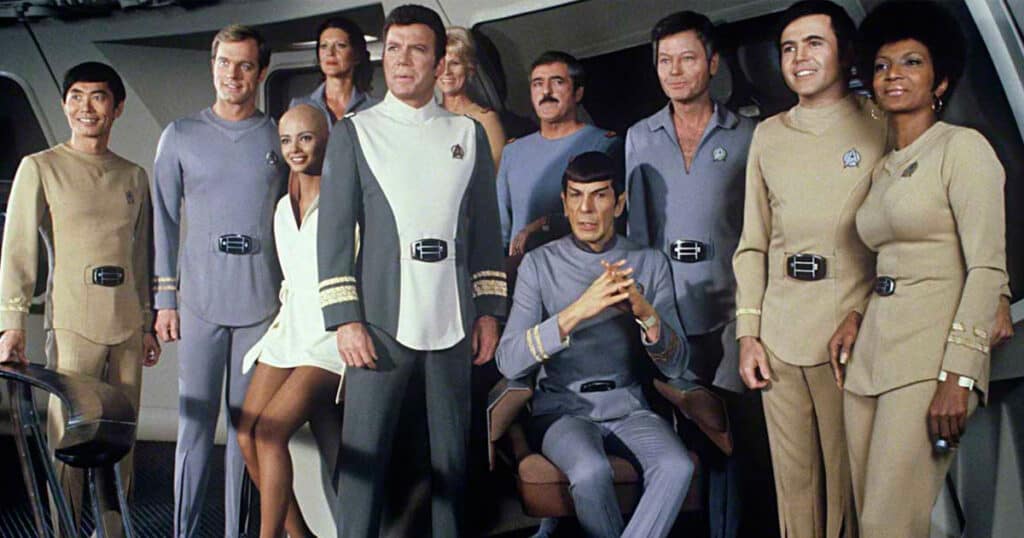
In 1977, a movie you might have heard of called STAR WARS came out and thoroughly shifted the kind of movies Hollywood considered blockbusters. Until then, the idea of an epic sci-fi fantasy grossing hundreds of millions of dollars was considered laughable, and the genre was regarded as B-movie material at best. Star Wars changed that thinking, and suddenly studios were bending over backwards flooding theaters with their own sci-fi epics. This led to Star Trek getting a crack at the big screen, with the original crew headlining a movie that, at the time, was one of the most expensive movies ever made. In this episode of Revisited, we dig into Star Trek: The Motion Picture.
Flashback to 1978. Star Wars was still making a mint, and Universal took the pilot episode for a Star Wars-knock-off series they developed, Battlestar Galactica, and released it in theaters. It made a stunning $41.8 million internationally, a considerable number considering it was just a TV episode that had already aired on TV. Universal pulled a double when a few months later they released the pilot of ANOTHER Star Wars knockoff they made, Buck Rogers in the 25th Century, and it made $21 million. Clearly, the appetite for science fiction was strong, and by 1979, theaters were flooded with Star Wars clones. There were brilliant ones, like Ridley Scott’s Alien, which subverted the formula, and then entertaining flicks like Disney’s The Black Hole, and even the James Bond movie, Moonraker, which takes a hard turn into sci-fi in the finale, sending 007 to space and even including Star Wars style laser battles in the finale. There were also dozens of Italian knockoffs like Starcrash and The Humanoid.
Into the fray came Paramount Pictures, who must have thought they had the inside track as they owned perhaps the biggest sci-fi property of all, Star Trek. While the series had only run three seasons on tv, when it was sold into syndication, the show became a monster cult hit, to the extent that the waters were tested when Paramount produced an animated series that played to surprising critical acclaim. Plans were made to produce another big-budget TV show called Phase 2, which was supposed to front a Paramount-branded TV network, which never came to fruition. The first season was set to run thirteen episodes and would have included all of the original cast except for Leonard Nimoy, who was in a legal battle with the studio over the use of his likeness in merchandise. He was to be replaced by a Vulcan character named Xon, to be played by David Gautreaux, while Persis Kambatta was hired to play Ilia, the ship’s navigator.
Then, Star Wars came out, and Paramount opted to make Trek their next big franchise, hoping to outdo Star Wars. They hired Robert Wise, the director of West Side Story, The Sound of Music and The Andromeda Strain to direct, with a budget that was supposed to be capped at $15 million, which was five million more than Star Wars and would eventually run to almost three times that number.
The original cast had already signed on to Phase 2 and were easy sells on Trek as a feature. Still, Paramount Studio Chief Michael Eisner decided to dump Xon, with the actor getting a bit part in the film instead, enticing Leonard Nimoy back as Spock. To accomplish this, Eisner cut him a check for the back royalties Nimoy had been asking for and said he essentially got on his knees and begged for the actor to agree to play the part. Persis Kambatta was kept as Ilia, but she would get a new love interest, Will Decker, to be played by Stephen Collins.
What’s interesting about Star Trek: The Motion Picture is how oblivious Paramount, at the time, was about what made a good Star Trek movie. Rather than give the crew any villains, the decision was made to go in a more heady, cerebral direction, with the Enterprise being called into action to investigate a mysterious alien cloud called V’ger. One can tell this was originally the premise of the Phase 2 saga, and it would become a recurring thing as far as Trek pilots would go, with The Next Generation and Deep Space Nine also having these obtuse, action-free pilots that fans, for the most part, dismissed.
What’s especially egregious about The Motion Picture is how under-used the original cast is. James Doohan as Scott, Nichelle Nichols, Walter Koenig and George Takei have little more than bit parts, and even the holy trio, Kirk, Spock and McCoy, are sidelined, with the focus of the film being on the two young love interests, Decker and Ilia, and their romance. The original cast is given little to do but react to the effects on-screen.
As for the VFX, they would lead to the film going massively over budget as the original team contracted to deliver the VFX could not deliver. Veteran FX specialist Douglas Trumbull, who had done the fx work for 2001: A Space Odyssey, was hired and given an unlimited budget, with the only caveat being that he had only months to deliver, as the studio had a contractually mandated release date in December of 1979. Eventually, John Dykstra, one of ILM’s pioneers with Star Wars, was sub-contracted but has since gone out on his own. They made the release date, but barely, as Robert Wise had no opportunity to test the film and fine-tune it, and he always considered it unfinished. The film was unexpectedly a decent-sized hit grossing $82 million domestically, but considering the budget, it only earned a profit after the international box office lifted it to $139 million. It would be the only time in the franchise’s history, until the J.J. Abrams-directed reboots, where a Star Trek feature would be considered an A-level film, with all future films being handled by the TV wing of Paramount, with Harve Bennett replacing series creator Gene Roddenberry as the franchise’s creative guru going forward.
Star Trek: The Motion Picture earned mixed reviews from critics, but many fans disliked it, even going so far as to call it the “motionless picture:” Watching it now, the movie is dull, with only Jerry Goldsmith’s incredible score, really standing the test of time. His theme for the film would be reused as the Star Trek: The Next Generation theme, and it’s rightly considered a classic. Much of the dialogue is cheesy, with the script a patchwork of contributions by writer Harold Livingston, Alan Dean Foster and Gene Roddenberry himself. The film haunted Robert Wise for decades, and it wasn’t helped by the myriad of editions floating around. One of the “extended editions” which ran on television and was released on Home Video. Wise hated this edition, which ran twelve minutes longer and featured unfinished, amateur-level FX. In 2001, Wise was finally able to complete the film when Paramount agreed to finance a definitive director’s edition, which, among other things, allowed him to redo many of the VFX with CGI. He also remixed the soundtrack and made numerous substitutions and additions throughout the movie, removing bad takes that he thought featured dodgy acting and making an altogether more polished version of the film, which largely won over fans who had found it underwhelming.
It proved to be something of a last hurrah for Wise, who died a few years later, in 2005. However, the fact that the new CGI for the director’s edition had only been done in standard definition proved to be a major headache as home media moved into HD, 4K and beyond, with the director’s edition unreleasable until a major restoration was done by Paramount Plus, who released it exclusively on their streaming version and later released it on Blu-ray and 4K. As the movie exists now, it remains a bit of a curiosity for fans, but it is considered an aborted launch for the franchise, which would only take off with the release of Star Trek II: The Wrath of Khan in 1982. Persis Khambatta and Stephen Collins’s involvement with the franchise would be short-lived. Khambatta’s bald look in the film became a sensation when the movie came out, but when she grew her hair out, she was unrecognizable, which might have hampered her career a bit. She’d go on to a well-received role in Sylvester Stallone’s Nighthawks and then would appear in the action flop MegaForce. However, she would be faced with numerous health challenges, and the former Miss India passed away in 1998 at only 49 years old.
By contrast, Stephen Collins, for a while, had a very successful career, leading the cult TV show Tales of the Gold Monkey and eventually moving on to massive success on the family show 7th Heaven. His career would end when, during a contentious divorce, a tape would be leaked where the actor appeared to admit to the sexual abuse of a minor. He would eventually reveal to People Magazine that he had actually abused three minors in 1973, 1982, and 1994.
Happily, the main cast, while under-served in The Motion Picture, was only at the beginning of their new silver screen adventures, with the series eventually launching Leonard Nimoy as one of the hottest directors of the eighties when his reluctance to continue to play Spock was parlayed into a deal to direct the third and fourth films. The series would reach its creative peak with the Genesis trilogy, comprised of the second, third and fourth films in the series, which would continue until the Next Generation cast eventually took over. While Star Trek: The Motion Picture isn’t a favorite among fans, it remains an interesting curiosity.
Ever since Rocky took the world by storm in 1976, people have been enamored with the idea of an underdog fighting his way to victory. There is something about two people entering an arena and just seeing who is the best. Movies help us find the themes and metaphors we can use for this mentality in our everyday life. If you’re in a funk and then play the Rocky theme, you suddenly become more motivated than ever to get over that mountain called life. With Creed III hitting theaters, it’s a great time to look back at some of the best films in the genre.
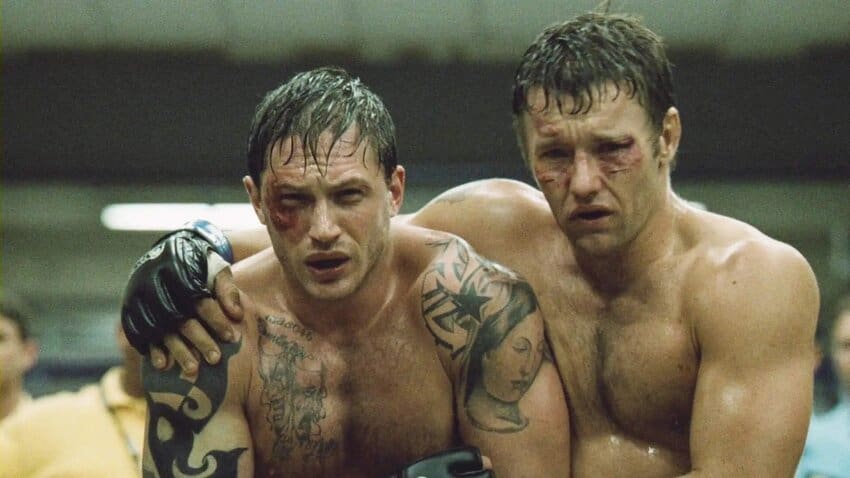
Tommy returns home after a stint in the Marines to find his father has cleaned himself up. They begin training for an upcoming MMA tournament offering the sport’s biggest payday. Tommy’s estranged brother Brendan also enters the tournament, and the two end up on a collision course as each fights his way to the top. An interesting MMA film that finds a way to examine the drama of a broken home and how the characters can work toward healing.
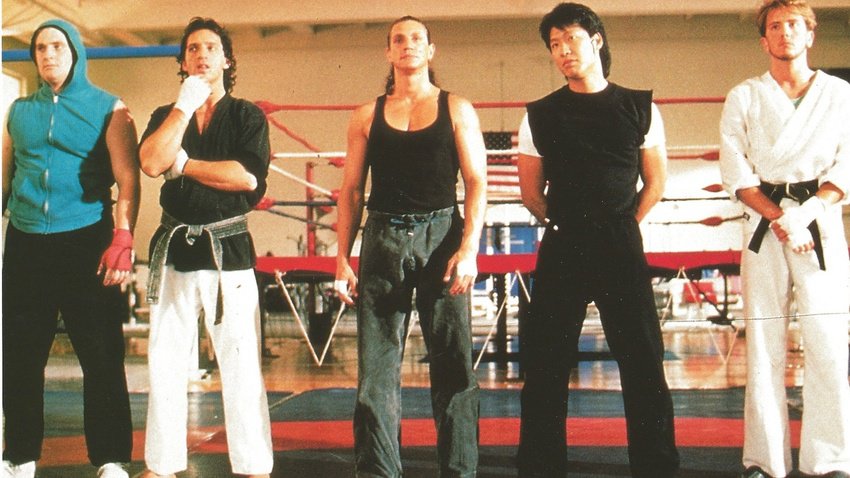
A martial arts team is assembled for the United States to compete in a Tae Kwon Do tournament in Korea. Everyone on the team has to put their personal problems aside to co-exist, but that is easier said than done. While they combat the other teams in the tournament, they must also keep an eye on each other. This film is reportedly UFC legend Chuck Liddell’s favorite martial arts movie.
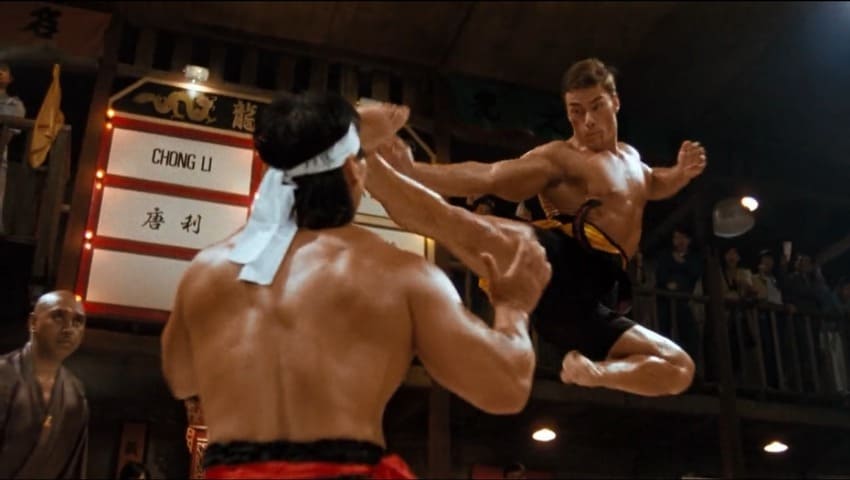
One of my personal favorites on the list. This film is supposed to be based on the true story of an American soldier named Frank Dux. He goes AWOL to enter a secret underground tournament called the Kumite. The world’s best martial arts fighters show up to compete but quickly find that the tournament is serious business. The reigning champion has no problem killing his opponents to keep his title. While Frank dodges officers sent to drag him back to the military, he begins a relationship with an American journalist who wants to report on the famed event. A Jean Claude Van Damme classic that any fight fan should check out. Even though it is kind of a cheese-fest, Bloodsport is still one of the best fighting films of all time.
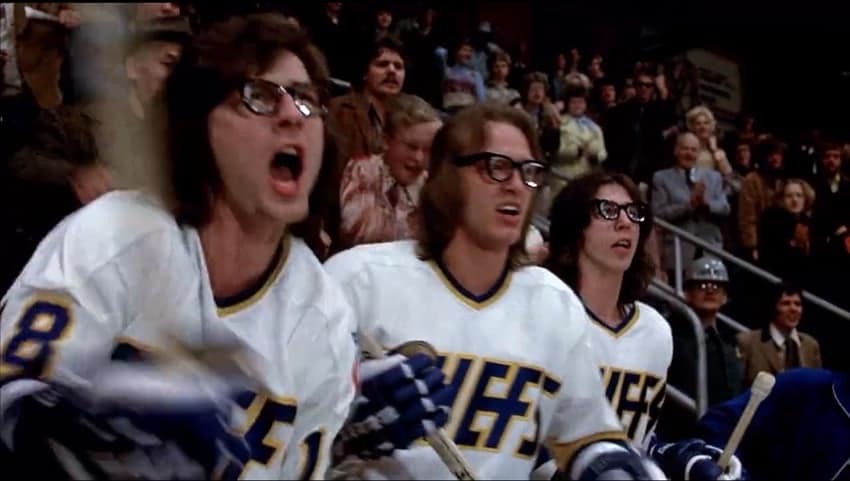
You’re about to say this is a hockey movie, not a fighting movie. Well, I would say it is actually both. A struggling hockey team is on the verge of closing. The coach/player, Reggie Dunlop, decides how to help the team get attention and a wider audience is to bring in the Hansen brothers. A group of goonish hockey players likes to start fights and cause violence on the ice. It quickly catches on, and the team sees a much-needed boost. The fights in this film are a lot of fun to watch, bringing about its own sort of comedy. Maybe not as serious as Creed III but still a great fighting film.
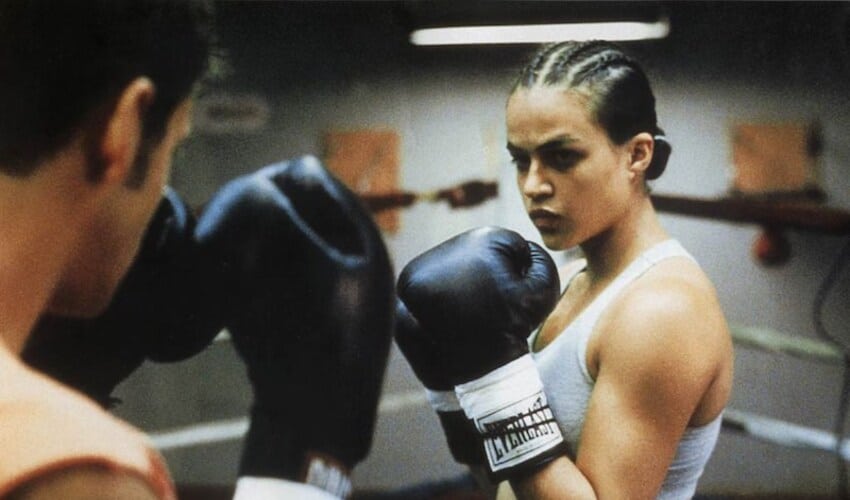
Diana is close to being kicked out of high school for fighting. She is introduced to the boxing world as she searches for something to grab onto. Her father disapproves, but she finds that she has natural talent as she keeps training. In order to claim her future, she begins to push herself further into the world of boxing and hopes to find everything she’s looking for. This film was Michelle Rodriguez’s first film and put her on the map. This movie actually has a lot in common with Creed III.
Based on the true story of Micky Ward. His older brother Dickie got some boxing acclaim when he faced Sugar Ray Leonard back in 1978. Now Dickie has fallen into a life of drugs and crime but still trains Micky. As Micky sees those around him falling to the wayside, he decides he needs a change if his boxing career will ever move forward. This causes a rift in his family as his mother is his manager, and his brother has been training him. Can he move forward without them?
Another JCVD classic. In this one, he plays Kurt Sloane. He is the corner man for his kickboxing champion brother Eric. Eric ends up paralyzed when he steps into the ring with Tong Po. Kurt thinks Po injured him on purpose and seeks revenge. He wants to train to fight him in the ring, but no one will take him. Finally, he finds an old kickboxing trainer who lives alone in the mountains. His methods are unconventional, but Kurt sticks with it to learn what he needs to avenge his injured brother.
Martial Arts Expert Michael Jai White takes over the title role of George Chambers from Ving Rhames in the first film. Chambers goes to Russia but finds he is sent to prison for bogus drug possession charges. The warden says that if he fights in the underground fighting league within the prison that he will help him get an early release. He turns him down at first but is soon forced to agree. He begins to train to take on the reigning champ with the help of another prisoner who has knowledge of how to win. In order to get out of Russia with his life, he has to win. This underseen movie is great and earns its status as one of the best fighting films.
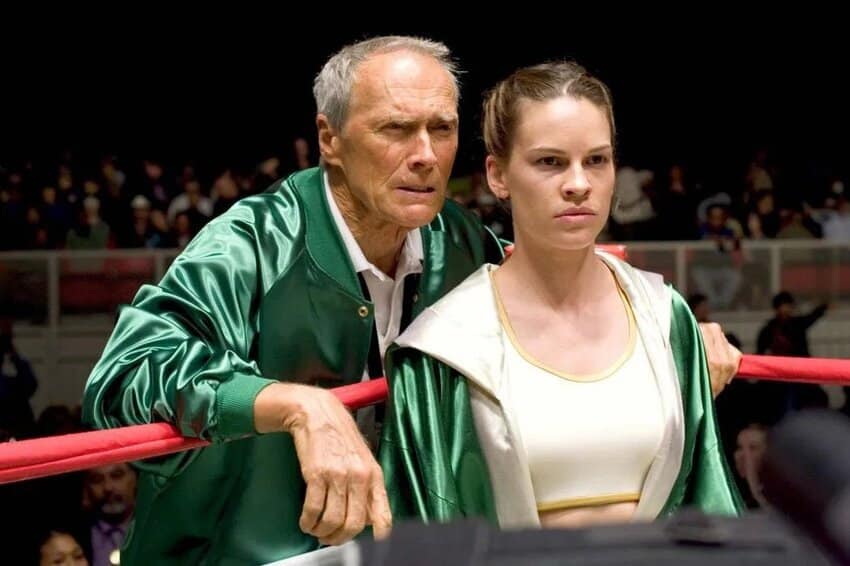
Maggie wants to train with the best to become a professional boxer and finds legendary trainer Frankie Dunn. At first, he refuses to train her. His personal life has been in tatters as his relationship with his daughter has fallen apart. When he sees she has natural talent, he finally relents. The two form a powerful bond that helps each of them to get what they want most in life.
Champion boxer Billy Hope is on top of the world when his wife is shot during an altercation with another boxer. After her death, Billy begins a spiral of self-destruction, leading to his daughter being taken away from him. He knows he has to rebuild his life and seeks out trainer Tick Wills. If he is going to get his life back on track and get his daughter back, he knows he has to start at the bottom and fight back to the top.
Are you excited about Creed III? What are your favorite fighting films? Let us know in the comments.
TORONTO, March 12, 2023 (Newswire.com)
-
The travel app Visited by Arriving In High Heels Corporation has published a list of the top 10 most visited surf spots in the world. Scenic Biarritz in the south of France tops the list as the most sought-after surf destination.
According to users of the Visited world map app, these are the most popular surf spots around the globe:
Biarritz entices surfers from far and wide to come enjoy the hollow waves along the picturesque south coast of France.
North Shore Oahu in Hawaii, U.S., serves up big waves and pro surfing contests along more than 7 miles of beaches.
Daytona Beach, Florida is a popular surfing destination that offers plenty of beginner-friendly beaches and ride-able waves in the southern U.S..
San Sebastian located in northern Spain's Basque country is a prime surfing spot for all ability levels at Zurriola Beach.
Nazare is a top surf destination along the coast of Portugal serving up big waves that attract top-level surfers.
Uluwatu and Kuta in Bali, Indonesia, have some of the best surfing waves in the world, attracting intermediate and advanced surfers.
Byron Bay on the southeast coast of Australia has a wide range of beaches and waves as well as surfing lessons for all levels.
Honolua Bay in Maui, Hawaii, is renowned for its big waves including hollow, powerful, and long waves.
Canggu, Bali is a resort village in Indonesia featuring a variety of waves and beginner-friendly places to learn to surf.
Apollo Bay in Victoria, Australia, has scenic surfing for beginners as well as bigger waves north of the harbor for more advanced surfers.
To see over 50 travel lists with bucket list destinations, get a customized travel map, and set travel goals, users can download Visited on iOS or Android.